

by Alex Marshall, Group Business Development and Marketing Director, Clarke Energy
The global energy transition isn’t just about switching fuels – it’s about managing carbon. While renewable power is accelerating, many industries, data centers, and utilities will continue to rely on gaseous fuels, natural gas, biomethane, and hydrogen as part of resilient distributed energy systems. The challenge is to maximise efficiency while minimising emissions.
Carbon capture and utilisation (CCU) technologies are now emerging as practical tools to reduce the carbon intensity of distributed generation. By capturing CO₂ at different points in the value chain, operators can unlock not only emissions reductions but also new revenue streams.
In this article, we explore three categories of opportunity:
- Pre-combustion CO₂ recovery from biogas upgrading
- Post-combustion CO₂ recovery from CHP and distributed generation
- Advanced and proof-of-concept technologies including mineralisation and integration into wider systems
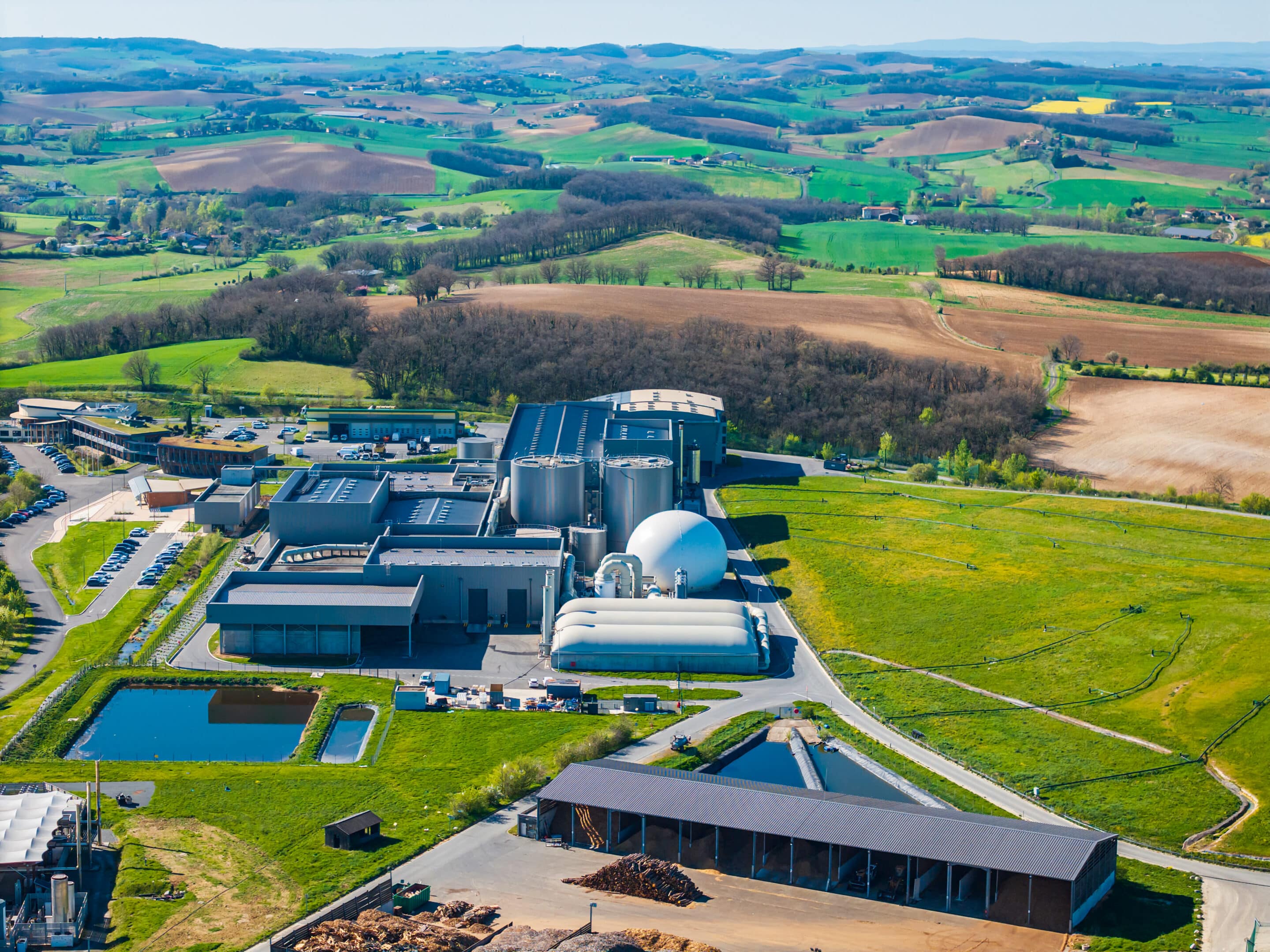
1. Pre-Combustion CO₂ Recovery: Biogas Upgrading
Biogas upgrading plants are already a cornerstone of the circular economy. By upgrading raw biogas into biomethane (renewable natural gas, RNG), operators create a pipeline-quality fuel suitable for grid injection, transport, or industrial use.
During this upgrading process, CO₂ is separated out typically 30–40% of the biogas stream. Traditionally, this CO₂ has been vented to atmosphere. Today, forward-looking operators are exploring opportunities to capture, purify, and monetise it.
Commercial applications include:
- Food & beverage industries (carbonation, packaging, chilling)
- Greenhouses (enhanced plant growth and yield)
- Dry ice production (for cold chains and logistics)
- Permanent sequestration (supporting carbon credits and net-negative projects)
For engineering managers, this is a relatively low-risk, near-term opportunity: the CO₂ is already separated, meaning capture infrastructure can often be bolted onto existing upgrading systems.
For finance directors, pre-combustion capture presents an attractive business case CO₂ that was once a waste stream becomes a sellable product, diversifying revenue beyond RNG sales.
2. Post-Combustion CO₂ Recovery: CHP and Distributed Generation
Combined Heat and Power (CHP) systems are already among the most efficient forms of thermal generation. By simultaneously producing electricity and utilising waste heat, they can achieve total efficiencies of 80–90% compared to around 40% for grid-only power.
However, even with high efficiency, natural gas or biogas combustion generates CO₂ at the exhaust. This is where post-combustion carbon capture comes into play. Technologies such as amine scrubbing, pressure swing adsorption, or emerging modular capture units can remove a significant proportion of CO₂ directly from flue gases.
Why it matters for decision-makers:
- Engineering managers can extend the sustainability credentials of proven CHP systems while retaining their operational resilience and controllability.
- Finance directors may view this as a route to future-proofing assets against tightening carbon regulations or carbon pricing while maintaining baseload energy security.
- Sustainability leaders and investors gain the opportunity to brand projects not just as “efficient” but as net-zero aligned a growing differentiator in competitive industries like data centers, food processing, and pharmaceuticals.
Where fuels are renewable (biogas, RNG, or hydrogen blends), the combination of CHP and post-combustion capture can even deliver carbon-negative outcomes — removing more carbon than is emitted across the system boundary.
3. Advanced Proof-of-Concept Technologies: Mineralisation and Integration
Looking ahead, the carbon capture ecosystem is moving beyond simple separation into more durable and innovative applications.
Mineralisation – Injecting captured CO₂ into mineral substrates (such as basalt or industrial byproducts like steel slag) where it reacts to form stable carbonates. This offers permanent sequestration and the potential to valorise waste materials.
Integration with other energy systems – Captured CO₂ can be combined with hydrogen (from electrolysis or surplus renewables) to produce synthetic fuels such as methanol or e-methane. This closes the carbon loop, enabling industries to recycle CO₂ as a feedstock rather than treating it as a waste.
Co-location strategies – For data centers, industrial clusters, and district energy systems, there is growing potential to integrate power generation, waste heat utilisation, and CO₂ capture with nearby users such as beverage plants or greenhouses.
For decision-makers, these technologies are not yet mainstream but they are gaining traction in pilot projects globally. Engineering managers should monitor technical readiness, while finance directors may see early participation as a way to secure first-mover advantage in markets where carbon credits, green branding, and ESG reporting are increasingly decisive.
Strategic Considerations for Decision Makers
When evaluating CO₂ recovery projects, leadership teams should consider:
- Technology readiness – Is the solution commercially proven (biogas upgrading) or still at pilot scale (mineralisation)?
- Revenue diversification – Can captured CO₂ be monetised locally, or should the business case rest on avoided carbon pricing?
- Policy frameworks – Tax credits (such as the U.S. 45Q) and carbon markets can significantly shift the ROI profile.
- Sustainability credentials – How does CO₂ recovery enhance the company’s ESG narrative and customer value proposition?
- Partnership models – Collaboration with offtakers (greenhouses, beverage producers, industrial users) is critical to maximising the economic value of captured CO₂.
Conclusion
CO₂ recovery whether pre-combustion, post-combustion, or advanced integration — is no longer a futuristic concept. It is becoming an essential tool for distributed energy projects seeking to balance resilience, cost-effectiveness, and decarbonisation.
For engineering managers, it’s about operational feasibility. For finance directors, it’s about diversifying revenues and managing carbon risk. For investors, it’s about aligning capital with the low-carbon future.
As industries and data centers face rising energy demands, CO₂ recovery represents a pathway not just to reduce emissions but to transform carbon into an asset within a circular economy.
Contact Us
If you have any further questions or would like to learn more about CO2 recovery in distributed energy systems please contact Clarke Energy.
About the Author
Alex Marshall is Group Director at Clarke Energy, a Rehlko Company, where he leads global marketing and business development across distributed energy solutions. With over 20 years of experience in sustainable technologies, Alex has played a key role in advancing projects that integrate combined heat and power (CHP), biogas upgrading, carbon capture, and hybrid energy systems.
He serves as Vice President of the Cogen World Coalition and a Council Member of the World Biogas Association, helping shape international dialogue on the role of distributed energy and renewable gases in the net-zero transition.
Alex is passionate about bridging the gap between engineering innovation, commercial strategy, and sustainability goals, supporting decision-makers in industries such as data centers, manufacturing, and utilities to unlock new pathways for resilience and decarbonisation.

