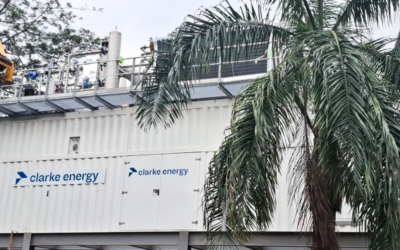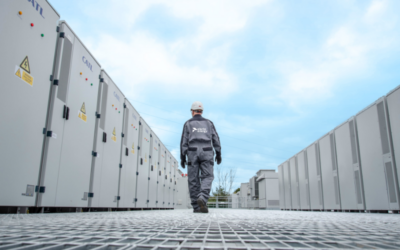

Navios Investments’ Racari project showcases a structured pathway from dispatchable generation to hybrid, lower-carbon energy infrastructure.
Key Information
- Energy hub evolves from fast-response gas generation to a hybrid system incorporating battery energy storage and renewable energy.
- Romanian grid balancing energy hub showcases the principles of the Structured Transition Model.
- Project demonstrates a phased transition from reliable thermal generation toward lower-carbon operation.
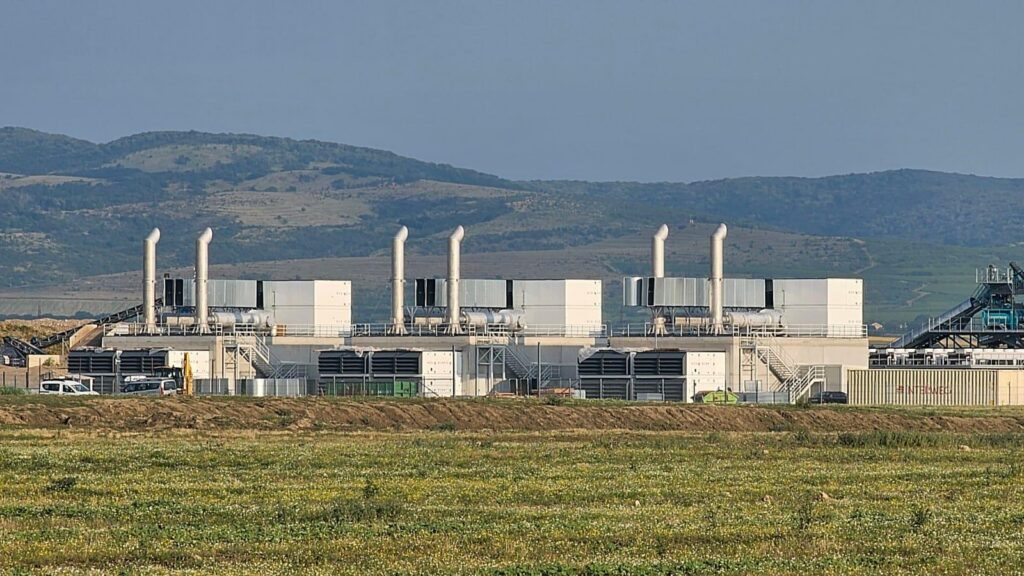
The project evolves from fast-response thermal generation to a hybrid system incorporating battery energy storage and renewable energy.
The Racari grid balancing energy hub in Romania demonstrates the principles of the Structured Transition Model.
The project, developed by Navios Investments and supplied through Rehlko’s Clarke Energy business, has been designed to support grid reliability while creating a pathway toward progressive decarbonization.
The initial phase combined high-efficiency gas engines with backup diesel generation to provide fast-response power supporting Romania’s electricity network. Subsequent phases have integrated battery energy storage systems (BESS), providing grid frequency support while optimizing the performance of the on-site generation assets.
An on-site solar photovoltaic (PV) installation is currently being developed to charge the battery systems using renewable energy. The gas engines are hydrogen-ready and can also operate on renewable natural gas (RNG) where available. Future development options include the addition of electrolyzers to produce green hydrogen for local blending into the fuel supply, further reducing carbon emissions.
The facility is strategically located adjacent to land suitable for future data center development. Romania occupies an increasingly important position within Europe’s power and digital infrastructure networks, offering both strong grid connectivity and attractive low-latency data transmission routes.
Gabriel Matei for Navios Investments said:
“The Racari energy hub demonstrates how the principles of the Structured Transition Model can deliver both reliability and long-term decarbonization. By combining gas-fired generation, battery energy storage and solar power within a single integrated facility, we have created a flexible platform that can evolve alongside market and grid requirements. The project provides immediate support for grid stability while preserving future pathways toward renewable natural gas and hydrogen-fueled operation.”
Rehlko’s Francis Perrin commented:
“The Racari project is an excellent example of phased hybridization in action. By combining dispatchable gas generation, emergency diesel gensets, battery energy storage and renewable energy within a single energy hub, Navios Investments has created a solution that addresses today’s grid stability requirements while establishing a practical pathway toward future decarbonization. This phased approach reflects the principles of the Structured Transition Model, which recognizes that the energy transition is most effective when reliability, affordability and emissions reduction are advanced together.”
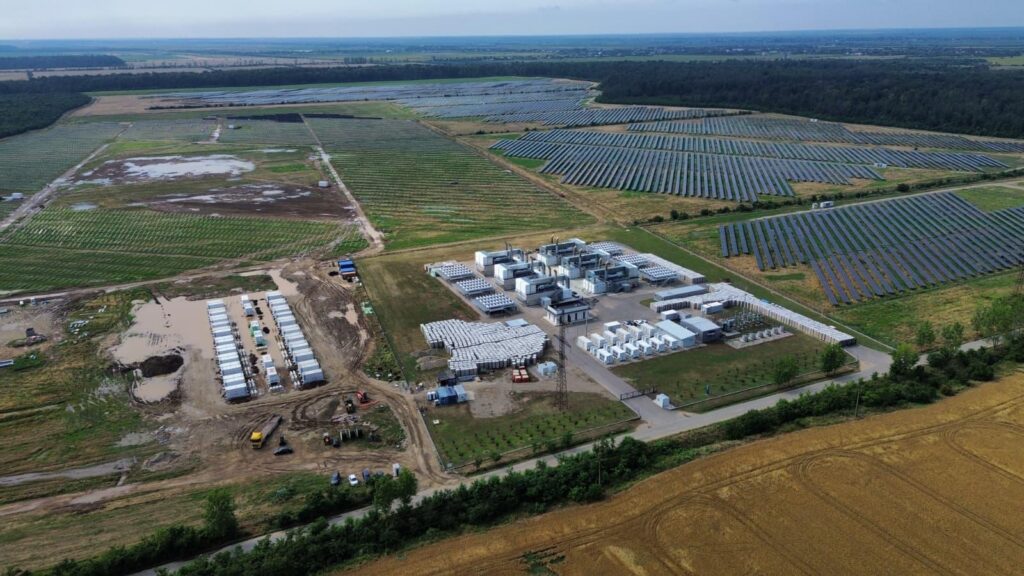
The project demonstrates how energy infrastructure can be deployed rapidly to address immediate grid challenges while maintaining a clear pathway toward lower-carbon operation through the phased adoption of complementary technologies.
Find out more
For more information on the project visit the Navios website.
Find out more information on Rehlko’s Structured Transition Model here.
Racari Energy Hub: Questions and Answers
Racari is a grid balancing energy hub in Romania, developed by Navios Investments and supplied through Clarke Energy, a Rehlko company. It provides fast-response power to help keep Romania’s electricity network stable. The project began with high-efficiency gas engines and backup diesel generators. Battery storage was added in later phases, and an on-site solar installation is now in development.
Electricity supply and demand must match continuously. When they drift apart, the frequency of the network moves away from its standard value, which is 50 hertz in Europe. If the deviation is large enough, equipment disconnects to protect itself. Grid balancing assets correct these imbalances by raising or lowering their output quickly. Batteries respond in under a second. Gas engines take minutes to reach full output but can then run for as long as fuel is available.
The Structured Transition Model (STM) is a planning framework for power infrastructure authored by Alex Marshall, Group Business Development and Marketing Director at Clarke Energy. It was first published by Rehlko in June 2026 in a white paper on power for artificial intelligence (AI) data centers, launched at the Data Cloud Global Congress in Cannes.
Its central principle is that power infrastructure should be designed as a transition pathway, not a fixed endpoint. The model sets out three phases.
Phase 1 establishes reliable power quickly, using proven dispatchable generation that can later run on lower-carbon fuels. Dispatchable means it can be switched on and adjusted on demand, unlike solar or wind.
Phase 2 adds renewable electricity, battery storage, and heat recovery. The engines move from running continuously to providing balancing and backup.
Phase 3 shifts the fuel toward renewable gases and, where equipment and safety codes allow, hydrogen. The site also takes a larger share of its energy from a lower-carbon grid. Phase three offers the potential for deeper decarbonization using carbon capture and storage technology.
Projects can enter at any phase. The test is whether the assets built today remain useful as later phases arrive.
The first phase at Racari, gas engines with diesel backup, corresponds to Phase 1. The battery energy storage systems (BESS) added since then, and the solar photovoltaic (PV) installation now in development, correspond to Phase 2. The solar array will charge the batteries with renewable electricity.
The Phase 3 elements are options, not yet built. The gas engines can run on renewable natural gas (RNG) where it is available and are hydrogen-ready. Electrolyzers, which split water into hydrogen and oxygen using electricity, could later be added to produce hydrogen on site for blending into the fuel supply.
Racari sits in Phase 2 today, with the equipment in place to move further.
A solar and battery site would produce fewer direct emissions. The difficulty is duration. Most grid-scale batteries are designed to discharge for a few hours. Solar produces nothing at night and little on overcast winter days. A balancing asset has to respond whenever the grid needs it, including on a cold, still evening after the batteries have already discharged. The engines provide that sustained capacity.
The question is not whether gas is used, but whether the assets built now close off lower-carbon options later. Engines that can run on RNG and hydrogen blends keep those options open. How far those options are taken up will depend on the supply and cost of RNG and low-carbon hydrogen in Romania over the life of the plant.
Hydrogen-ready means an engine can burn a blend of hydrogen and natural gas up to a limit set by the manufacturer. Higher blends, or pure hydrogen, typically require modifications. The share actually used depends on the engine specification and on the hydrogen supply.
Renewable natural gas is methane produced from organic waste such as food waste, farm residues, or sewage, and then cleaned to pipeline quality. It is chemically interchangeable with fossil natural gas, so it can run in the same engines without changes. It also captures methane that would otherwise escape to the atmosphere from waste.
Green hydrogen is hydrogen produced by electrolyzers powered by renewable electricity.
The white paper that introduced the Structured Transition Model addresses AI data centers, where the pressure to secure reliable power quickly is most acute. The underlying logic is not specific to data centers. It applies to any asset that must be reliable from day one while its emissions come down over time. Racari shows the same sequence at work in grid balancing.
The site is also located next to land suitable for data center development. In most data center projects, the building comes first and the power follows, often after a long wait for a grid connection. At Racari, the power infrastructure already exists and the demand could follow.
Most discussion of phased decarbonization concerns plans. At Racari, part of the sequence has already happened. The site has moved from its first phase into its second without replacing the generation it started with. That is the central claim of the model: early investment can remain useful as the system changes around it.