
The next challenge in achieving BESS delivery excellence across the entire lifecycle.

by Bob Beckwith, Group Applications Manager – BESS, Clarke Energy
BESS deployment is accelerating at an unprecedented pace. Lithium Iron Phosphate (LFP) now firmly established as the chemistry of choice for most utility-scale and commercial energy storage projects.
The key question is no longer which battery to use, but how to deploy, integrate and operate systems successfully?
LFP Battery Energy Storage Systems (BESS) offer excellent thermal stability, long cycle life, and comparatively benign failure modes.
However, technology maturity has not eliminated execution risk. Successful deployment still requires careful attention to engineering, integration, commissioning, and operational management.
Why do BESS Projects Remain Complex?
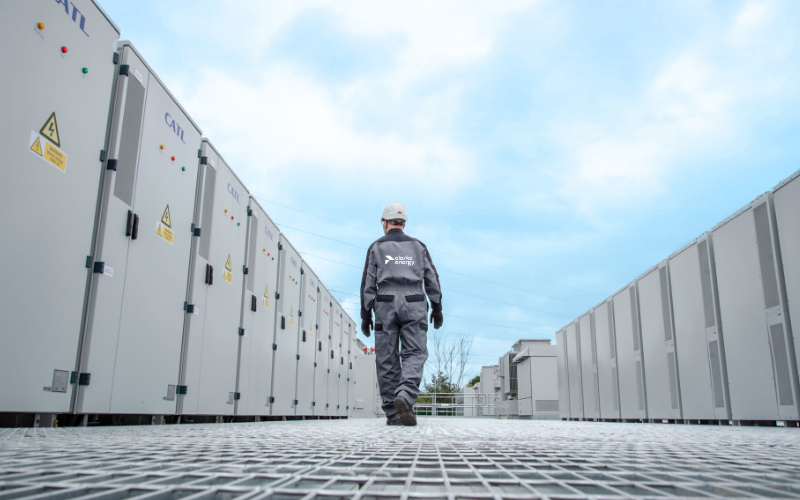
A modern BESS is far more than batteries. Installations combine; battery systems, cooling infrastructure, power conversion equipment, transformers, protection systems, EMS/SCADA platforms, communications networks, safety systems, and civil works.
Every interface introduces potential technical, commercial, and schedule risk.
Installation Challenges – Site Preparation and Civil Works
Containerised systems require sufficient space for maintenance access, crane operations, cable routes, fire lanes, and emergency response. Poor layout decisions can hinder maintenance and create compliance issues. Foundations must accommodate concentrated equipment loads and prevent settlement that could affect mechanical alignment or cable terminations. Drainage is equally important, as standing water and environmental contaminants can accelerate corrosion and reduce asset life.
Successful projects typically begin with detailed geotechnical assessments, robust foundation design, well-defined equipment clearances, effective drainage strategies, and suitable anti-corrosion specifications.
Remote sites are by definition remote with unique challenges such as narrow access roads, weak bridges, and tight turns. Weather exposure, communications and connectivity, utility supply and protected habitats add to the mix. Urban sites rarely have perfect land to work with and have their own challenges often related to nearby housing.
Electrical Integration
The interaction between the PCS, transformer, protection systems, and utility network – i.e. grid integration is one of the most critical aspects of any BESS project. Transformer sizing, impedance selection, harmonic performance, grounding philosophy, and protection coordination all influence long-term reliability.
Incorrect design can result in nuisance trips, power-quality issues, communication interference, excessive fault energy, or compliance failures. Increasingly, project developers must also evaluate whether grid-following or grid-forming architectures best align with future grid requirements.
As power systems become increasingly inverter-dominated, and inertia is being removed from grids, grid-forming capability is moving from future differentiator to present-day requirement.
Comprehensive power system studies, coordinated protection schemes, disciplined grounding practices, and segregation of power and control cabling remain essential.
Safety and Compliance
Although LFP chemistry offers improved safety characteristics compared with some alternative lithium-ion technologies, thermal events and off-gassing remain credible risks.
Regulatory expectations continue to rise as BESS deployments become larger, more visible, and increasingly integrated into critical infrastructure.
Emergency power-off systems require particular attention. Isolation strategies must balance safety requirements with the need to retain essential monitoring and telemetry during abnormal events.
Early engagement with regulators, insurers, and emergency responders significantly reduces project risk and commissioning delays.
Logistics and Supply Chain
Battery modules, busbars, transformers, and switchgear require careful handling throughout transportation and installation. Mechanical damage may not always be immediately visible yet can create reliability issues later in the asset lifecycle.
Large BESS projects also involve multiple suppliers and contractors. Supply chain issues rarely remain isolated. Delays to transformer manufacturing, grid connection works, or delivery schedules can cascade across the entire programme.
Clearly defined quality inspections, integrated planning, and strategic spare-parts management are therefore critical.
Operational Challenges – Thermal and Environmental Management
Long-term asset value is heavily influenced by thermal management performance. High power operation, seasonal weather extremes, and inadequate airflow can all accelerate degradation and increase operational risk.
While air-cooled systems remain in use, liquid cooling is increasingly becoming the preferred approach for utility-scale installations due to superior temperature uniformity and long-term performance.
Nevertheless, cooling systems require ongoing maintenance to ensure filters, pumps, coils, and sensors continue operating effectively.
Environmental conditions can be equally challenging. Dust, humidity, sea salt, industrial pollutants, condensation, rodents, and insects all have the potential to affect reliability through corrosion, contamination, or equipment damage.
Effective filtration, environmental monitoring, and routine inspections are therefore fundamental operational requirements.
Operational Challenges – Electrical Reliability
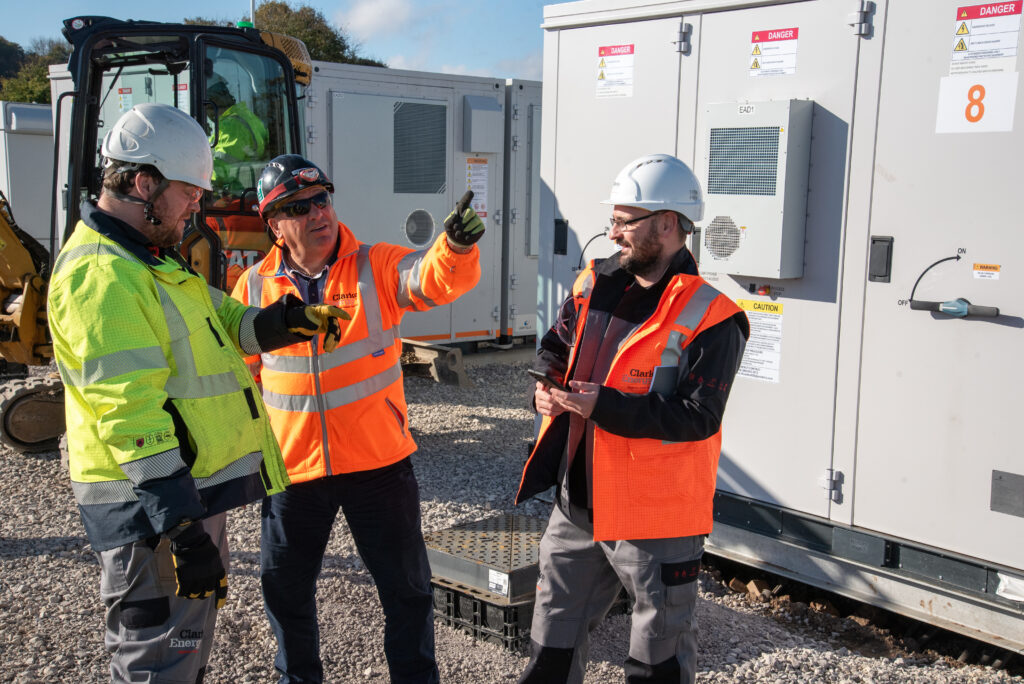
Operational duty cycles, reactive power support, grid disturbances, and repeated switching events place considerable stress on power electronics, transformers, protection systems, and auxiliary equipment.
Failures often originate not from the battery cells themselves but from cooling equipment, control systems, capacitors, communications infrastructure, or protection devices. Asset owners should therefore adopt condition-based maintenance techniques such as thermal monitoring, vibration analysis, transformer diagnostics, and trend-based performance assessment.
Controls, Communications and Cybersecurity
Modern BESS facilities rely on seamless interaction between the BMS, PCS, EMS, SCADA, and utility control systems. Integration challenges frequently arise because equipment from different vendors operates using different protocols and data models.
Firmware changes, configuration drift, poor time synchronisation, or inadequate interface management can create operational issues that are difficult to diagnose. Establishing robust interface documentation, change-management processes, and testing procedures is therefore essential.
As BESS assets become increasingly connected, cybersecurity is becoming a high-level operational risk rather than simply an IT concern.
Remote connectivity increases operational flexibility but also expands the attack surface. Network segregation, least-privilege access, multi-factor authentication, vulnerability management, and security monitoring should form part of every operational strategy.
Commissioning and Grid Compliance
Some of the costliest project delays can arise during commissioning, when weaknesses in design, documentation and interface management are finally exposed. Missing documentation, incomplete interface definitions, inadequate testing, and poorly validated protection schemes frequently create very avoidable problems.
Factory acceptance testing and site acceptance testing should extend beyond simple functionality checks. They should verify communications, failover behaviour, thermal performance, protection coordination, emergency shutdown functions, and abnormal operating scenarios.
Grid compliance presents a further challenge. Performance during voltage disturbances, frequency excursions, fault ride-through events, reconnection sequences, and active/reactive power control must be thoroughly validated against utility requirements.
As inverter-based resources become dominant, grid-forming capabilities, fast frequency response, and dynamic system support functions are attracting increasing attention from regulators and system operators.
Operations and Maintenance
Initial design quality is key, but asset performance is ultimately determined over decades, not during commissioning. Effective O&M programmes should include inspection of thermal systems, electrical connections, transformers, power electronics, protection devices, communications infrastructure, and safety equipment.
The most successful operators increasingly adopt predictive maintenance techniques, using operational data to identify emerging issues before they result in outages. Key performance indicators typically include availability, response times, thermal derates, nuisance trips, maintenance backlog, and mean time to repair.
Strong document control is equally important. Settings files, firmware records, drawings, procedures, and operational logs should remain under strict configuration management throughout the project lifecycle.
Installation Lifecycle
The industry’s focus on deployment speed should not come at the expense of lifecycle planning. Battery performance will naturally degrade over time, making augmentation strategies important for maintaining capacity and contractual performance obligations.
Equally, careful warranty management is required to ensure operational practices, maintenance activities and environmental conditions remain compliant with manufacturer requirements throughout the asset life. Developers should also consider end-of-life planning, including battery replacement, recycling pathways, regulatory obligations, and potential opportunities for second-life applications.
Addressing these factors early can help minimise lifecycle costs, preserve asset value and avoid operational surprises in later years.
Risk Management and Resilience
As storage becomes a cornerstone of modern power systems, BESS facilities should be managed and governed as critical energy infrastructure. Risks such as thermal runaway, transformer failure, controller malfunction, communication outages, protection miscoordination, ventilation loss, and cybersecurity incidents should be systematically identified and mitigated.
Appropriate redundancy, spare-parts strategies, resilient communications, emergency procedures, and lessons-learned programmes all contribute to improved availability and reduced operational risk.
Insurers are also placing greater emphasis on demonstrable risk management practices, particularly around fire protection, emergency response, cybersecurity, and maintenance governance.
In Conclusion
LFP BESS technology provides an attractive combination of safety, performance, flexibility, and durability. However, successful deployment depends on much more than battery chemistry.
The industry has largely solved the question of battery selection. The next challenge is delivery excellence. As deployments scale in size, complexity and strategic importance, success will increasingly depend on an organisation’s ability to integrate engineering, construction, operations, safety, and lifecycle management into a coherent asset strategy.
Organisations that invest in thorough planning, detailed interface management, comprehensive testing, and predictive maintenance are far more likely to achieve safe, reliable, and commercially successful outcomes.
Ultimately, a BESS should be treated not as a collection of batteries, but as a fully integrated power plant requiring the same level of engineering rigour and operational discipline as any other critical energy infrastructure.
Find out more:
If you’d like to learn more about flexible, scalable BESS solutions, contact Clarke Energy for more information.