

Heaten Heat Pumps
High temperature heat pumps to turn industrial waste heat into low-carbon process heat - up to 200°C.
Why Decarbonise Industrial Heat?
Industrial process heat is one of the biggest sources of energy use and carbon emissions in manufacturing. High-temperature heat pumps are now one of the most effective ways to decarbonise it, recovering heat that would otherwise be wasted and upgrading it into usable process hot water or steam, cutting fuel costs and emissions at the same time.
The pressure to act is coming from every direction: rising energy costs and energy security concerns, tightening decarbonisation targets and carbon taxes, growing customer and workforce demand for sustainable operations, and rapid advances in heat pump design and refrigerant technology that make industrial-scale deployment more practical than ever.
Why Heaten Heat Pumps?
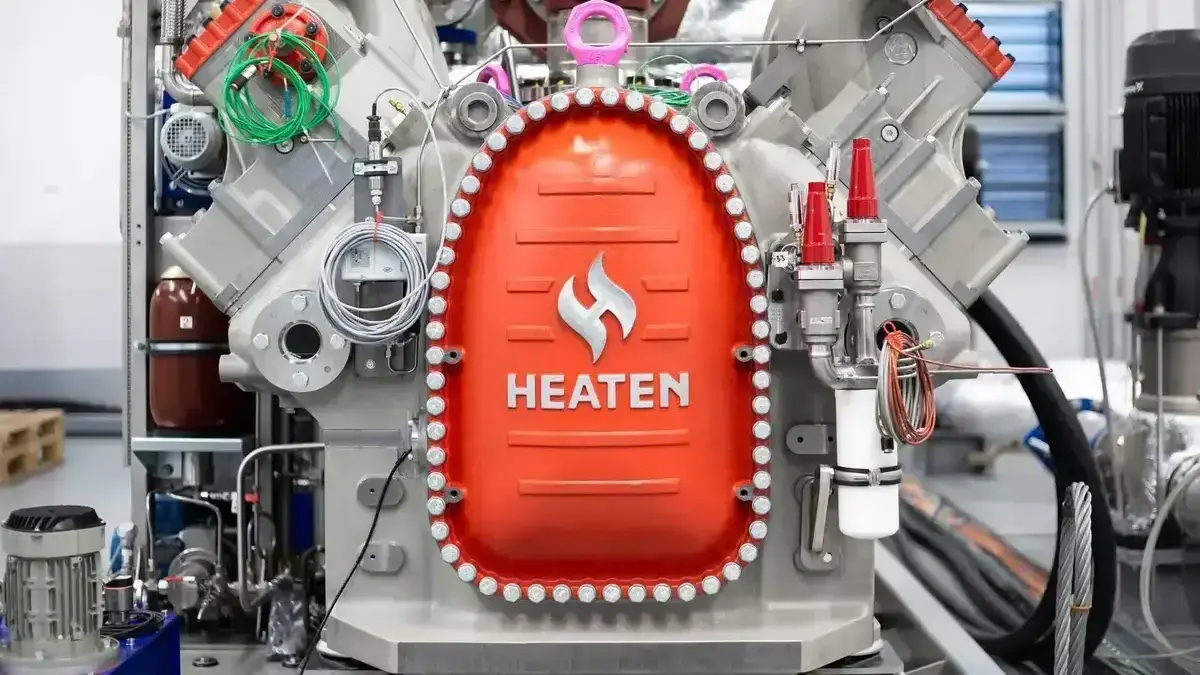
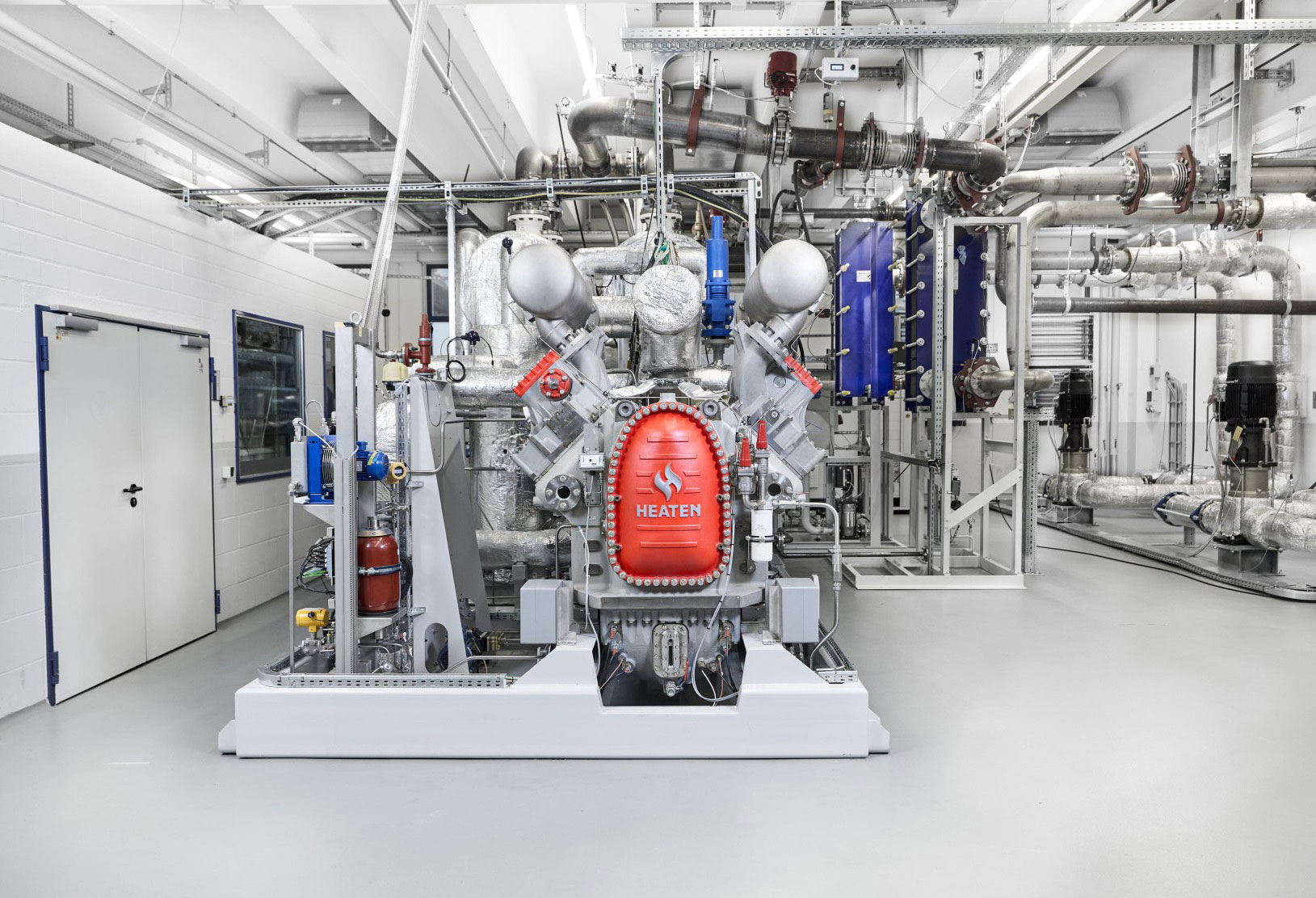
Heaten's HeatBooster® technology recovers low-grade waste heat and upgrades it into valuable process hot water or steam, combining advanced piston compressor technology with a modular design engineered for industrial use. Built on over a decade of experience in industrial heat recovery, the core compressor technology has been extensively validated through field testing, and Heaten holds full ownership of its IP.
Widely regarded as the most flexible solution on the market, systems also stay efficient at part-loads as low as 20%, can reduce water consumption by up to 40,000 m³ a year in suitable applications, and are built for a 20+ year service life, helping future-proof operations against fuel price volatility.
A Strategic Partnership with INNIO
Heaten HeatBooster technology is backed by a strategic partnership between INNIO Group and Advent International, bringing greater collaboration and financial support to accelerate the development and rollout of high-temperature heat pumps.
As INNIO's established distribution and service partner for their Jenbacher engines in 27 countries, Clarke Energy is the route to market for this technology — handling installation, commissioning and long-term maintenance for customers.
Benefits of Heaten Heat Pumps
Up to 12,000 t CO₂ / year
Saved per heat pump - accelerating decarbonisation progress.

Up to 85% energy savings
By recovering thermal energy already present in your process.

Up to 200°C
Process heat output, suited to demanding industrial applications
Product Range
HeatBooster is modular and scalable, from 1 MWth to 50 MWth, deployed as single units, parallel installations or cascaded configurations - suitable for pilot projects through to full industrial rollout.
|
Parameter |
Capability |
|
Heat source temperature |
10°C – 150°C |
|
Heat sink temperature |
90°C – 200°C |
|
Temperature lift |
Up to 80°C per stage |
|
Output medium |
Hot water or steam |
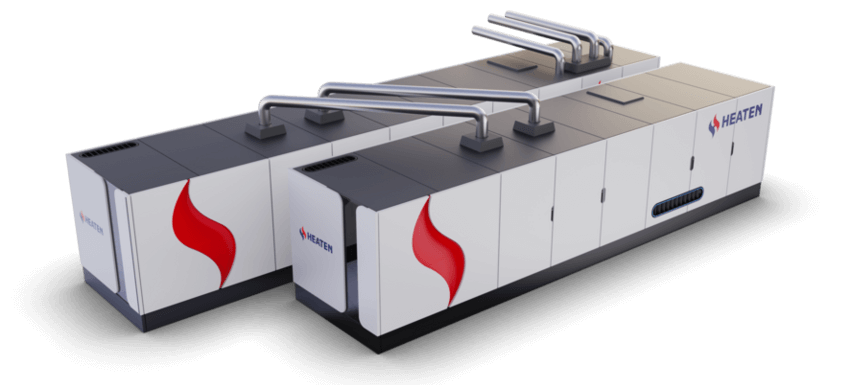
Technical Specifications
HeatBooster HBL4
A four-cylinder heat pump for medium-scale applications: industrial heat recovery, food and beverage processing, and chemical manufacturing.
HeatBooster HBL16
A sixteen-cylinder heat pump for larger industrial facilities and district heating projects, delivering large-scale waste heat recovery and process heating.
| Feature | Compressor configuration | Thermal output | Best suited to | Scalability | Heat sink temperature |
|---|---|---|---|---|---|
| HeatBooster HBL4 | 4-cylinder | 0.8 – 2.5 MWth | Medium-scale industry | Modular | Up to 200°C |
| HeatBooster HBL16 | 16-cylinder | 3.2 – 10 MWth | Large industry & district heating | Modular | Up to 200°C |

From Waste Heat to Process Heat
Typical heat sources
- Process waste heat and cooling water
- Condensate and waste steam
- Process cooling systems
- District heating return networks
Typical uses
- Steam generation
- Process heating
- Distillation, evaporation and drying
- Pre-heating and pressurised hot water
- District heating supply
Why Clarke Energy for Heat Pumps?
Clarke Energy supports the full project lifecycle - feasibility assessments, waste heat recovery studies, engineering design, installation, commissioning, performance optimisation and long-term maintenance. As an established Combined heat and power (CHP) and gas engine specialist, we also help customers integrate heat pumps into a wider site energy strategy rather than treating them as standalone equipment.
- Combine heat pumps with CHP, boilers or process cooling for a whole-site approach.
- Recover waste heat from engines and processes to feed the heat pump.
- Balance electrical and thermal loads across the site.
- Backed by specialist energy transition expertise and long-term operational support.
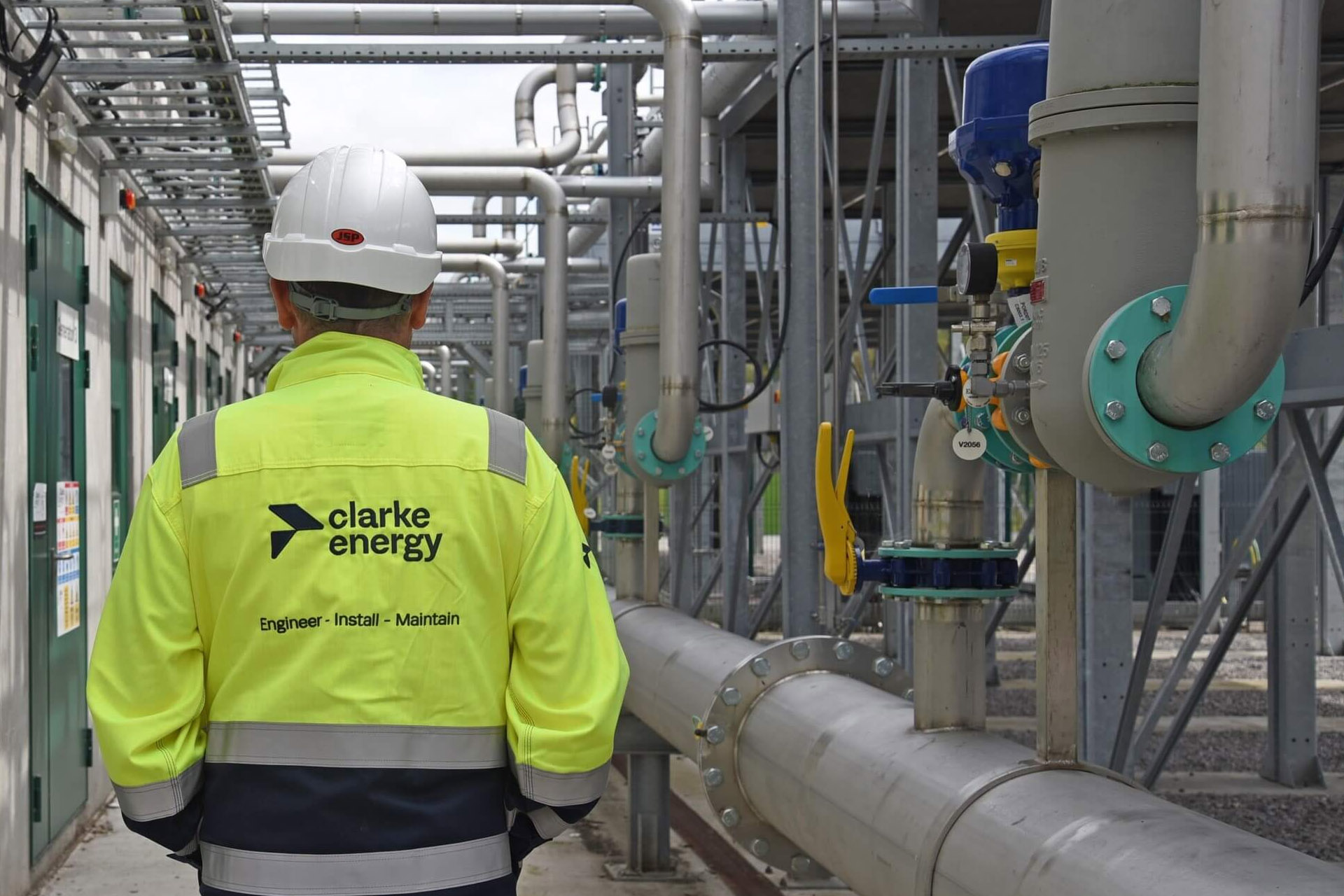
Typical Heat Pump Applications





Comprehensive Project Development Support
Project Engineering
Electrical and mechanical engineering along with a dedicated team of computer aided design staff.
Project Management
Comprehensive project management service for the installation of your generation projects.
Project Feasibility
Feasibility studies offered for a range of services to assess the viability of your energy projects.
Engineering, Procurement and Construction
Comprehensive EPC services complimenting the supply and maintenance power generation equipment.
Latest Heat Pump News
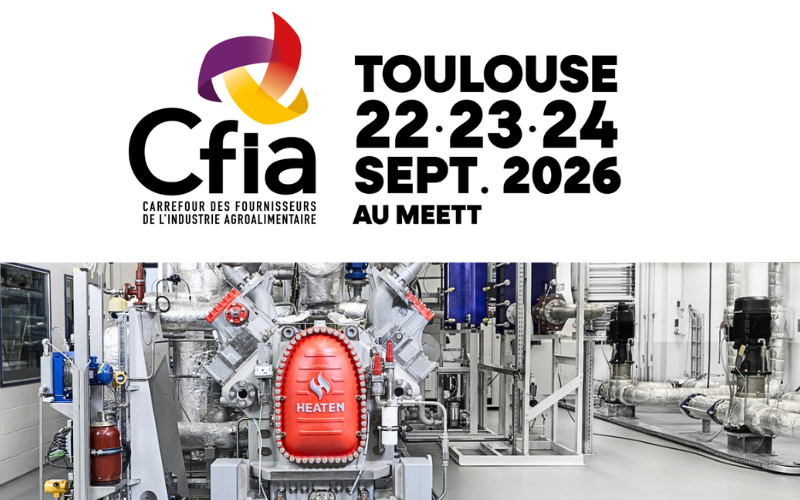
Clarke Energy to Showcase High Temperature Heat Pumps at CFIA Toulouse
Clarke Energy is proud to exhibit at CFIA Toulouse 2026 showcasing innovative industrial heat recovery solutions. Find out more.

Fenlands Greenhouse Hybrid Energy System Wins ‘Project of the Year’
Fenlands Greenhouse wins “Project of the Year” at AMPS – the Association of Manufacturers Power Systems – Awards for Excellence!

Advanced Energy Solutions for Sustainability and Efficiency
The horticulture sector is uniquely positioned to benefit from advanced energy solutions, transforming energy expenditure into an opportunity for sustainability and efficiency.
Frequently Asked Questions about Heat Pumps
Technical and Engineering
Can industrial heat pumps reduce energy costs?
Yes. They recover and reuse waste heat that would otherwise be lost, reducing fuel consumption and improving overall energy efficiency.
Are Heaten heat pumps scalable for large industrial facilities?
Yes. HeatBooster systems are modular and can be deployed from 1 MWth to 50 MWth via individual units, parallel installations or cascaded configurations.
Can Heaten heat pumps produce industrial steam?
Yes — suitable for evaporation, drying, crystallisation, food processing and other steam-intensive processes.
Financial and Commercial
Can industrial heat pumps reduce energy costs?
Yes. They recover and reuse waste heat that would otherwise be lost, reducing fuel consumption and improving overall energy efficiency.
Are Heaten heat pumps scalable for large industrial facilities?
Yes. HeatBooster systems are modular and can be deployed from 1 MWth to 50 MWth via individual units, parallel installations or cascaded configurations.
What factors affect the return on investment?
Electricity and gas prices, carbon pricing, available grants and incentives, annual operating hours, and the quantity of recoverable waste heat on site.
Environmental and Sustainability
How do industrial heat pumps reduce carbon emissions?
By replacing fossil-fuel-based heating with electrified process heat generated from recovered waste thermal energy.
How much CO₂ can a Heaten heat pump save?
Depending on the application, a single installation can reduce emissions by up to 12,000 tonnes of CO₂ annually.
Operational and Implementation
What industries use high-temperature heat pumps?
Food and beverage manufacturing, distillery, chemicals/pharmaceuticals, refineries, pulp and paper, district heating, and carbon capture applications.
What is the typical timeline for delivering a hydrogen power project?
Project durations range from several months to over a year depending on system size, permitting, and integration complexity.
Is my facility suitable for a high-temperature heat pump?
A good starting fit typically means: a heat sink demand above 800 kWth at an outlet temperature of 95–200°C, a heat source above 600 kWth at an outlet temperature above 10°C, and more than 2,500 operating hours a year. Temperature lift is also key — sites with a lift below 100°C generally see the strongest business case.
What support does Clarke Energy provide?
Feasibility studies, engineering design, installation, commissioning, maintenance, optimisation and long-term service support.
Ready to take the next step with your heat pump project?
Clarke Energy's experts can help you assess your site's waste heat recovery potential and design the right high-temperature heat pump solution for your business.