

Combined Heat and Power (CHP)
Delivering efficient, resilient, and sustainable energy through integrated cogeneration systems.
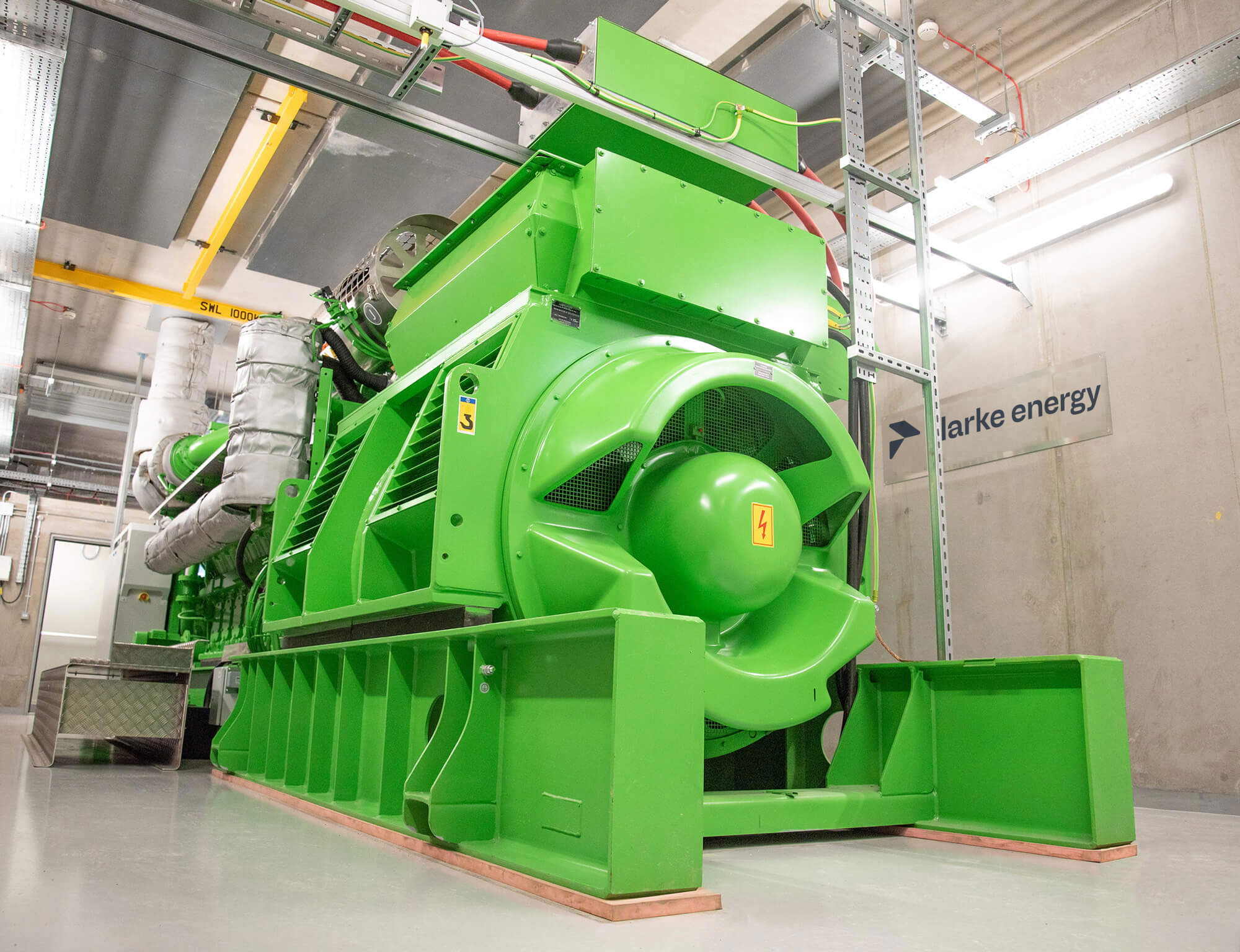
What is Combined Heat and Power (CHP) ?
Combined Heat and Power (CHP), or cogeneration, is the simultaneous generation of electricity and useful heat from a single fuel source. This energy-efficient approach improves fuel utilisation, reduces emissions, and delivers economic and operational benefits.
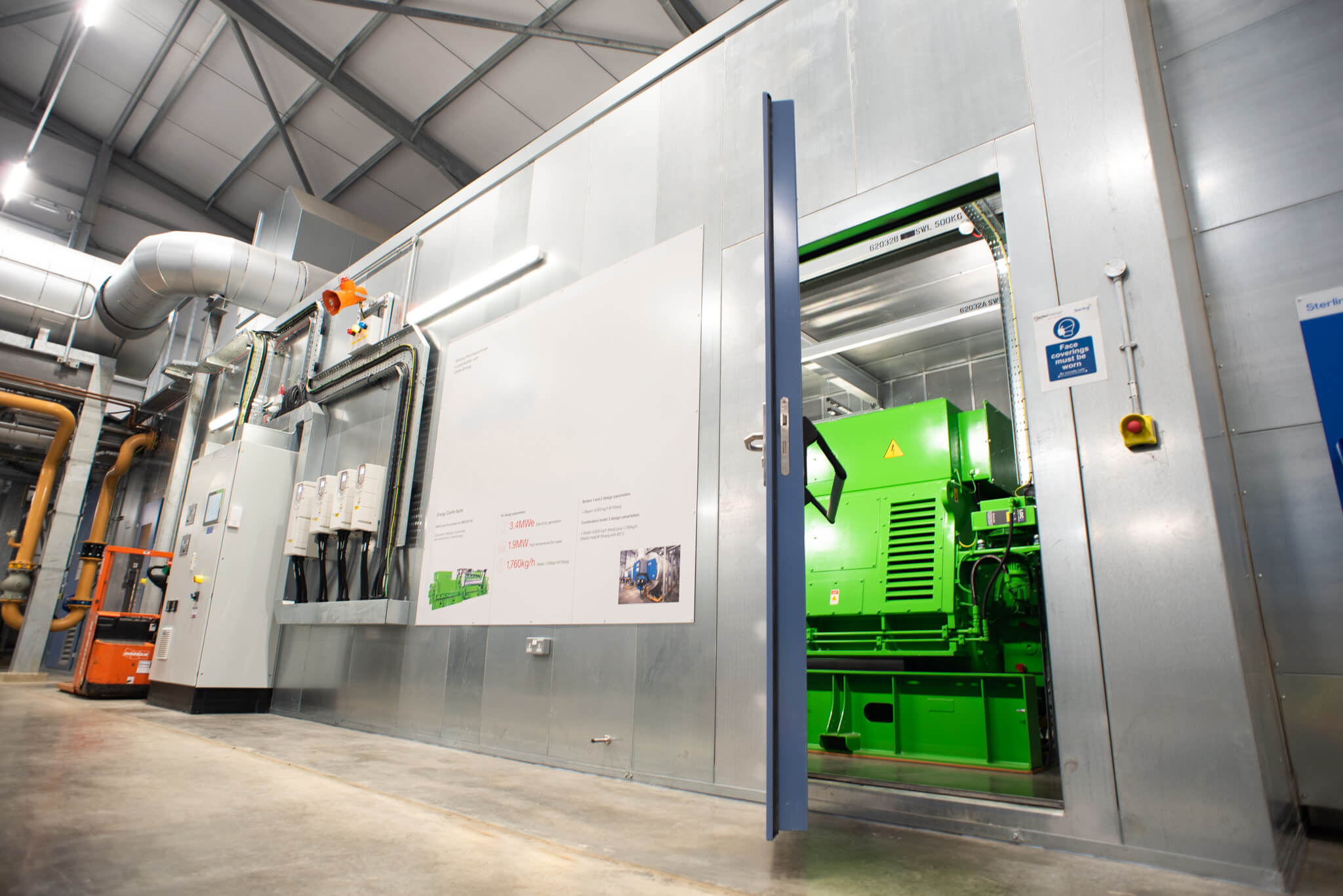
CHP systems are typically installed on-site, reducing transmission losses and ensuring power resilience. They can operate independently of the electricity grid and are compatible with hybrid energy systems and microgrids.
Trigeneration systems expand the benefits of CHP by using recovered heat to produce cooling via absorption chillers, offering electricity, heat, and cooling from one integrated solution.
Quadgeneration systems further expands the benefits of trigeneration, with the addition of post-combustion carbon capture technologies.
What are the Benefits of CHP?
Significant energy cost savings by generating electricity and useful heat on-site from a single fuel source, reducing overall energy consumption compared to separate generation.
Reduced carbon emissions through improved fuel utilisation, lower transmission losses, and compatibility with lower-carbon and renewable gases.
Reliable on-site power that operates independently of the grid, supporting continuity of operations during grid outages or instability.
Flexible system integration to match site heat and power demand and support future low-carbon energy strategies.
What are the Sustainability Features of CHP?
Energy Efficiency
Total system efficiencies exceeding 80% by capturing and reusing heat.

Renewable Gas
Compatible with biogas, biomethane, and hydrogen for lower-carbon energy generation.

Energy Resilience
Maintains power supply during outages or peak grid demand.
What are the Economic Benefits of CHP?
CHP offers significant financial advantages for industrial, commercial, and institutional users:
- Reduced Energy and Operational Costs: By generating electricity and heat on-site, CHP systems dramatically improve fuel utilisation, lowering overall energy bills.
- Grid Independence: ability to continue to operate in the event of a grid failure
- Avoidance of Peak Charges: Ability to peak electricity prices from local grid operators and reduce exposure to volatile energy markets.
- Revenue Opportunities: Export surplus electricity to the grid or participate in demand response and grid balancing schemes.
- Incentives & Grants: CHP installations may qualify for government support schemes, tax incentives, or carbon credits.
- Operational Efficiency: Improved energy reliability and process heat integration can enhance operational performance and reduce downtime.
Why Clarke Energy for CHP?
Clarke Energy has over 30 years of experience and more than 10GW of installed capacity globally. We are the largest distributor and service provider of Jenbacher gas engines worldwide.
CHP systems from Clarke Energy can operate on a wide range of gaseous fuels including natural gas, biogas, biomethane, syngas, and hydrogen blends. This provides decarbonisation pathways aligned with net-zero strategies.
- Our solutions are customised to meet your facility’s specific energy, carbon, and cost goals.
- We offer full project lifecycle support—from feasibility and engineering through to installation and long-term maintenance contracts.
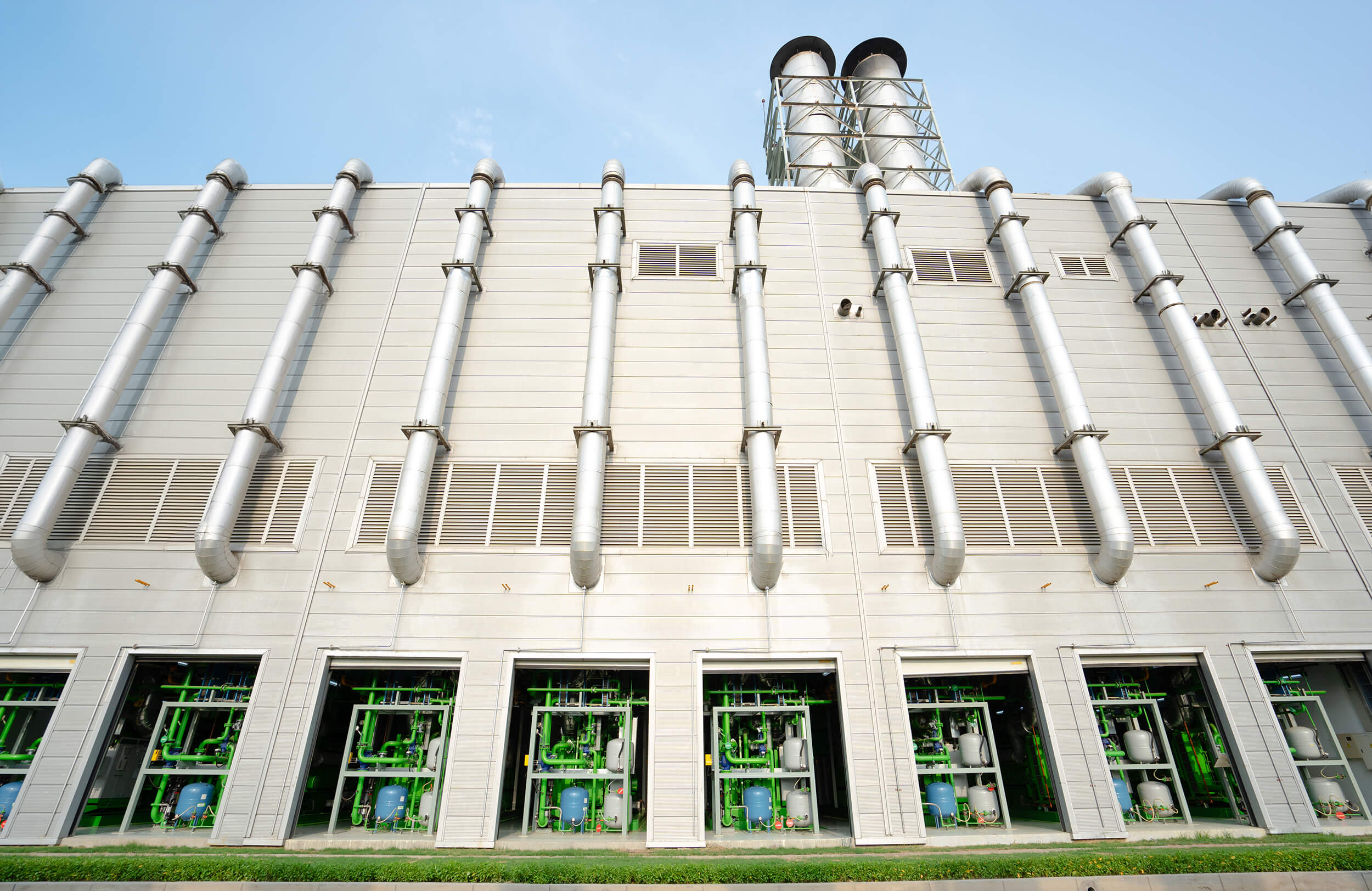
Walkthrough
Explore a Clarke Energy installed combined heat and power plant with this 360-degree walk-through of the site:
Discover More About CHP
Integration with Other Technologies
System Efficiency
Modular & Scalable Design
CO₂ Recovery & Quadgeneration
Integration with Other Technologies
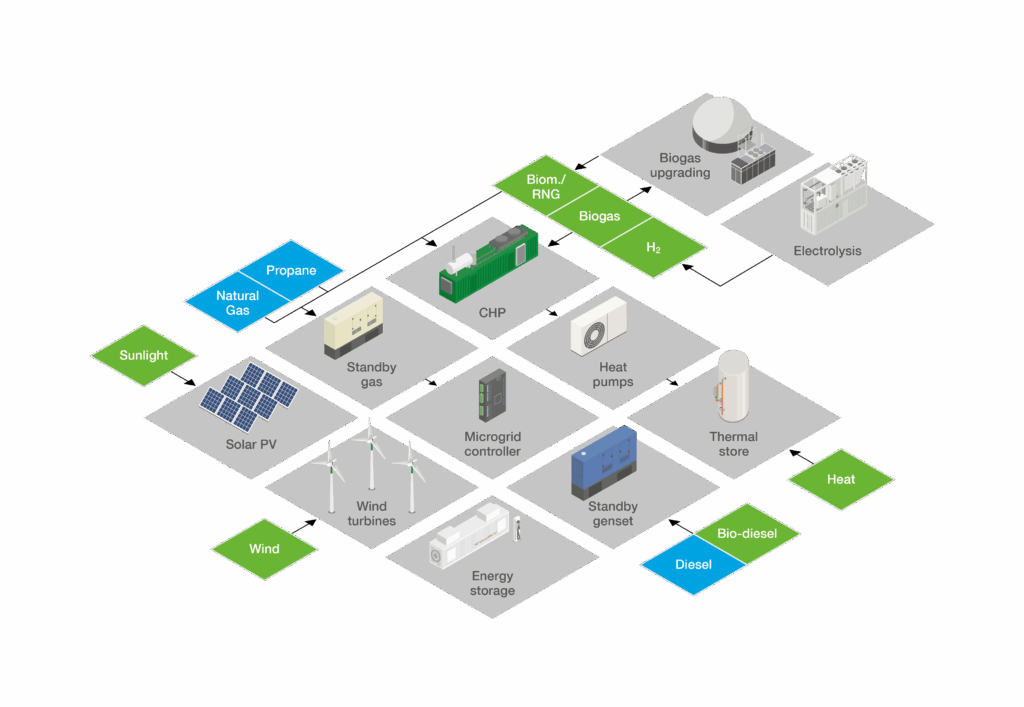
CHP systems can be readily integrated with solar PV, wind, and energy storage technologies as part of a microgrid typically with a microgrid controller. This helps store electricity increase renewable energy penetration. CHP systems can be readily integrated with other thermal systems including heat pumps and air conditioning.
System Efficiency
CHP units routinely achieve overall efficiencies exceeding 80%, compared to around 50% for conventional power-only generation, and lacks transmission losses associated with moving electricity from a centralised power plant. Captured heat can be used for space heating, domestic hot water, process steam, or absorption chilling (trigeneration).
Modular & Scalable Design
Gas engine CHP solutions range from small-scale (35 kW) to large installations exceeding 10 MW. Multiple modules can be installed in parallel for higher capacities and system resilience.
CO₂ Recovery & Quadgeneration
CHP systems can include carbon dioxide recovery for use in industrial processes or horticulture. This enables ‘quadgeneration’: power, heat, cooling, and CO₂—maximising resource efficiency.
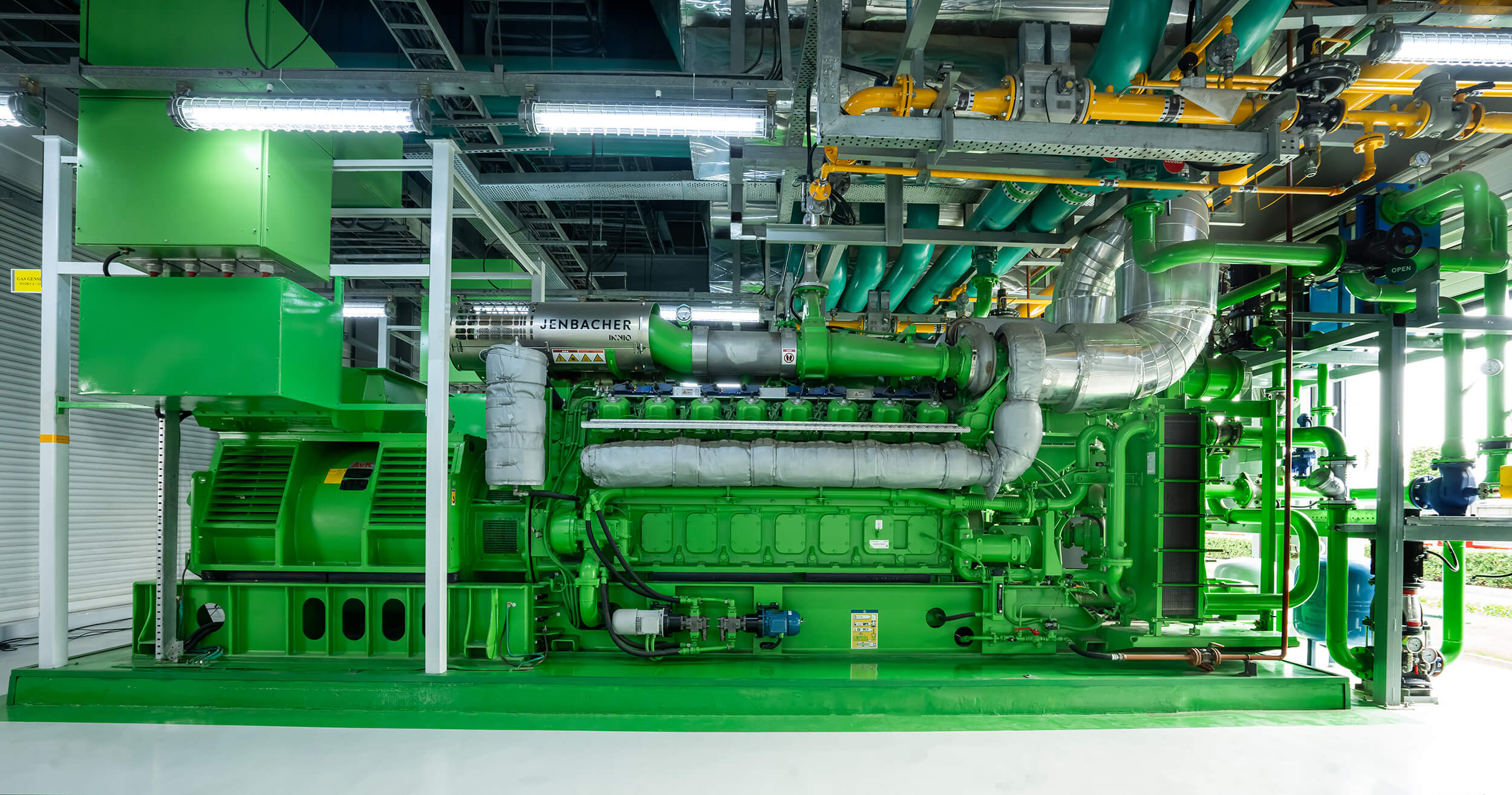
Gas Engine Heat Recovery in CHP Systems
In a gas engine CHP system, significant heat recovery can be achieved from five main sources. Understanding these is critical for facilities engineers aiming to improve industrial energy efficiency:
1. Engine jacket cooling water
2. Lubrication oil cooler
3. First-stage air intake intercooler
4. Exhaust gases
5. Radiated heat from the generator and second-stage intercooler
Recoverable heat is provided in the form of hot water, typically at 70/90˚C flow and return, and can be interfaced with the manufacturing facility via a plate heat exchanger.
The engine exhaust gases, exiting at 400–500˚C, offer high-grade heat suitable for steam generation in a waste heat boiler, direct drying processes, or can be combined with other sources in a heat exchanger system.
The second-stage intercooler also provides low-grade heat, which may be used for pre-heating, space heating, or other ancillary thermal processes.
Applications
Agriculture

Manufacturing

Food and Drink

Wastewater
Data Centres

District Energy

Hospitals

Universities

Pharmaceuticals

Greenhouses
Latest CHP News

Clarke Energy Supports Groundbreaking of Soufflet Malt’s New Malting Facility in Gauteng
Clarke Energy joined the groundbreaking of Soufflet Malt’s new Midvaal malting facility, where the company will design and construct a high‑efficiency energy centre featuring Jenbacher gas CHP units, boilers, and hot water storage.
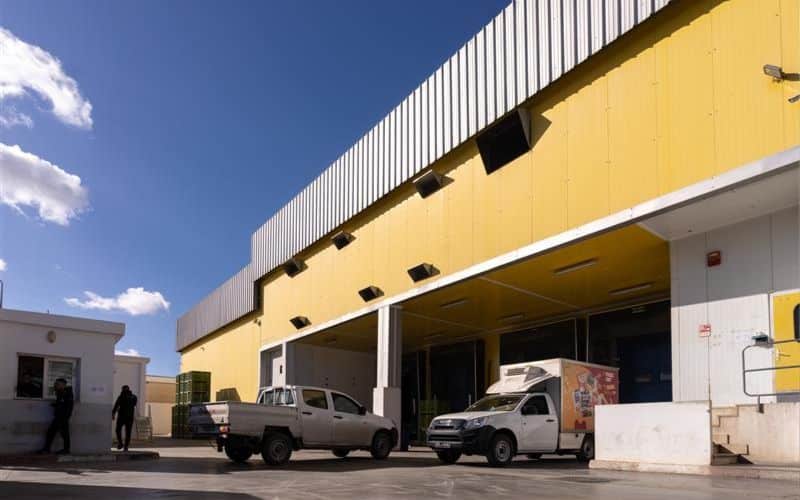
Clarke Energy Tunisia Commissions New Cogeneration System for Tunifries
Clarke Energy Tunisia has commissioned a new high-efficiency cogeneration system at Tunifries, supporting energy efficiency, operational resilience and reduced emissions within Tunisia’s agri-food sector.
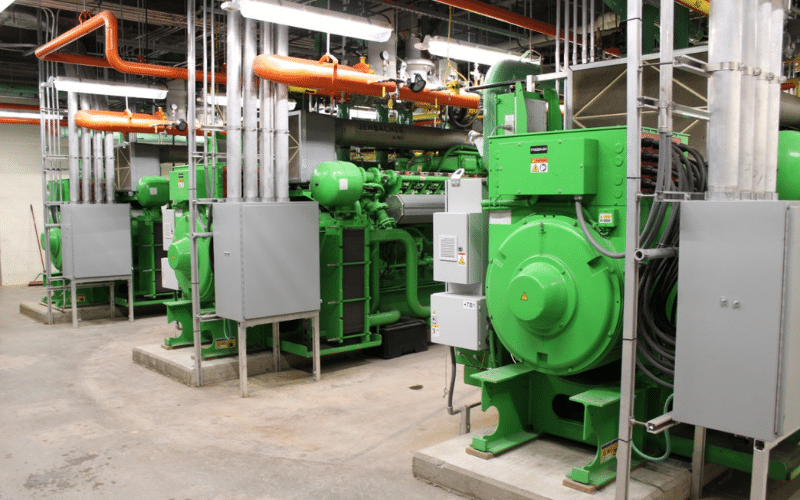
Resource Renew Powering Wastewater Facility with 100% Biogas Utilization
Resource Renew Powering Wastewater Facility with 100% Biogas Utilization
Frequently Asked Questions about CHP
Technical and Engineering
What is the typical efficiency of a combined heat and power (CHP) system?
CHP systems can achieve total efficiencies of 75–90% by capturing and reusing heat that would otherwise be wasted.
Can a CHP system meet the specific energy demands of my site?
Yes – systems are sized based on your site's baseload electrical and thermal demand to ensure optimal efficiency.
What types of thermal energy outputs can a CHP system deliver?
CHP can provide hot water, steam, or even chilled water when integrated with absorption chillers.
Can a CHP system integrate with my existing boilers or heating infrastructure?
Yes – CHP can work alongside existing infrastructure, often supplementing or reducing the load on boilers.
Will a CHP system continue to operate during a grid power outage?
With island mode or black-start capability, CHP can provide power during outages, supporting energy resilience.
What are the routine and long-term maintenance requirements of a CHP system?
Routine maintenance is typically required every 3,000–4,000 operating hours. Major overhauls occur at 60,000 operating hours. Clarke Energy offers full-service contracts.
What types of fuel can a CHP system use, including renewable or alternative options?
Systems can run on natural gas, biogas, hydrogen blends, renewable fuels or associated gases such as landfill or coal seam gas.
How are emissions controlled in a CHP system to meet environmental standards?
Yes – systems include emission controls such as catalytic converters to meet local environmental standards.
Financial and Commercial
What is the typical payback period for a CHP installation?
Typically 3–6 years, depending on energy prices, usage patterns, and available incentives.
What are the main operating costs associated with a CHP system?
Operating costs typically include spare parts, consumables, labour and oil. They will vary depending upon duration, running hours and fuel type. Speak to your local Clarke Energy office to provide a tailored quotation.
Can a CHP system help reduce electricity and utility bills over time?
Yes – CHP reduces grid electricity use and demand charges, offering long-term savings.
Are there government incentives or tax benefits available for CHP projects?
Many regions offer incentives, such as capital grants or enhanced depreciation. We can help identify these.
How does fuel price volatility impact the economics of a CHP system?
CHP improves energy cost stability, especially if you have long-term fuel supply contracts.
What financing or procurement options are available for investing in CHP?
Yes – options include CapEx purchase, lease, or energy services agreements (ESAs) with no upfront cost.
Environmental and Sustainability
How much carbon dioxide (CO₂) can be saved by using a CHP system?
Natural gas-fuelled CHP can reduce CO₂ emissions by up to 30% compared to conventional generation and boilers. When using a renewable fuel, emissions can be near completely negated.
Can a CHP system contribute to achieving corporate net-zero carbon goals?
Yes – especially when paired with renewable fuels, carbon capture solutions or integrated into a microgrid.
Is a CHP system compatible with hydrogen or other renewable fuels?
Modern CHP systems, such as Jenbacher engines, are 'Ready for H₂'* and biogas compatible.
Does CHP support environmental, social, and governance (ESG) targets or green building certifications?
Yes – CHP contributes to LEED, BREEAM, and other certification frameworks.
Operational and Implementation
What is the typical installation timeline for a CHP project from design to commissioning?
From design to commissioning, projects typically take 6–12 months, depending on complexity.
Will installing a CHP system disrupt ongoing site operations or production?
Minimal disruption – installation is planned to avoid interference with core operations.
Who is responsible for monitoring and operating the CHP system once it is installed?
Systems are fully monitored via cloud-based platforms such as the myplant system. We offer remote support and on-site service.
Is operator training required to run a CHP system effectively, or is support available?
Training can be provided, but full-service packages eliminate the need for in-house expertise and significantly reduce customer exposure to risk.
What types of warranties, service agreements, or long-term support are provided with a CHP installation?
Clarke Energy often provides availability guarantees with comprehensive service agreements for peace of mind. Speak to us to explore the specifics of your project.
Ready to take the next step with installing a Combined Heat and Power Plant?
Clarke Energy’s regional experts can provide the insight and support you need to evaluate options and achieve the right energy solution for your business.