


Cooling Decarbonisation
Low-carbon cooling by converting CHP waste heat into chilled water—reducing emissions, improving efficiency, and increasing energy resilience.

Overview
Cooling is one of the fastest-growing energy demands worldwide—particularly in data centres, healthcare facilities, district cooling networks, and industrial sites. Traditionally powered by electric chillers, cooling can be highly carbon-intensive and expensive, especially when grid power is fossil-fuel dominated.
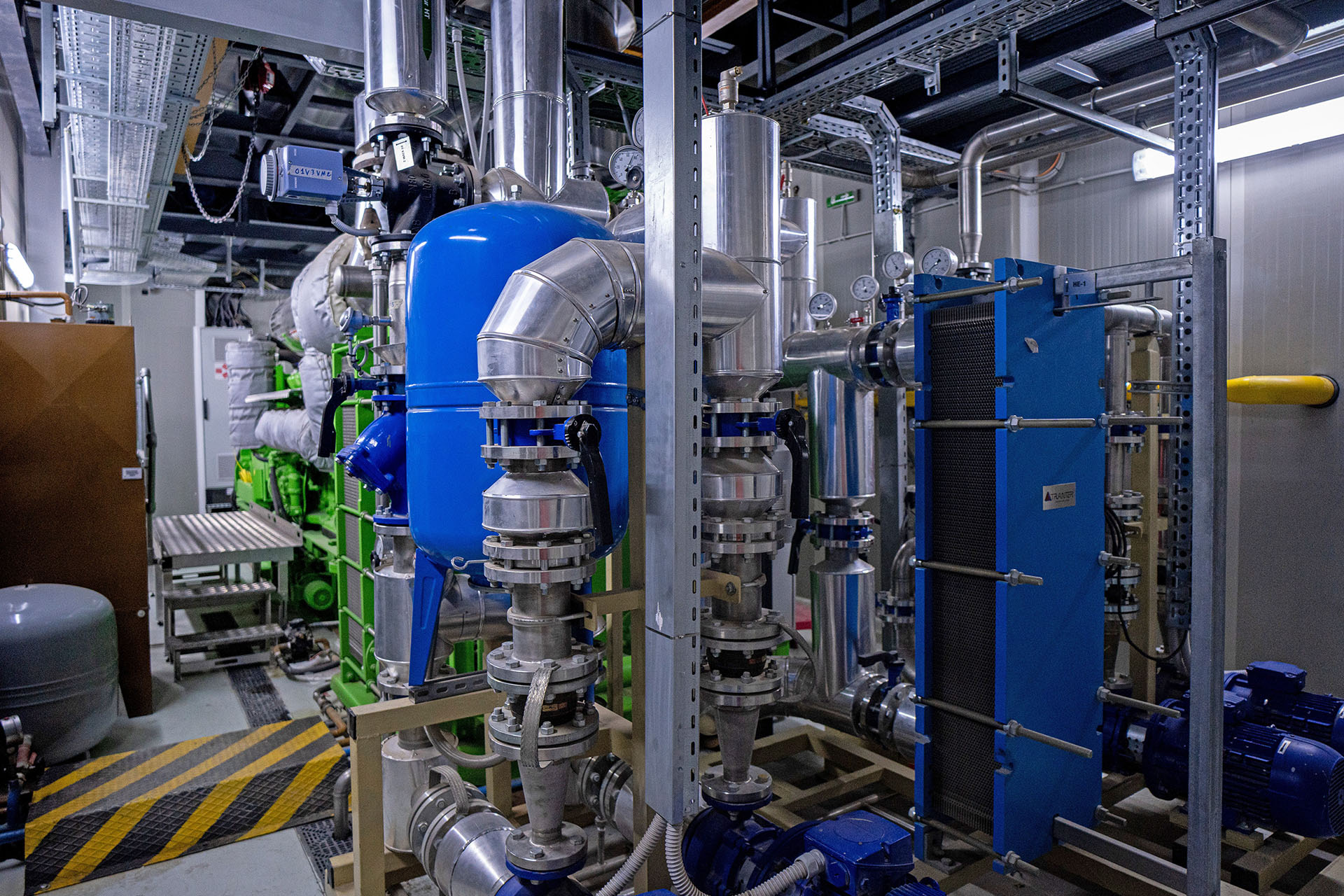
Clarke Energy’s trigeneration systems (also known as Combined Cooling, Heat and Power – CCHP) use waste heat from CHP gas engines to drive absorption chillers. This creates chilled water for air conditioning or process cooling without the need for additional electricity from the grid.
The result:
• Lower emissions by reducing reliance on grid-powered cooling
• Lower operating costs through higher overall system efficiency
• Improved resilience with on-site generation and cooling capacity
How Trigeneration Works
A trigeneration system simultaneously produces:
• Electricity – for onsite use or export to the grid
• Heat – for space heating, hot water, or process loads
• Cooling – by converting engine waste heat into chilled water via absorption chillers
Because the system captures and reuses heat that would otherwise be wasted, it can achieve total system efficiencies exceeding 80%.

Alignment with the UN Sustainable Development Goals (SDGs)
Clarke Energy’s renewable gas production projects contribute to:
• SDG 7 – Affordable and Clean Energy: Expanding access to clean, renewable fuels
• SDG 9 – Industry, Innovation and Infrastructure: Building sustainable fuel production infrastructure
• SDG 12 – Responsible Consumption and Production: Using waste and renewable resources efficiently
• SDG 13 – Climate Action: Reducing emissions in energy, heat, and transport sectors
Cleaner Fuels and Hybrid Integration
Impact on Data Centre PUE
Clarke Energy and the Global Cooling Pledge
Cleaner Fuels and Hybrid Integration
Clarke Energy trigeneration systems can operate on:
• Natural gas
• Renewable biogas or biomethane
• Hydrogen blends
They can also be integrated with solar PV and battery energy storage (BESS) to create hybrid energy-cooling systems—further reducing emissions and enabling participation in demand response or grid support services.
Impact on Data Centre PUE
For data centres, trigeneration can significantly improve Power Usage Effectiveness (PUE) by replacing electrically driven chillers with waste-heat-powered absorption chillers. This reduces electrical cooling load, freeing capacity for IT equipment and lowering both operational costs and carbon footprint.
Clarke Energy and the Global Cooling Pledge
At COP28 (December 2023), the United Nations Global Cooling Pledge committed over 60 countries to:
• Reduce global cooling-related greenhouse gas emissions by at least 68% by 2050
• Improve the efficiency of new air conditioning systems by 50% by 2030
Clarke Energy’s CCHP solutions directly support these goals by:
• Increasing cooling efficiency through waste heat recovery
• Reducing reliance on grid-powered chillers
• Enabling low-carbon and renewable-fuel operation
At a Glance
| Feature | Benefit |
|---|---|
| CHP + Absorption Chiller | Replaces grid-powered cooling, improving efficiency |
| Renewable Gas Compatible | Cuts emissions and supports net-zero goals |
| District Cooling Integration | Scalable for urban and campus-wide applications |
| Hybrid-Ready | Integrates with solar PV and BESS |
| Data Centre Optimised | Enhances resilience and reduces PUE |
Frequently Asked Questions about Cooling Decarbonisation
What is cooling decarbonisation?
The reduction of emissions from cooling systems using low-carbon or waste heat technologies.
What is trigeneration?
A system that produces electricity, heating, and cooling from a single fuel source.
How does Clarke Energy provide sustainable cooling?
Using absorption chillers that convert CHP waste heat into chilled water.
Where is trigeneration most effective?
In buildings or facilities with year-round heating and cooling needs, such as data centres.
Can trigeneration systems use renewable fuels?
Yes, they are compatible with biogas, biomethane, and hydrogen blends.
Power Your Sustainability Journey With Cooling Decarbonisation
Discuss with our team how low-carbon cooling technologies can reduce emissions and enhance ESG performance.