
Last month in the Powering Resilience newsletter series we covered speed to power: how quickly electricity can reach a site, and what operators are prepared to accept in order to get it sooner. There is a second question sitting directly behind that one, and it is the question we now hear most often once a connection date is finally in hand. When the power does arrive, will it behave the way the facility actually needs it to?
For most of the past century that question answered itself. Getting connected was the hard part. Once a plant, a hospital or a data center was on the network, the grid was treated as the dependable foundation everything else was designed around. That assumption is quietly coming apart, and not for the reason most people expect.
The grid is not getting worse, it is getting busier
Electricity networks are expanding, modernizing and decarbonizing faster than at any point in living memory. More renewable generation is connecting, electrification is lifting demand across transport and heat, and an entirely new category of very large consumer, the AI data center, is arriving on systems that were never planned around it.
None of that is a failure. It is progress, and mostly good progress. But it is changing what reliability means in practice, because utilities are now balancing rapid demand growth, high shares of variable generation, thousands of distributed assets, aging infrastructure in many regions and constant pressure on cost, all at once. The old picture of electricity flowing one way from a handful of large stations out to passive consumers no longer describes the system anyone is operating.
A more dynamic system is a more capable one. It is also a system with far more variables to manage, and that eventually shows up at the meter.
Connection and reliability are not the same thing
Critical facilities design around availability figures that leave very little room. Data centers commonly target five nines, 99.99% uptime. Semiconductor fabs, pharmaceutical production and continuous process industries can lose a full batch or a full shift to an event measured in milliseconds.
Those requirements are about more than avoiding blackouts. Voltage stability, frequency stability, harmonic distortion and how quickly the system recovers after a disturbance all matter, and a site can remain perfectly connected while still seeing fluctuations, momentary interruptions and constraints that sensitive equipment registers even when the lights never go out. For AI campuses the exposure is sharper again, because a training run interrupted at hour forty is not a brief inconvenience, it is compute time that has to be bought twice.
So the useful question has shifted. It is less about whether electricity will be available, and more about whether it will be predictable.
Three pressures reshaping what the grid can promise
The first is congestion. In many regions there is no shortage of generating capacity at all, the difficulty is moving electricity to where it is needed. Renewable projects connect faster than transmission can be permitted, planned and built, so power can be abundant in one location and tightly constrained a hundred miles away. For developers that translates into longer connection times, import capacity limits, curtailment risk and genuine uncertainty about whether a site can expand later without starting the queue again.
The second is weather. It has always driven demand, and it is now shaping system resilience too. Heat waves reduce transmission efficiency at exactly the moment cooling load peaks. Extended low wind periods and reduced hydro availability tighten generation margins. Storms, flooding and wildfires affect network infrastructure in even the most developed electricity systems. These events rarely produce headline blackouts. What they produce is reduced operational flexibility: deferred maintenance, temporary operating restrictions, local constraints managed in ways that raise uncertainty for large users.
The third is less visible and, for sensitive processes, the most consequential. The system was historically underpinned by large rotating machines in gas, coal, nuclear and hydro stations, whose spinning mass naturally stabilized frequency through a disturbance. As inverter based resources take a larger share of the mix, that stability increasingly has to be delivered through sophisticated control rather than physics. Grids are managing this competently. But the system responds differently under stress than it used to, and for a sensitive load that can appear as a voltage disturbance or a short duration power quality event that never registers as an outage anywhere in the utility’s statistics, and still stops production on site.
Resilience is being designed onsite
Utilities are obliged to optimize the performance of the whole electricity system. An operator has to optimize the performance of one facility. Those objectives overlap most of the time, but they are not identical, and wherever they diverge it is the operator who carries the consequence.
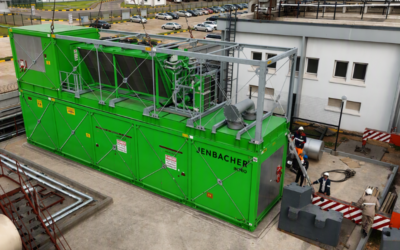
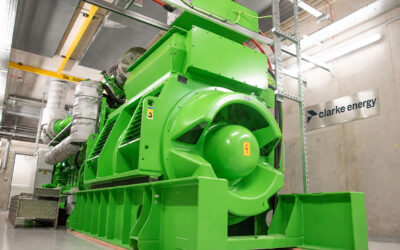
That is why more organizations are taking direct control of their own resilience, combining dispatchable gas engine generation, battery energy storage, onsite renewables and microgrid controls that coordinate the whole arrangement alongside the network. The aim is not to leave the grid. For everyday operation the grid remains the most efficient and usually the cheapest source of supply, and it should be.
The aim is to stop treating it as the only layer of protection, and to build resilience in layers instead: grid supply for normal running, dispatchable onsite generation for assured capacity, storage for flexibility and power quality, and intelligent control to make the layers behave as one system rather than four separate assets.
“The grid is not becoming less reliable. It is becoming less predictable, and those are two different problems with two different solutions. Predictability is something a site can design for. That is the real change: reliability is moving from something operators receive to something they engineer.”
– Alex Marshall, Group Business Development and Marketing Director, Clarke Energy
Where the Structured Transition Model fits
This is the point in the series where the Structured Transition Model earns its place, because layered resilience is only useful if the layers are sequenced deliberately rather than assembled in a hurry.
The model treats the energy transition as a sequence of stages rather than a single decision. Each stage has to do real work in the present, delivering the capacity, availability and power quality the facility needs today, while preserving the ability to change what comes next. That means every asset is assessed twice: once on what it delivers now, and once on what it forecloses later. A gas engine plant sized purely for today’s load and today’s fuel is a different decision from the same plant specified with future fuel pathways, additional storage and expansion headroom in mind, even where the two look identical on day one.
The reason this matters for reliability specifically is that resilience decisions are usually made under time pressure, and time pressure produces lock-in. A structured sequence is what stops a short term response to a connection delay from becoming a twenty year constraint on the site.
The questions that are actually being asked now
When evaluating a new development or an expansion, decision makers used to want one thing confirmed: is a grid connection available. That question is now the beginning of the conversation rather than the end of it.
The sharper questions are about how resilient the local network really is, whether transmission constraints will limit future expansion, how exposed the site is to weather driven disruption, what standard of power quality the operation genuinely requires, and how onsite systems can improve certainty while still supporting decarbonization commitments. Those are harder questions, and they are being asked far earlier in the development process than they were even two years ago.
The grid is not failing. In most respects it is more capable than it has ever been. But it is being asked to do things no previous generation of electricity system was designed to do, and the definition of reliability is moving with it. Availability is no longer the measure. Certainty is: certainty that power will arrive with the quality, stability and resilience a critical operation needs, across a much wider range of conditions than anyone used to plan for.
Which means the question is no longer whether the grid reaches your facility. It is whether your facility can keep operating with confidence when the grid does what a rapidly changing system inevitably does.
Next month we will look at the layer underneath all of this: what the onsite generation actually runs on, and fuel strategy.
Want to learn more?
If you’d like to learn more about flexible onsite power solutions for data centers, contact Clarke Energy for more information.
Questions and Answers
Speed to power is how fast usable, reliable electrical capacity can be delivered and brought into service for a load. It is a timeline, not a quantity. As grid connection stretches from months into years, the operators who can energize sooner capture demand, and the ones still in the queue watch it go elsewhere. That makes deployment speed a competitive advantage, not just an engineering detail.
AI workloads create step-changes in demand that arrive far faster than the grid can respond. A single facility may need several hundred megawatts within a year, while grid connection, permitting, and transmission upgrades still run on multi-year timelines. When the workload will not wait, how fast power can be delivered often determines whether a project is built on schedule, or at all.
Grid connection delays increasingly outlast the interim solutions meant to bridge them. Systems once brought in for a matter of months are now specified to run for years, deliver reliable baseload, and integrate with permanent assets. In practice they are no longer temporary, so they need to be designed as part of the long-term plan from the start.
Modular generation uses scalable, containerized engine-based units deployed in phases rather than as one large centralized build. It delivers speed, because units commission in months; flexibility, because capacity is added as demand appears; and resilience, because a distributed fleet carries fewer single points of failure. That combination fits the high-density, fast-scaling, mission-critical nature of AI load.
What is modular power generation, and why does it suit data centers?
Pre-engineered, containerized modular systems can be deployed and commissioned in months rather than the years a large grid-connected build can take, and modern gas engines can reach full output in minutes once running. Actual timelines depend on site preparation, fuel supply, and logistics, but the gap versus waiting for the grid is usually measured in years.
The Structured Transition Model, authored by Alex Marshall and published by Rehlko, plans energy infrastructure as a sequence of staged decisions rather than a single one. It matches the asset to the stage, keeps future options open, and avoids locking in today’s constraints as tomorrow’s liability. It is the framework behind treating power as a strategic decision rather than a one-time procurement choice.