

Oil and Gas
Reliable, efficient, and low-emission power solutions for upstream and midstream oil and gas operations.
About the Oil and Gas Industry
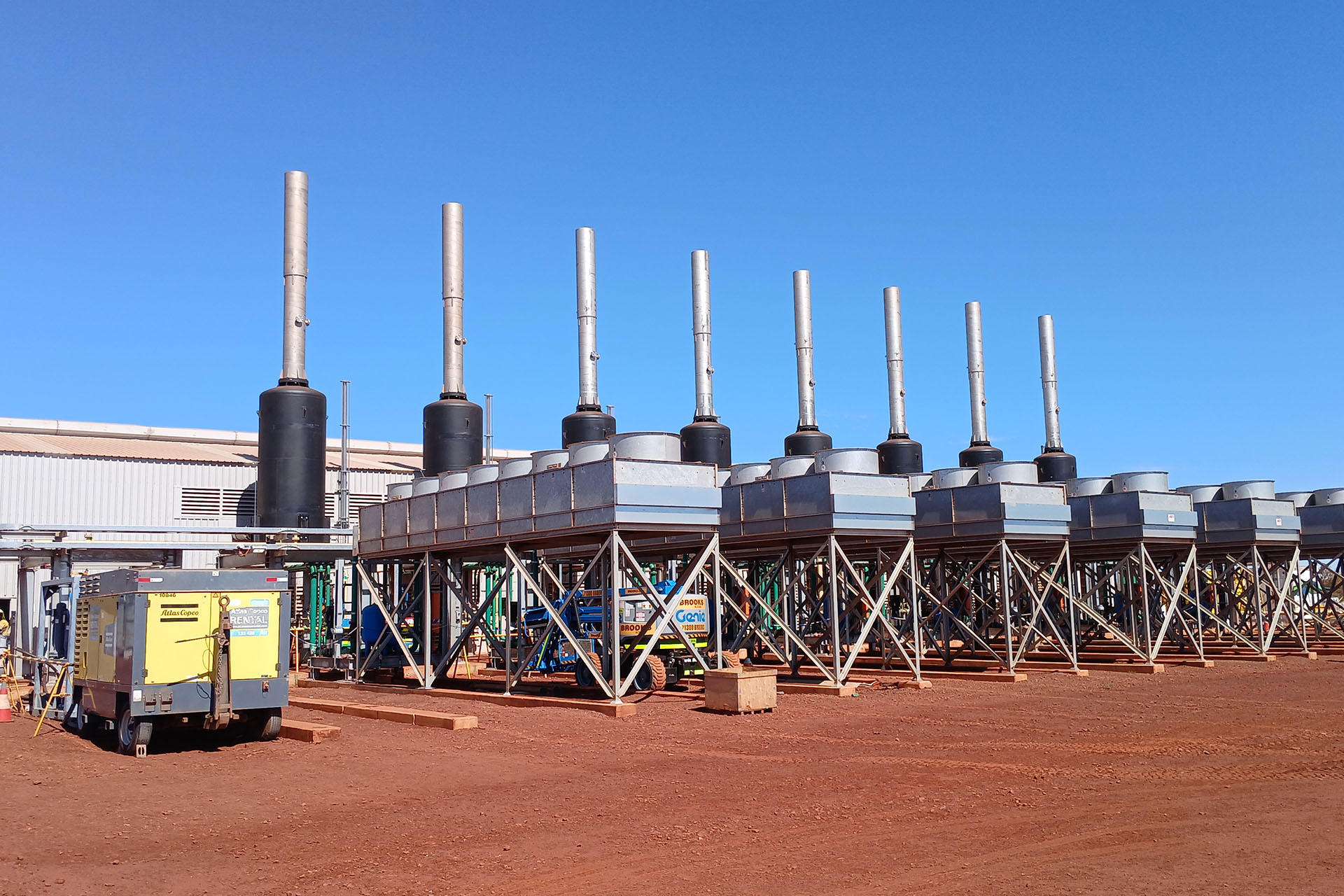
The oil and gas industry operates in some of the world’s most challenging environments, where reliable and efficient energy supply is essential for continuous production. Remote wellheads, processing plants, and compression stations often lack access to stable grid power, requiring dependable onsite generation.
Gas engine power plants offer a robust solution by converting available gases—such as natural gas, associated petroleum gas (APG) also called “flare gas”, or coal seam gas (CSG)—into clean, reliable electricity and heat. These systems help operators improve energy efficiency, lower emissions, and reduce dependence on diesel fuel.
By capturing and using flare or waste gas for power generation, oil and gas producers can transform emissions liabilities into productive energy assets. This supports operational resilience, cost savings, and compliance with environmental and ESG commitments.
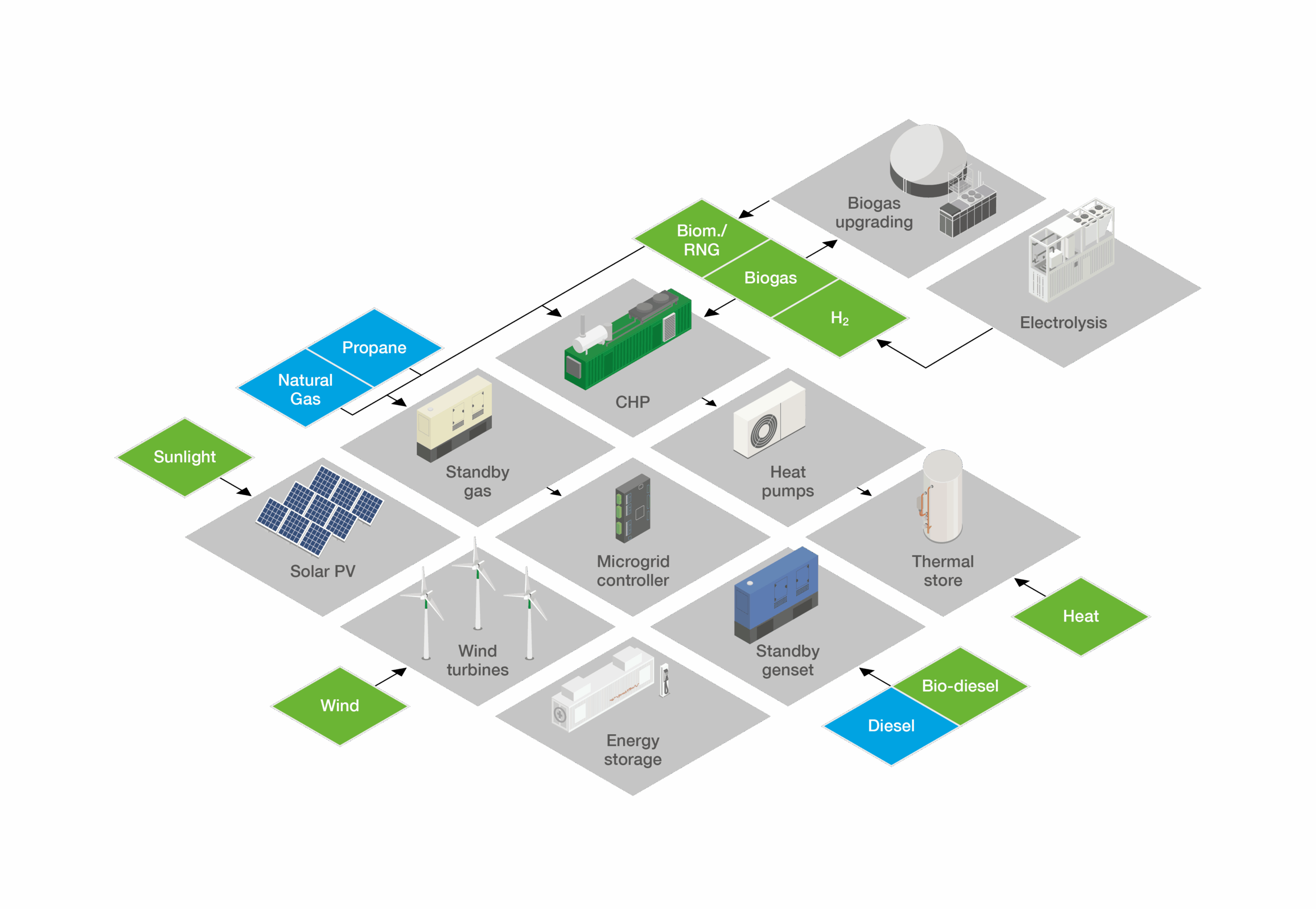
Gas engines can form the cornerstone of microgrids adding solar, battery energy storage systems or other technologies to improve the environmental performance and resilience of oil and gas power generation installations.
Benefits of Gas Engine Power for Oil and Gas
• Energy Resilience: Provides continuous onsite power for off-grid and remote facilities.
• Flare Gas Recovery: Converts waste or stranded gas into electricity, avoiding methane emissions.
• Cost Efficiency: Reduces diesel consumption and fuel transport costs.
• Emission Reduction: Cuts CO₂ and methane emissions through efficient combustion.
• Fuel Flexibility: Operates on natural gas, APG, CSG, or hydrogen blends.
• High Efficiency: CHP and heat recovery options achieve total efficiencies above 80%.
• Fast Deployment: Modular and skid-mounted systems minimise site installation time.
Energy Resilience
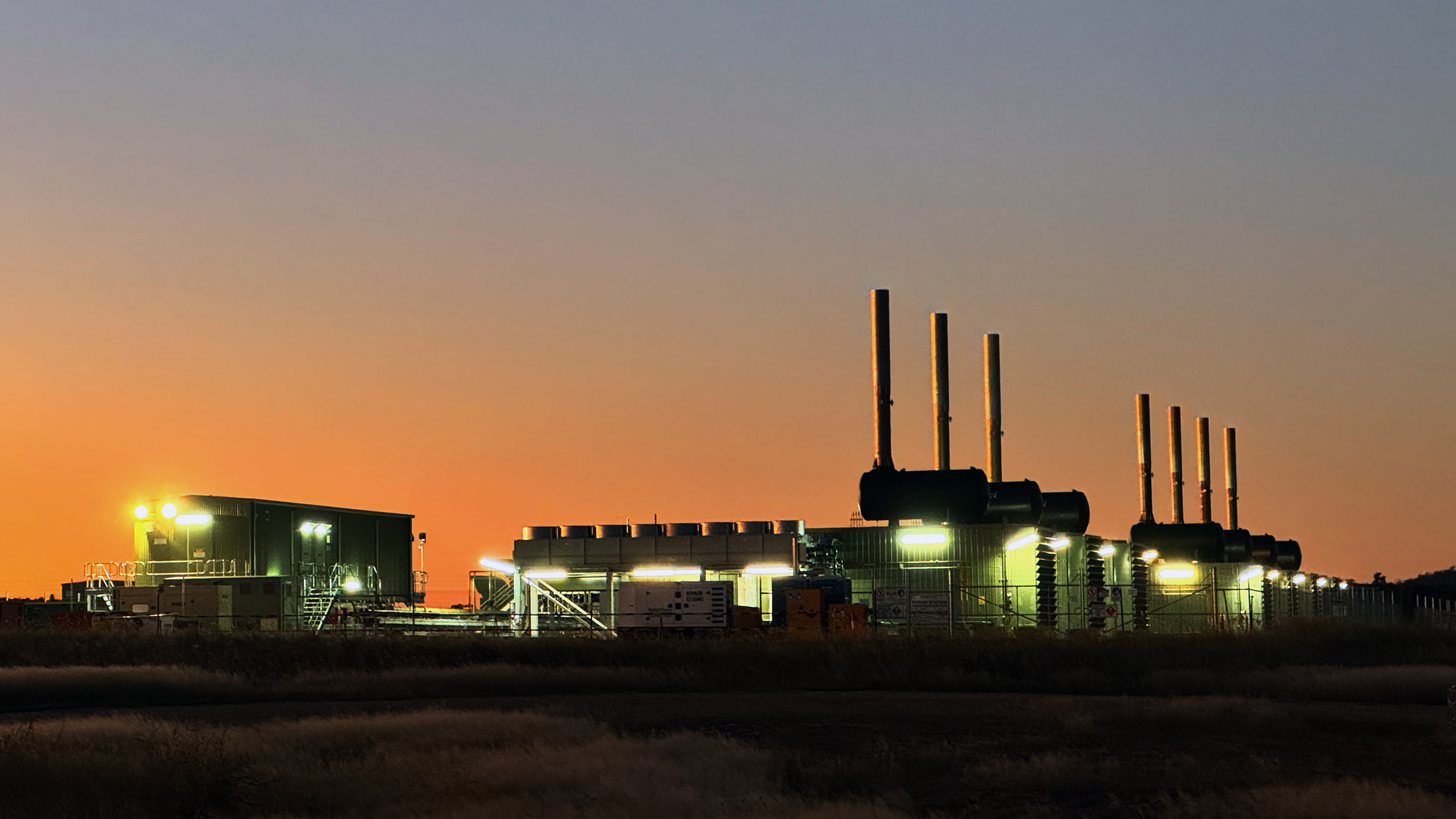
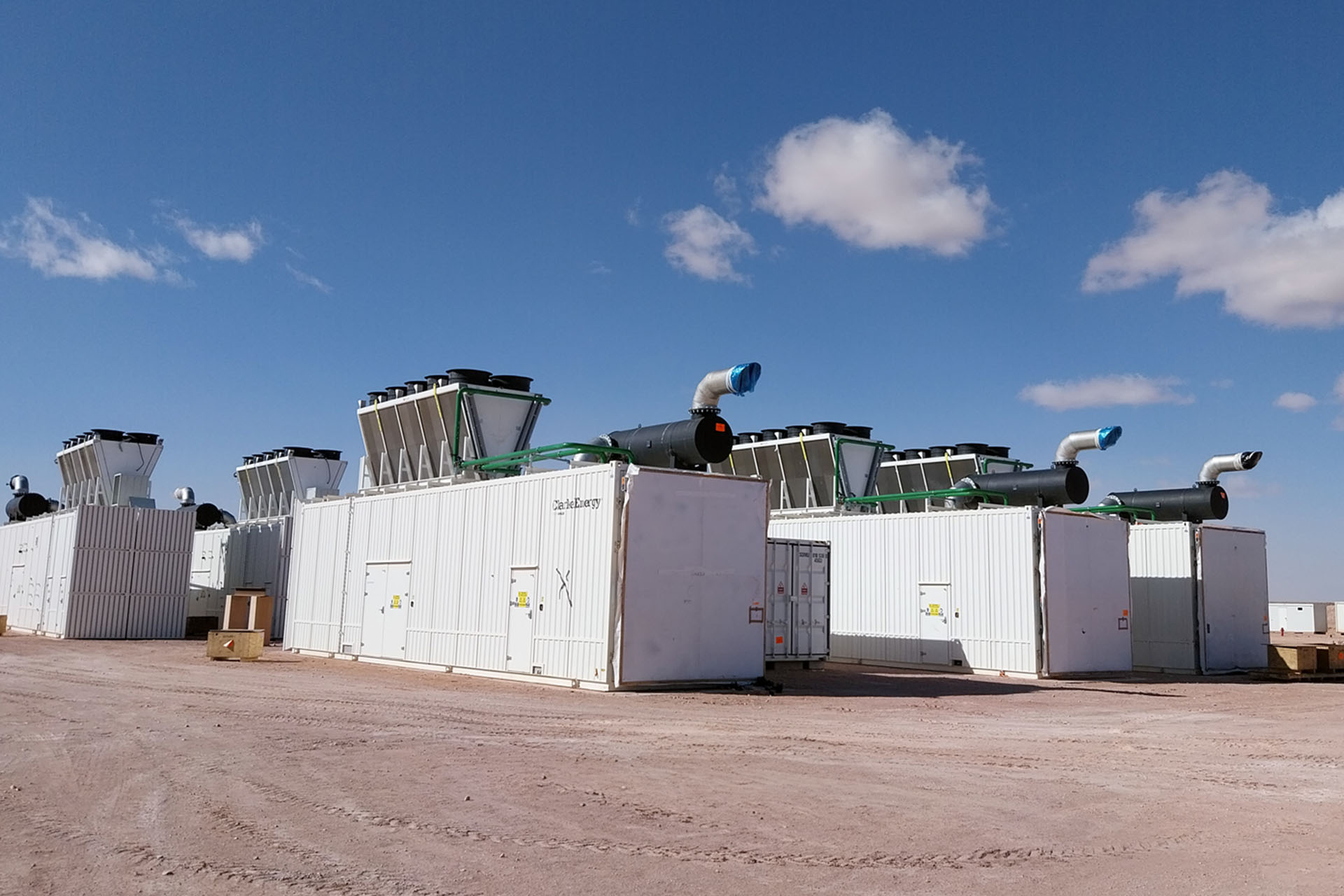
Reliable power is critical for oil and gas operations, where production downtime can result in significant economic loss. Gas engine-based power systems deliver stable, dispatchable energy even in remote or isolated regions. Capable of operating in island mode, these systems maintain uninterrupted power for critical loads such as pumps, compressors, and control systems.
Discover More
Flare and Associated Gas Utilisation
Off-Grid and Island Mode Power
Fuel Flexibility and Modular Design
Heat Recovery and CHP Integration
Flare and Associated Gas Utilisation
Gas engines provide an effective method for converting waste gases—including APG and flare gas—into useful electricity and heat. This process eliminates flaring, reduces methane emissions, and transforms by-products into valuable onsite energy. Using stranded or waste gas as a fuel source reduces the need for diesel, improves environmental performance, and supports operators in meeting global methane-reduction initiatives.
Off-Grid and Island Mode Power
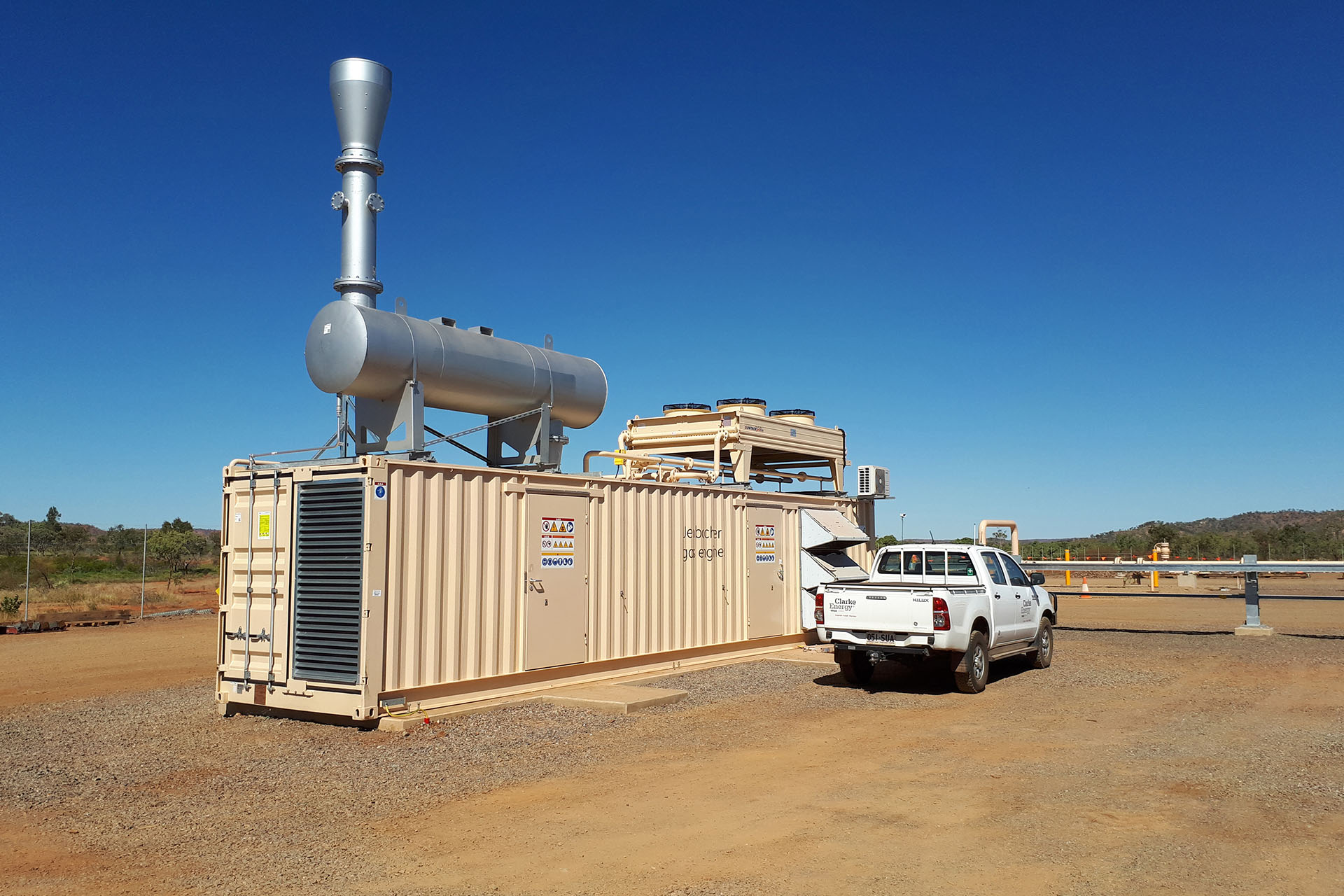
For remote sites without reliable grid access, gas engine systems operate independently in island mode, ensuring continuous power supply for drilling, extraction, and processing facilities. These units can be configured for automatic load control and parallel operation to match varying site demands. Modular and containerised designs enable fast mobilisation, making them ideal for temporary or rapidly deployed power solutions in remote field locations.
Fuel Flexibility and Modular Design
INNIO Jenbacher gas engines are designed to operate on a wide range of fuels including natural gas, APG, CSG, and hydrogen blends, making them suitable for upstream and midstream applications. Systems are available in modular or skid-mounted configurations for fast deployment and ease of transport. Their flexibility allows operators to expand or relocate capacity as production demands evolve, ensuring sustained energy security and long-term reliability.
Heat Recovery and CHP Integration
Where heat demand exists, gas engine systems can be configured for Combined Heat and Power (CHP), recovering waste heat from the engine’s exhaust and cooling circuits. This energy can be used for water or glycol heating, process steam, or absorption cooling, improving overall site efficiency. CHP reduces total fuel use and emissions, making it a cost-effective way to decarbonise energy-intensive operations.
Microgrids
Microgrids anchored in gas engine technology can play a pivotal role in supporting the oil and gas sector by delivering resilient, on-site power that ensures operational continuity in remote and energy-intensive environments. Gas engines provide a reliable and flexible generation source capable of running on natural gas or associated gas, turning what would otherwise be flared or wasted into valuable energy. This approach not only reduces emissions but also enhances energy efficiency by enabling combined heat and power (CHP) for process heating and facility needs. Furthermore, gas-engine-based microgrids can integrate with renewables and battery storage, creating hybrid systems that optimize fuel use, lower costs, and improve sustainability—critical for oil and gas operators seeking to decarbonize while maintaining high reliability in harsh conditions.
Why Clarke Energy for Oil and Gas Projects
Clarke Energy delivers complete, proven gas engine solutions for oil and gas applications. From flare gas recovery to off-grid generation, our systems provide dependable power for upstream and midstream infrastructure while reducing emissions and operational costs.
Our key advantages include:
• Proven experience – decades of successful projects in remote and challenging environments.
• Full turnkey capability – EPC delivery with design, installation, and lifecycle maintenance.
• Fuel flexibility – compatible with natural gas, APG, CSG, and hydrogen blends.
• Emissions reduction – supports flare gas capture and methane abatement.
• Island mode operation – ensures autonomous power supply in off-grid locations.
• CHP options – enables heat recovery to enhance efficiency and reduce fuel demand.
Frequently Asked Questions about Oil and Gas Power Systems
Technical and Engineering
What gases can be used as fuel in gas engine systems?
Engines can operate on natural gas, associated petroleum gas (APG), coal seam gas (CSG), and hydrogen blends.
Can systems operate independently of the grid?
Yes. Gas engines can run in island mode to power remote wellheads, rigs, and processing facilities.
How can waste heat be recovered?
Recovered heat can be used for process water, steam, or absorption cooling through CHP or trigeneration systems.
Are modular or containerised options available?
Yes. Clarke Energy supplies modular and skid-mounted plants for rapid installation and scalability.
Financial and Commercial
Can flare gas be used to reduce fuel costs?
Yes. Flare and stranded gases can be converted into electricity, reducing reliance on diesel and lowering energy costs.
What incentives exist for flare gas recovery projects?
Many regions offer emissions credits or grants for projects that reduce methane flaring and promote gas utilisation.
How do gas engine systems improve project economics?
By using site-produced fuel, operators reduce transport costs and improve energy independence.
What is the typical payback period?
Payback generally ranges between three and seven years, depending on site conditions and gas availability.
Environmental and Sustainability
How do gas engines support methane reduction goals?
They convert flare and waste gases into useful energy, reducing methane emissions and supporting decarbonisation.
Can waste gases be reused for power?
Yes. Associated or flare gases can be safely cleaned and used as fuel in gas engines.
How does this technology align with ESG commitments?
By reducing flaring, cutting emissions, and improving efficiency, gas engine power systems directly support ESG and sustainability frameworks.
Can engines use hydrogen as a future fuel?
Yes. INNIO Jenbacher engines are hydrogen-ready and capable of running on blended or pure hydrogen.
Operational and Implementation
What types of oil and gas sites typically use these systems?
Gas engines are used at production wells, gathering stations, and processing plants.
How quickly can systems be deployed?
Modular and containerised solutions can be installed and operational within a few months.
Can Clarke Energy provide ongoing maintenance?
Yes. We offer full lifecycle support, including remote monitoring and predictive maintenance.
What is the expected lifespan of gas engine systems?
Typically 15–20 years with regular servicing and manufacturer-supported maintenance.
Looking for a Reliable, Efficient, and Low-Carbon Energy Solution?
Our experts can provide the insight and support you need to evaluate options and achieve the right energy solution for your business.