

Government Buildings
Reliable, efficient, and low-carbon energy for public sector facilities.

About Government Facilities
Government buildings and public sector facilities, such as offices, administrative centres, civic halls, and emergency service complexes, demand dependable power, heating, and cooling to operate effectively. Many of these facilities run long hours or even 24/7, supporting essential services that require high standards of comfort, safety, and operational reliability.
Public sector organisations are under increasing pressure to reduce energy costs, improve efficiency, and meet national carbon reduction targets. However, ageing infrastructure, rising energy prices, and the need for resilient backup supply continue to challenge estate managers and local authorities.
Combined heat and power (CHP) offers an efficient solution by generating electricity and useful heat from a single fuel source. When configured as trigeneration (CCHP), CHP can also provide cooling for offices, IT suites, and public service centres. Integrated with microgrid systems, these technologies help local authorities and public sector estate managers deliver energy-efficient, low-carbon, and resilient operations.
Benefits of Flexible Energy Systems for Government Facilities
• Generates reliable onsite electricity, heating, and cooling.
• Reduces operational costs and energy consumption.
• Supports public sector net-zero and emissions-reduction goals.
• Improves energy resilience and continuity of essential services.
• Integrates with renewable technologies to optimise efficiency.
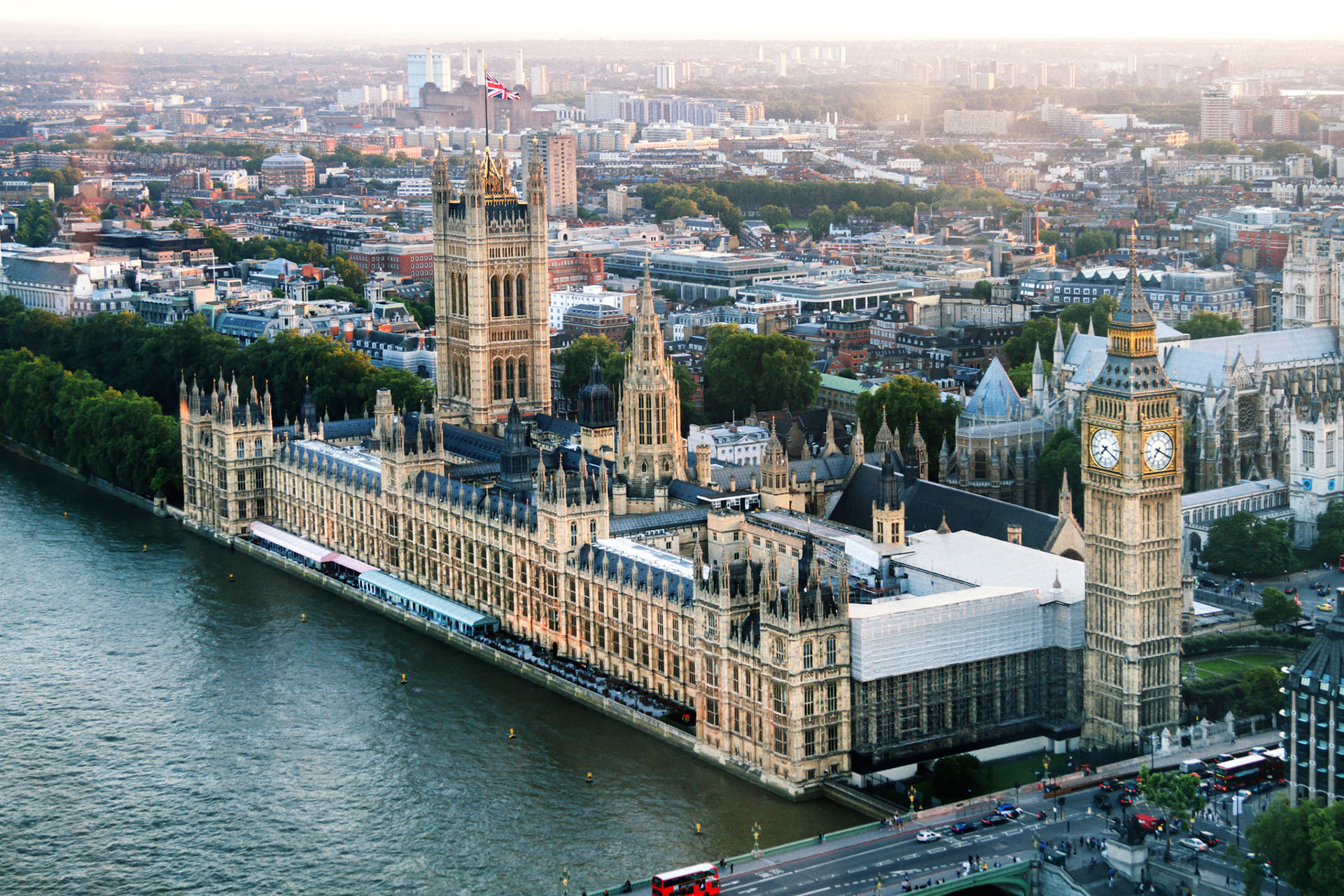

Energy Resilience in Public Infrastructure
Reliability is critical for government and civic buildings, particularly those housing emergency services, control centres, and critical communications systems. Power failures can compromise safety, disrupt essential operations, and increase costs.
CHP and CCHP systems provide a dependable source of onsite generation, ensuring continuity of power and heat during grid instability. When deployed as part of a microgrid, these systems can manage energy generation, storage, and load balancing across multiple buildings or sites.
This approach enhances operational resilience, improves cost control, and strengthens the sustainability of government infrastructure. It also supports broader public sector objectives for carbon reduction, efficiency, and responsible energy management.
Discover More
Combined Heat and Power (CHP)
Trigeneration (CCHP)
Microgrids
District Energy
Combined Heat and Power (CHP)
CHP systems generate electricity and recover waste heat from engine exhaust and cooling systems to provide heating and hot water for government buildings. Delivering efficiencies above 80%, CHP reduces energy costs and carbon emissions compared with traditional grid power and boiler setups. Reliable onsite generation ensures uninterrupted operation of offices, civic facilities, and emergency service buildings while enhancing energy independence. By improving overall efficiency and reducing reliance on external utilities, CHP systems help public sector organisations meet net-zero objectives and demonstrate leadership in sustainable infrastructure management.
Trigeneration (CCHP)
CCHP builds on CHP by converting recovered heat into chilled water through absorption chillers, providing efficient cooling for offices, control centres, and other temperature-sensitive public facilities. This configuration allows heating, power, and cooling to be produced from a single fuel source, improving overall energy efficiency and reducing operational costs. Trigeneration also minimises electricity consumption associated with conventional chillers, lowering carbon emissions and supporting cleaner, more efficient building operation. For public sector estates, it represents a practical solution to achieving comfort, cost savings, and long-term environmental performance.
Microgrids
Microgrids can integrate CHP and CCHP systems with renewable generation and battery storage, forming intelligent, decentralised energy networks. These systems provide greater control over local generation and consumption, ensuring reliable energy supply even during grid instability or peak demand. For government facilities, microgrids improve energy security, support demand management, and allow integration of renewable energy sources within a single optimised system. By combining flexibility with resilience, microgrids help public organisations maintain essential services, reduce emissions, and move toward a more efficient, low-carbon energy future.
District Energy
Government buildings can serve as the anchor loads for a district energy network, providing the stable, year-round heat and power demand necessary to make shared infrastructure economically and technically viable. When these civic assets—such as hospitals, schools, and administrative offices—are interconnected with nearby commercial buildings like hotels, offices, retail centres, and entertainment venues, the diversity of energy profiles creates powerful synergies.
For example, offices and schools often have high daytime heating and cooling demands, while hotels and residential areas maintain evening and weekend consumption. By integrating these varying loads through a centralised energy system, technologies such as combined heat and power (CHP), heat pumps, thermal storage, and waste heat recovery can operate at higher efficiency and steadier output. This approach not only reduces overall fuel use and carbon emissions but also enhances energy resilience and cost stability for all participants.
In addition, the participation of government and commercial tenants together provides a strong financial and policy foundation for investment, unlocking private-sector capital and enabling the development of low-carbon, economically sustainable district energy networks that strengthen local communities and revitalise urban infrastructure.
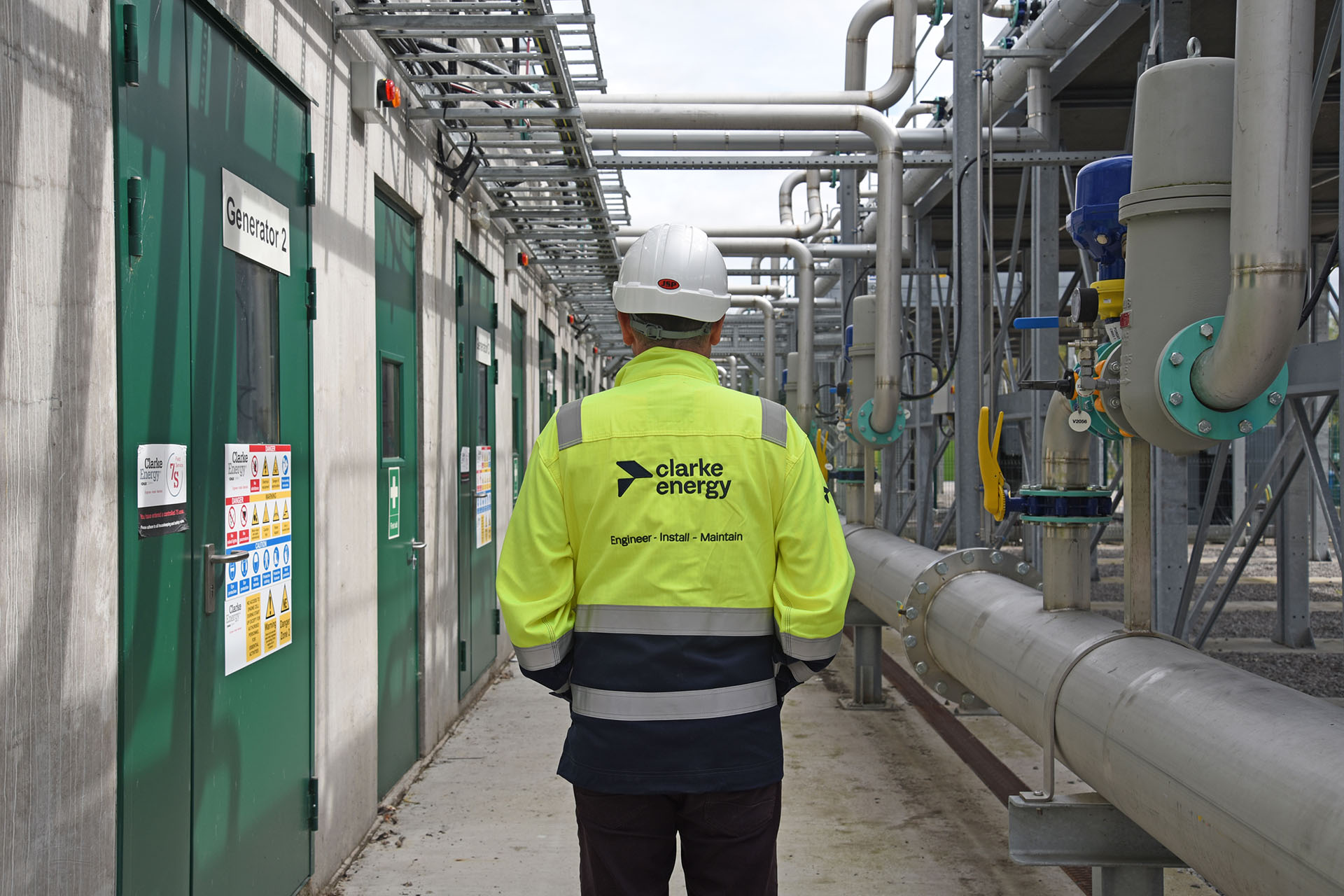
Why Clarke Energy for Government Energy Projects?
Clarke Energy delivers energy solutions designed to meet the reliability, efficiency, and carbon reduction goals of public sector estates. Our expertise in CHP, CCHP, and microgrid technologies ensures secure, low-carbon operation across complex facilities and multi-site portfolios.
Our key advantages include:
• Comprehensive project delivery – from feasibility and design through to installation and commissioning.
• Proven experience – delivering CHP and CCHP systems for government and institutional facilities.
• Integrated solutions – combining power, heating, cooling, and microgrid management for maximum efficiency.
• Future-ready technology – INNIO Jenbacher gas engines compatible with renewable gases and hydrogen.
• Full lifecycle support – predictive maintenance, remote monitoring, and 24/7 service coverage.
Frequently Asked Questions about Government Building Energy Systems
Technical and Engineering
How does CHP improve energy efficiency in government buildings?
CHP systems produce electricity and heat together, reducing energy waste and increasing efficiency compared to traditional power and boiler systems.
What are the advantages of trigeneration (CCHP) for public facilities?
CCHP provides cooling as well as power and heat, ensuring comfortable environments and efficient temperature control throughout the year.
Can CHP and CCHP be installed in existing public buildings?
Yes. Modular CHP systems can be retrofitted into existing energy centres or incorporated into new-build designs.
How do microgrids enhance public sector energy management?
Microgrids integrate generation, storage, and control systems to ensure uninterrupted energy supply and efficient distribution across multiple facilities.
Financial and Commercial
How can CHP reduce operational costs for government buildings?
By producing both heat and electricity on-site, CHP systems lower fuel consumption, reduce grid reliance, and stabilise energy costs.
Are there grants or funding options for public sector CHP projects?
Yes. Various national and regional programmes support energy efficiency and carbon reduction in public infrastructure.
What is the typical payback period for CHP installations?
Payback periods usually range between five and eight years, depending on site load profiles, fuel type, and utilisation.
Can CHP systems support long-term budget control?
Yes. Onsite generation provides predictable operating costs and reduces exposure to grid energy price volatility.
Environmental and Sustainability
How do CHP and CCHP systems contribute to carbon reduction?
These systems increase fuel efficiency, capture waste heat, and can operate on renewable gases, significantly reducing emissions.
Are the systems hydrogen-ready?
Yes. Clarke Energy’s Jenbacher engines can operate on hydrogen blends and be upgraded for 100% hydrogen operation in the future.
Can CHP systems integrate with renewable energy sources?
Yes. CHP can operate alongside solar PV and other renewables, providing a reliable base supply and improving total system efficiency.
How do microgrids support sustainability?
Microgrids enable smarter energy use, balancing renewable inputs with onsite generation to minimise waste and emissions.
Operational and Implementation
Can CHP systems operate independently during grid outages?
Yes. When configured with island-mode capability, CHP systems can maintain critical services during grid failures.
What maintenance is required to ensure reliable operation?
Regular inspections, component servicing, and remote monitoring maintain high performance and minimise downtime.
How long can CHP or CCHP systems operate before replacement?
With proper maintenance, systems typically operate efficiently for 15–20 years.
What aftersales support does Clarke Energy provide?
Clarke Energy offers long-term service agreements, remote diagnostics, and local support teams to ensure reliable performance.
Looking for a Reliable, Efficient, and Low-Carbon Energy Solution?
Our experts can provide the insight and support you need to evaluate options and achieve the right energy solution for your business.