

Electricity Generation
High-efficiency Jenbacher gas engines convert the energy in gas into reliable, low-emission electrical power.
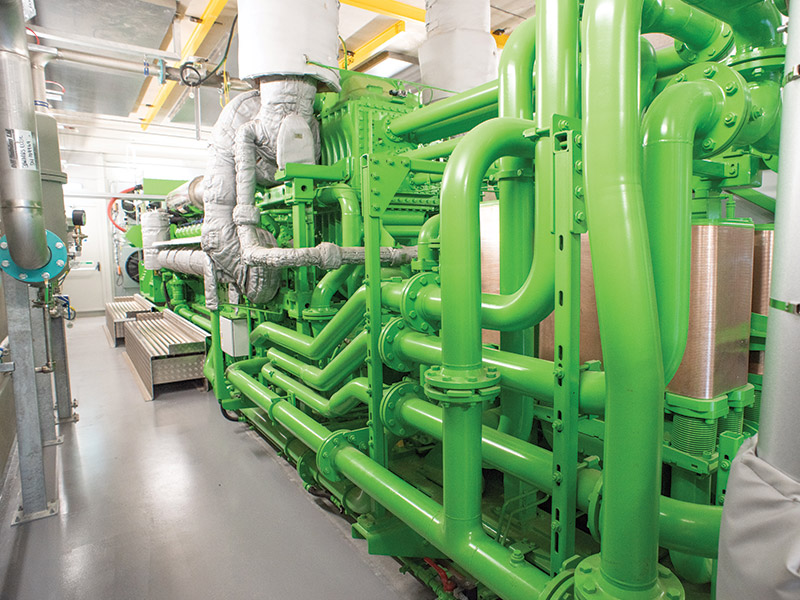
Electricity Generation from Gas Engines
Jenbacher gas engines generate electricity efficiently and reliably by converting the energy contained in gaseous fuels into mechanical power, which is then transformed into electrical energy via a generator. These advanced reciprocating engines are engineered for high performance and fuel flexibility, operating on natural gas or alternative renewable gases.
Where sites also require heat, Jenbacher systems can be configured for combined heat and power (CHP), capturing engine heat to maximise overall fuel utilisation and reduce energy costs.
Benefits of High-Efficiency Electrical Power
- Reduced fuel consumption per kilowatt-hour generated.
- Lower greenhouse gas and pollutant emissions versus less efficient alternatives.
- Lower operational costs through improved conversion efficiency.
- Flexible operation for both grid-parallel and islanded modes.
Discover More
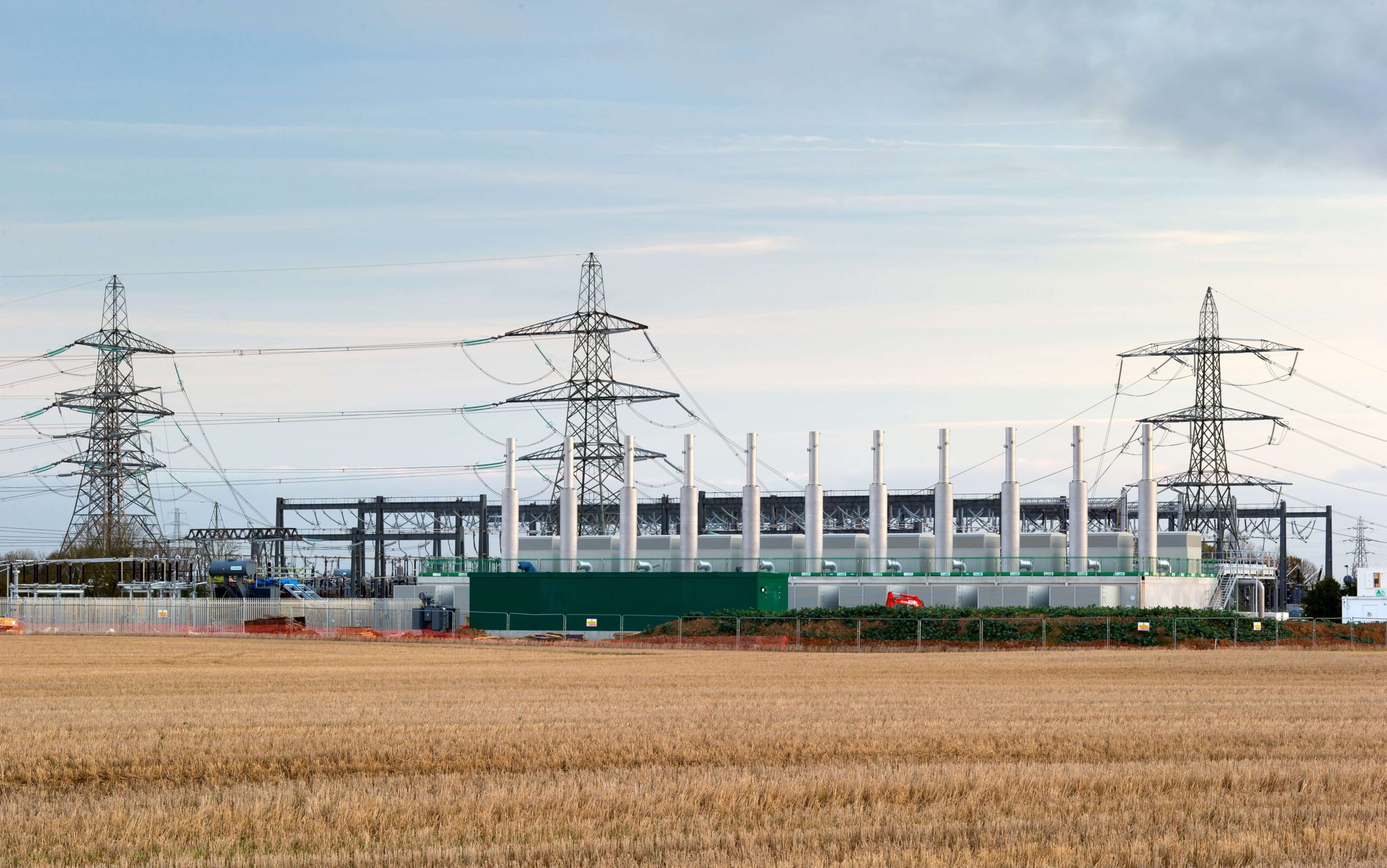
Electrical generation plants come in two main forms stable base load (continuous) generation and electricity peaking.
Electricity Production
Base-Load Electricity Generation
Electrical Peaking Stations
Backup Power and Diesel Displacement
Electricity Production
A Jenbacher gas engine is directly coupled to an electrical generator via a drive coupling to form a genset. The generator is connected through a circuit breaker to the site electrical system. The breaker is used to synchronise the generator to the mains where parallel operation with the grid is required. For 50 Hz regions the engine operates at a constant 1,500 revolutions per minute (rpm) with a 4‑pole generator to match grid frequency; for 60 Hz regions the corresponding speed is approximately 1,600 rpm.
Base-Load Electricity Generation
Base-load generation is suited to sites with a stable fuel supply such as natural gas, landfill gas, or coal gas. Jenbacher gas engines are renowned for their field reliability and ability to operate efficiently even with challenging gas compositions. Electricity-only operation is typical where there is no local demand for heating or cooling. The power generated can either be exported to the grid or used in island mode to supply local facilities.
Electrical Peaking Stations
Peaking, or peak-lopping, plants are designed to support the grid by responding to short-term fluctuations in power demand. These stations typically remain in standby mode until a signal is received from the grid operator to commence generation. Jenbacher gas engines provide a rapid response thanks to their operational flexibility and robust design, ensuring dependable power when required and efficient shut-down as demand reduces.
Backup Power and Diesel Displacement
Gas engines also serve as a cleaner alternative to diesel generators for standby or emergency power. They provide reliable backup capability while significantly reducing emissions such as NOx, particulates, and CO₂ compared to conventional diesel systems.
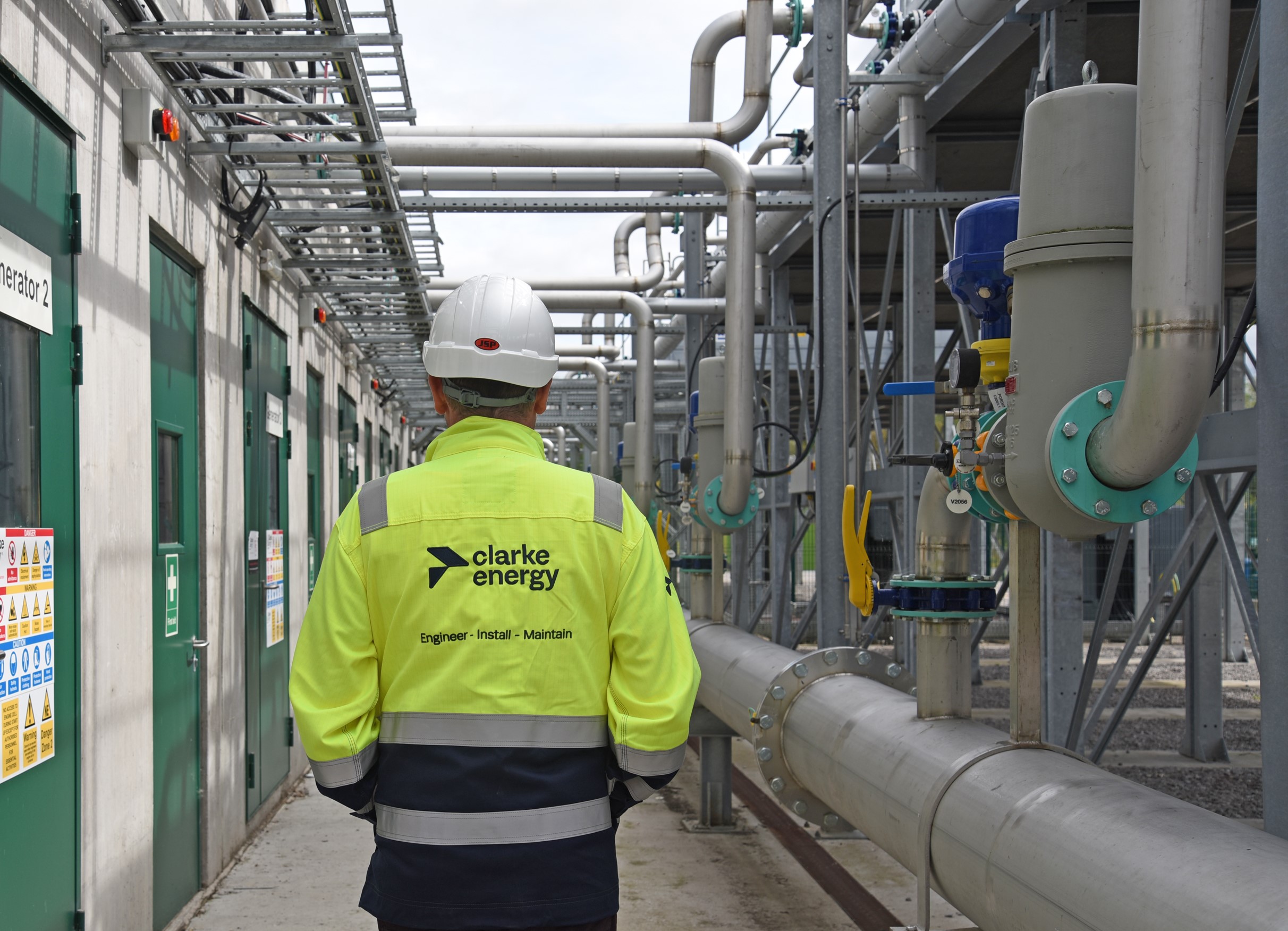
Why Clarke Energy for your Electricity Generation Project?
- End-to-end project delivery – Comprehensive turnkey solutions from design and installation to commissioning and long-term service, ensuring a smooth and efficient project experience.
- Authorised Jenbacher distributor and service provider – Exclusive representation of INNIO’s Jenbacher engines, combining proven technology with expert local engineering and responsive aftersales support.
- Lifecycle performance and reliability – Regional service teams deliver scheduled maintenance, remote monitoring, and fast response with genuine OEM parts to maximise uptime and efficiency.
- Local capability, global support – Backed by INNIO’s international R&D and Clarke Energy’s regional delivery network, providing dependable support and long-term value across every project.
Frequently Asked Questions about Electricity Generation
Technical and Engineering
How does a Jenbacher gas engine produce electricity?
The reciprocating engine converts fuel energy into shaft power that drives a 4‑pole alternator. The alternator output passes through a circuit breaker to synchronise with the grid for parallel operation or feed an islanded site network.
What engine speeds align with 50 Hz and 60 Hz grids?
For 50 Hz, engines typically run at 1,500 rpm with a 4‑pole generator; for 60 Hz regions it is approximately 1,600 rpm to match frequency.
When is CHP preferred over electricity-only operation?
If there is a local thermal demand, CHP captures engine heat to raise total fuel utilisation and reduce overall energy costs. Where no heat demand exists, electricity-only operation is typical.
Financial and Commercial
How does high electrical efficiency reduce operating costs?
Higher efficiency lowers fuel consumption per kWh, which directly reduces energy costs and can improve project payback.
Can power be exported to the grid to create a revenue stream?
Yes. Base-load generators can export electricity to the grid subject to local regulations, tariffs and interconnection agreements.
What factors influence the business case for peaking plants?
Key drivers include demand response or capacity payments, fuel pricing, start/stop flexibility, and availability during system peaks.
Environmental and Sustainability
How do gas engines compare to diesel for standby power emissions?
Gas engines generally offer lower NOx, particulate and CO₂ emissions than diesel generators for equivalent output.
Does higher efficiency reduce greenhouse gas intensity?
Yes. Reduced fuel per kWh lowers CO₂ emissions intensity, improving sustainability outcomes.
Can alternative gases be used in these engines?
Depending on model and conditioning, gases such as natural gas, landfill gas or coal gas can be utilised. Suitability and performance depend on gas quality.
Operational and Implementation
What site electrical configurations are supported?
Systems can run in island mode for local loads or synchronised with the public grid via an appropriately controlled circuit breaker.
How quickly can peaking engines respond to demand?
Reciprocating gas engines are well suited to rapid start and ramp rates to meet short-duration peaks, subject to control system settings.
Who supports commissioning and long-term service?
Clarke Energy provides commissioning, maintenance agreements, remote monitoring and field service to maximise uptime and lifecycle performance.
Want to Learn More About Electricity Generation Projects?
Our experts can provide the insight and support you need to evaluate options and achieve the right energy solution for your business.