

Standby Gas Engines
Delivering rapid-response, low-emission standby power for mission-critical operations.
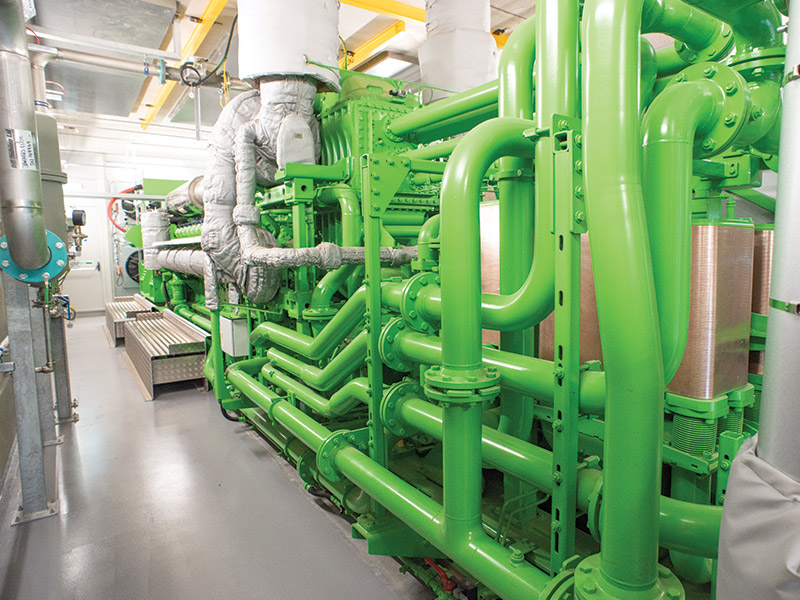
Gas Engine Standby Power
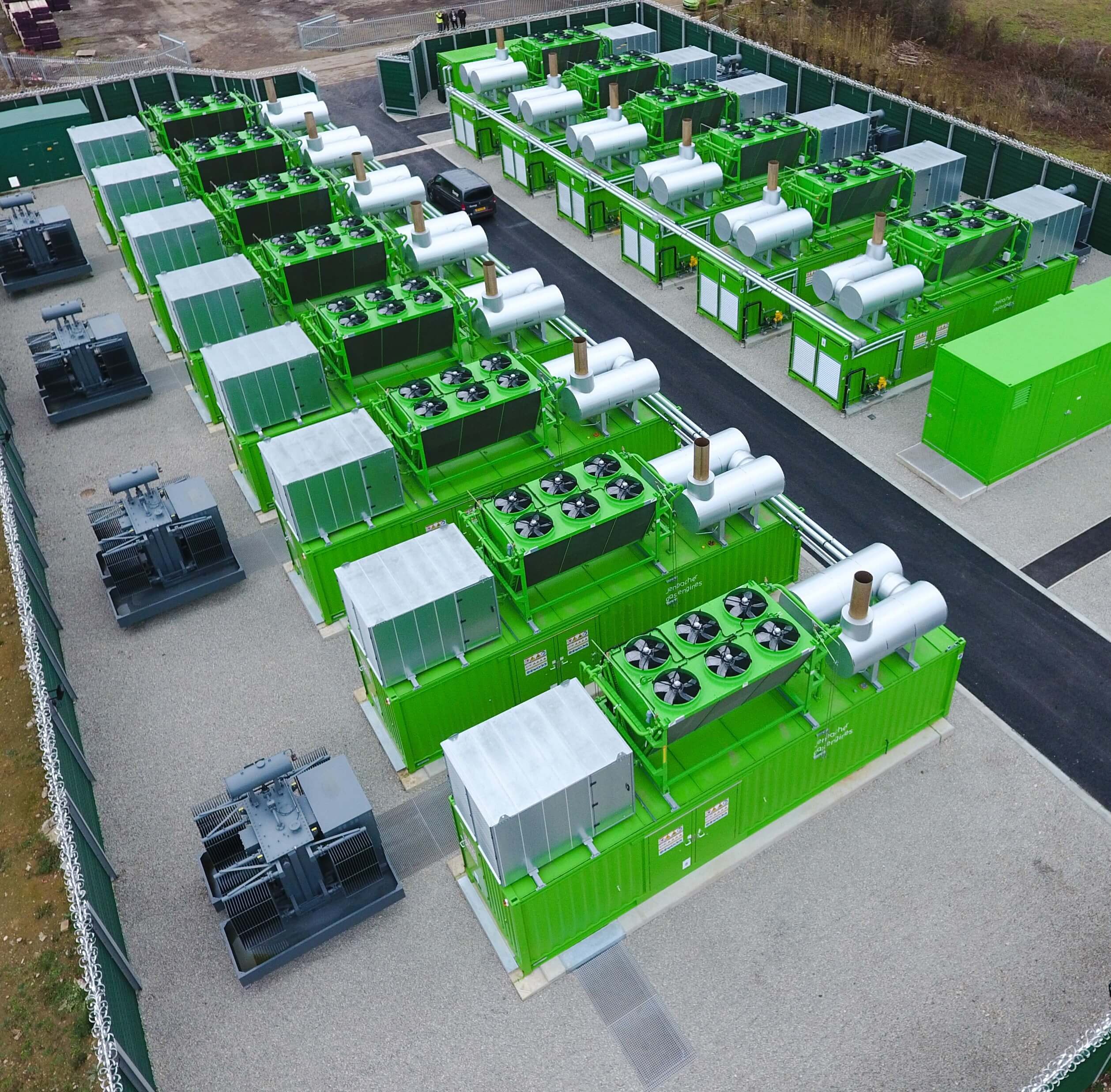
Standby gas engine systems deliver rapid-response backup power tailored for mission-critical infrastructure, data centres and emergency resilience. These solutions replace or complement traditional diesel standby sets, offering higher availability, faster start speed, and lower emissions while supporting long-term sustainability anstad reliability goals.
Benefits of Standby Gas Engines
Rapid resilience – Load can be delivered in approximately 15 seconds, with full output achieved in under 45 seconds under pre-heated and pre-lubricated conditions.
Exceptional availability – Gas-fuelled standby plants support availability metrics such as 99.999% for data-centre applications.
Cleaner operation – Compared with diesel standby units, gas engines emit significantly lower NOx and virtually no SO₂ or particulate matter, offering a lower-emission alternative for standby power.
Dual-use potential – When not required for emergency standby operation, the engine plant can be configured for peaking, demand-response or ancillary services, improving asset utilisation and economics.
Robust fuel security – With gas engine technology, fuel supply resilience is improved compared with diesel fuel storage logistics, offering greater confidence in prolonged power-failure events.
Discover More
Fast-Start Performance
Operating Modes and Applications
Fast-Start Performance
| Step | Description | Typical Time |
|---|---|---|
| 1 | Start command, delay and pre-lubrication | ~5 s |
| 2 | Firing to nominal speed | ~10 s |
| 3 | Nominal speed to full load | ~30 s |
*Pre-heated and pre-lubricated engine conditions.
Modern gas engines (such as the Jenbacher J620 platform) can meet diesel-equivalent standby start times. The modular plant design enables operation in island mode during grid failure or grid-parallel mode for standby and peaking applications.
Technical support services include grid-connection planning, emissions and noise assessments, and remote monitoring. These ensure regulatory compliance and optimal lifecycle performance.
Operating Modes and Applications
| Emergency Backup Power Supply | Island Mode with Grid-Parallel Option | Grid-Parallel Operation |
|---|---|---|
| Reliable backup power with proven technology | Cost savings through reduced grid-connection power requirements | Fast-start resource providing balancing and ancillary services to the grid |
| Reduced CO₂ and NOₓ emissions for longer run times | Avoidance of demand charges or coincident peak electricity charges | Grid value – accommodating intermittent renewable generation |
| Unlimited, stable fuel supply even in emergency situations | Easily expandable due to grid independence | Demand response – when needed |
| – | Participation in curtailable tariffs and/or as an emergency standby | Peak shaving – with the ability to sell electricity when prices are high or to capacity markets |
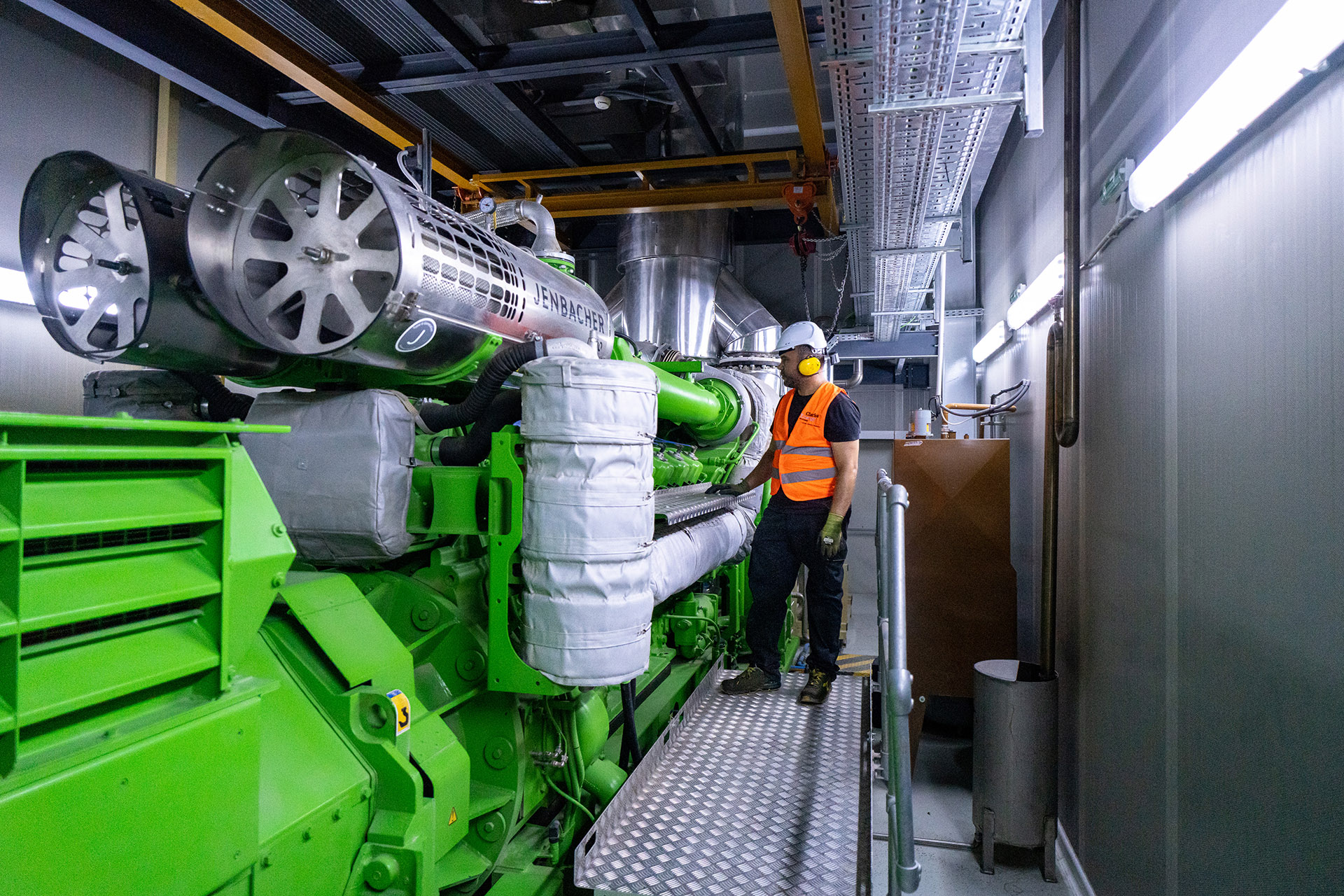
Why Clarke Energy for Standby Gas Engine Projects?
Complete turnkey delivery – Fully integrated power solutions covering design, engineering, installation, commissioning, and lifetime service.
Principal Contractor expertise – Safe, compliant project execution under CDM regulations with seamless coordination across all disciplines.
Advanced monitoring and control – Remote monitoring and dispatch for rapid response, optimised operation, and dependable performance.
Comprehensive technical support – Detailed data for planning, grid connections, emissions, and noise assessments to simplify regulatory compliance.
Dedicated long-term service – Proactive maintenance and flexible service agreements to ensure reliable performance and sustained resilience.
Frequently Asked Questions about Standby Gas Engines
Technical and Engineering
What is the typical start-up time for a standby gas engine system?
Pre-heated gas engines can reach full load in around 45 seconds from start command, providing diesel-equivalent response for emergency standby.
How do standby gas engines operate during grid failure?
Systems automatically detect outages and start independently, supplying site loads in island mode until grid supply is restored.
Can standby gas engines operate in parallel with the grid?
Yes, they can run in grid-parallel mode for peaking or demand-response applications when not required for standby.
Are standby gas engines suitable for continuous or hybrid operation?
Yes, depending on configuration, units can operate in continuous, standby, or combined peaking/hybrid modes for added flexibility.
Financial and Commercial
Can standby gas engines participate in demand-response or peaking markets?
Yes, when not required for emergency backup, plants can export power or provide balancing services, improving asset utilisation and return on investment.
How do running costs compare to diesel generators?
Gas engines typically offer lower fuel and maintenance costs over time, with reduced emissions compliance costs due to cleaner combustion.
What influences the financial case for standby gas systems?
Key factors include gas availability, project scale, duty cycle, and potential revenue from ancillary service participation.
Environmental and Sustainability
How do gas engines compare to diesel in emissions performance?
Gas engines can reduce CO₂ emissions by around 25%, NOₓ by 80–90%, and virtually eliminate SO₂ and particulates.
Can renewable gases be used for standby operation?
Yes, biomethane and hydrogen-blend fuels can be used to further lower carbon impact while maintaining fast-start capability.
Do gas engines support long-term decarbonisation targets?
Yes, they provide immediate emissions reduction and compatibility with future renewable gas supplies for ongoing decarbonisation.
Operational and Implementation
What are the key infrastructure requirements for standby gas systems?
Essential considerations include reliable gas supply, site footprint, and integration with electrical distribution systems.
How is reliability ensured during prolonged outages?
Systems are designed for frequent start-stop operation with redundant controls, automatic changeover, and remote monitoring for maximum uptime.
What maintenance or monitoring options are available?
Comprehensive service agreements include remote diagnostics, predictive maintenance, and performance reporting to ensure ongoing reliability.
Looking for a Flexible, Efficient, and Low-Carbon Energy Solution?
Our experts can provide the insight and support you need to evaluate options and achieve the right energy solution for your business.