

TPI Biogas Upgrading Systems
Membrane and selective solvent technologies for biomethane production.
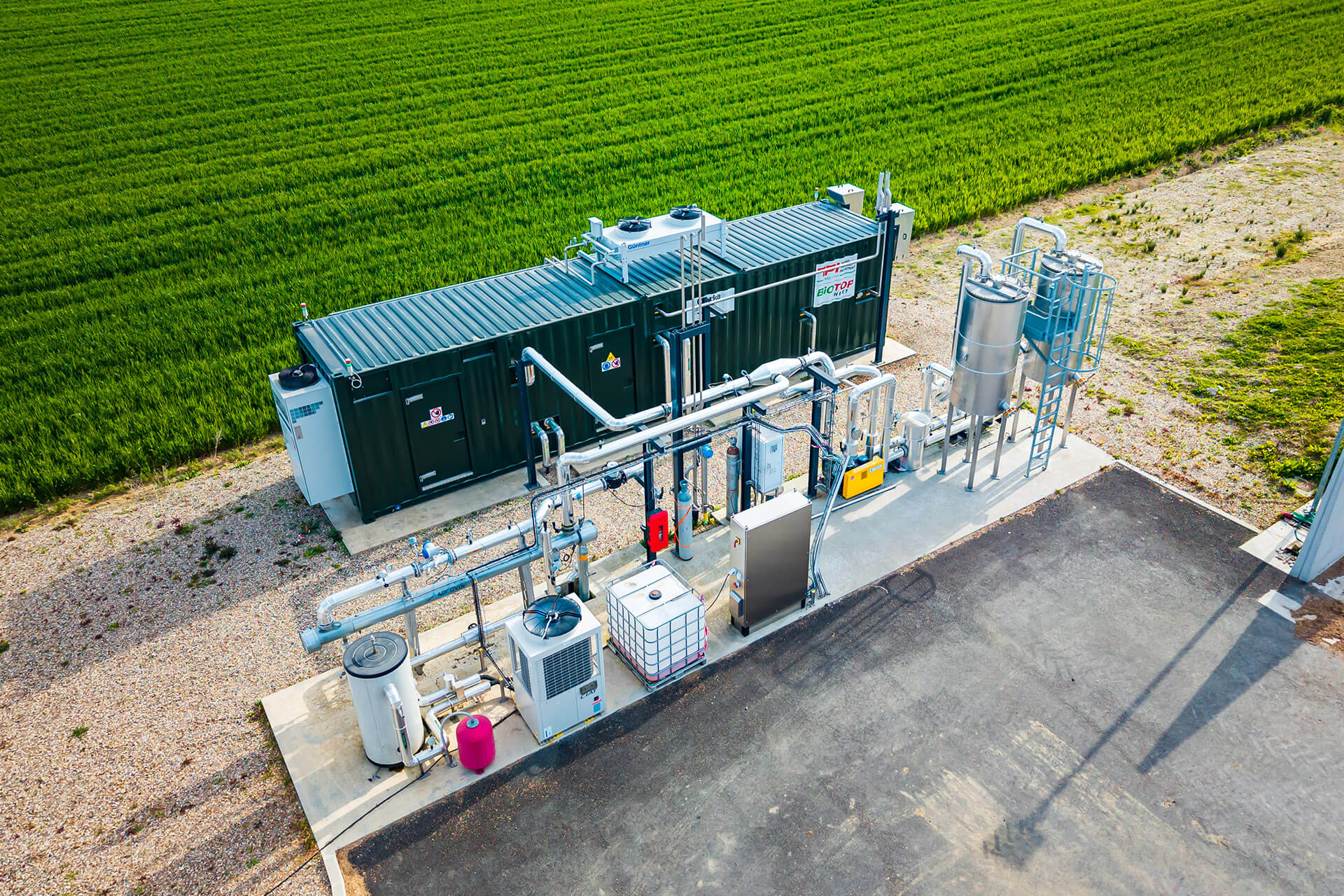
High-Efficiency Biomethane Production
Clarke Energy is an authorised distributor and service provider for Tecno Project Industriale (TPI) biogas upgrading plants. These include both membrane separation systems and selective solvent-based washing systems, enabling raw biogas to be upgraded into high-quality biomethane for grid injection, transport fuel, or industrial gas use.
TPI biogas upgrading systems are engineered for reliable long-term operation across a wide range of plant capacities and inlet gas conditions. Technology selection is based on gas flow rate, methane concentration, carbon dioxide content, recovery targets, and site-specific requirements, ensuring each installation achieves high methane purity, low methane slip, and stable performance under variable operating conditions.
About TPI Biogas Upgrading Systems
TPI designs and supplies advanced biogas upgrading plants that remove carbon dioxide and trace impurities from raw biogas to produce specification-compliant biomethane. Systems are deployed globally across agricultural, waste, wastewater, and industrial biogas applications and are designed for continuous operation in demanding environments.
TPI’s portfolio includes two proven upgrading routes — membrane separation and selective solvent absorption — allowing each project to be matched to the most appropriate process from both a technical and commercial perspective.
TPI Membrane Biogas Upgrading Systems
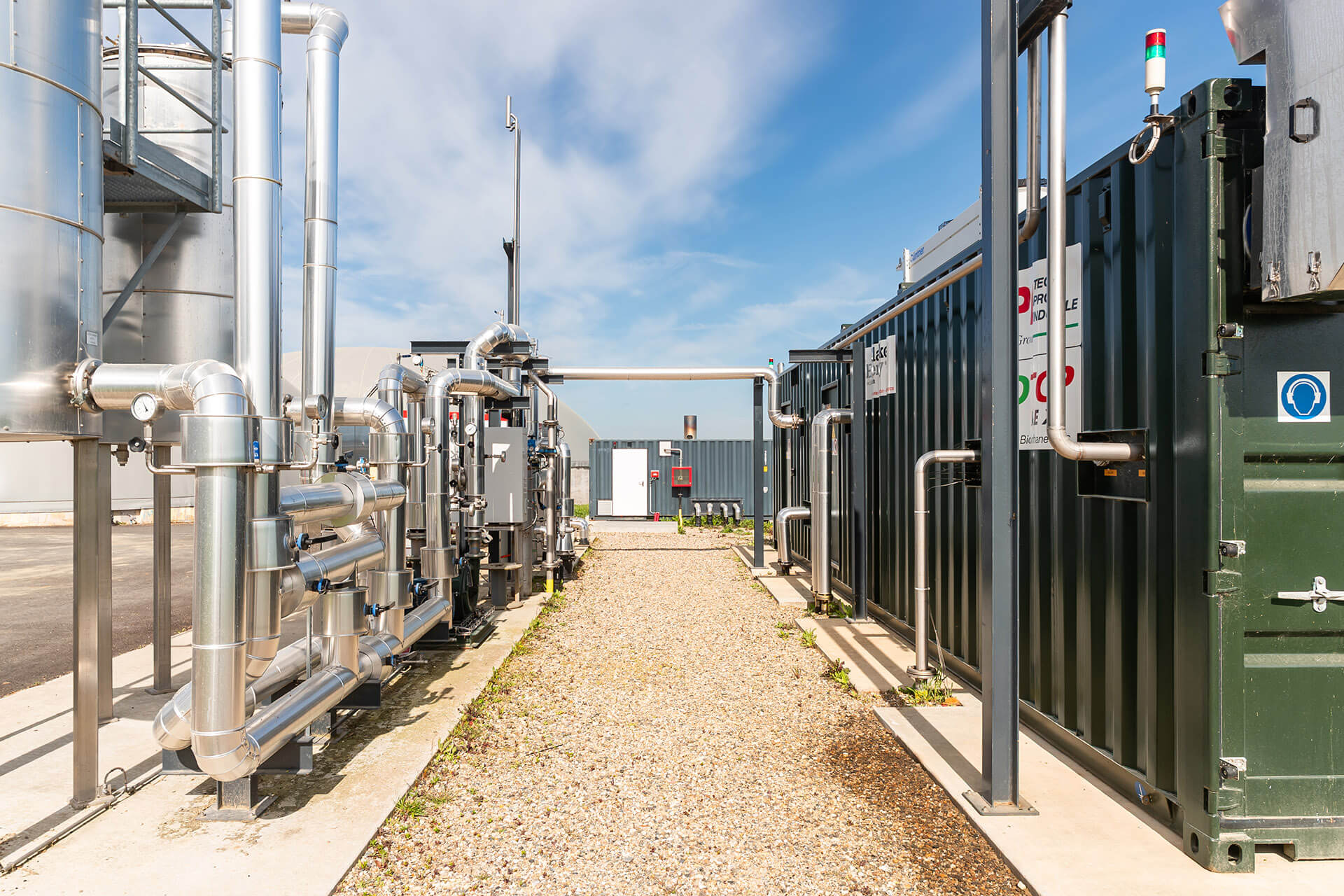
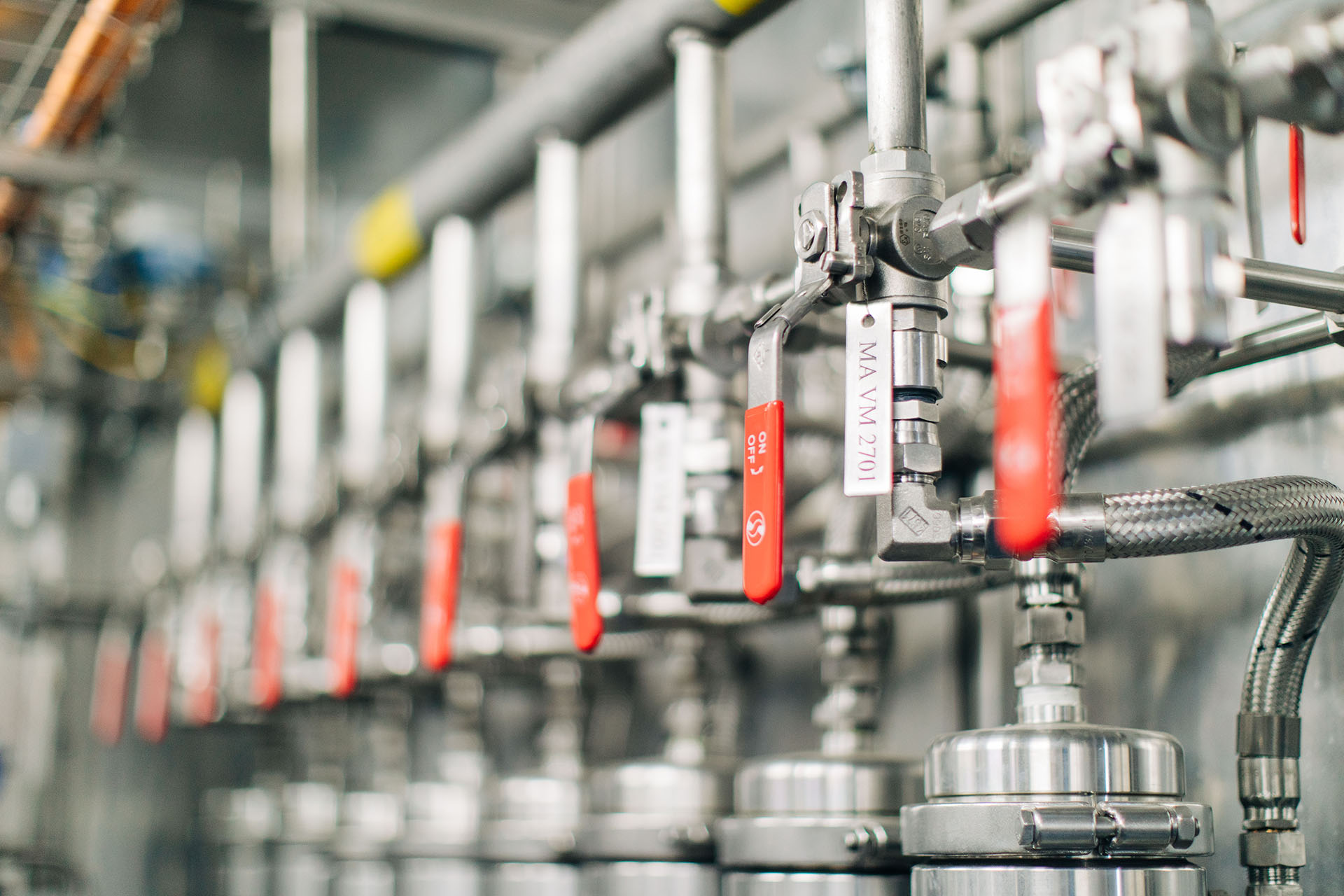
TPI membrane upgrading systems use multi-stage polymer membranes to selectively separate carbon dioxide and other non-methane components from biogas. The modular design allows systems to be configured for a wide range of flow rates and expanded as gas production increases.
Typical characteristics include:
• Biomethane methane concentrations typically above 97%
• Modular, compact plant layout with reduced space requirements
• Low chemical consumption and simplified operation
• High availability with minimal routine maintenance
• Flexible configuration to accommodate variable inlet gas quality
Membrane systems are commonly selected for small to medium-scale plants, sites with limited footprint, or projects requiring scalable capacity growth.
TPI Selective Solvent Biogas Upgrading Systems
TPI selective solvent upgrading systems use physical or chemical solvents to absorb carbon dioxide and trace components from biogas. The solvent is regenerated and reused, producing a high-purity methane stream with very low methane losses.
Typical characteristics include:
• High methane recovery with minimal methane slip
• Stable biomethane quality across fluctuating inlet conditions
• Suitability for higher gas flow rates and large-scale installations
• Proven compliance with demanding grid injection specifications
• Long service life with established process control strategies
Selective solvent systems are often preferred where maximum methane yield, high throughput, or very stable output quality is required.
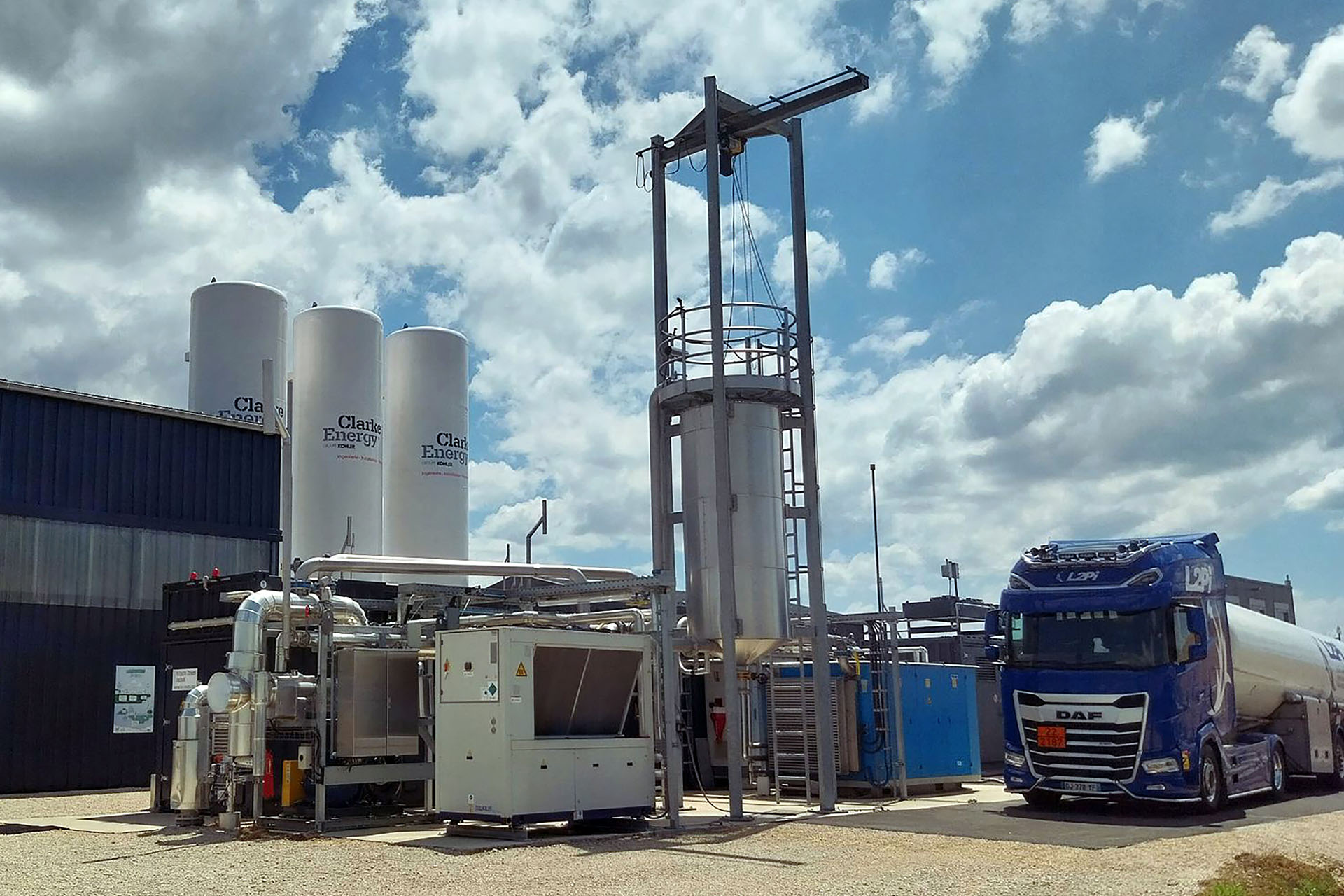
Applications for TPI Biogas Upgrading Systems
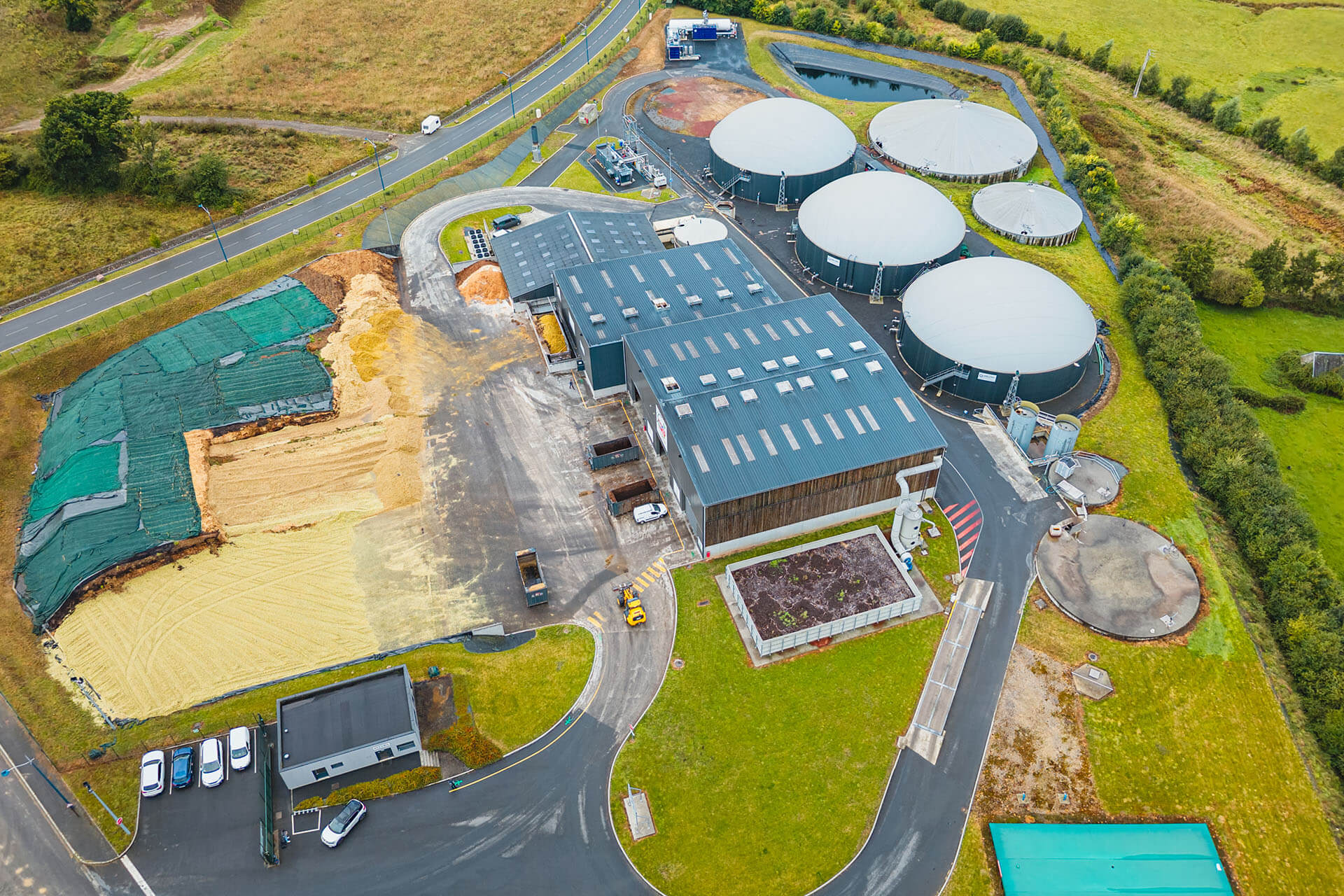
TPI biogas upgrading technology is suitable for a wide range of renewable gas applications, including:
• Agricultural anaerobic digestion plants
• Food waste and organic waste treatment facilities
• Wastewater treatment works
• Industrial biogas recovery projects
• Biomethane production for grid injection or transport fuel
Why Clarke Energy for TPI Biogas Upgrading Projects
As an authorised distributor and service provider for TPI biogas upgrading systems, Clarke Energy provides:
• Technology selection expertise, ensuring the most appropriate TPI membrane or selective solvent system is selected based on gas flow, composition, and methane recovery targets
• Complete project integration, including upgrading, gas handling, grid injection interfaces, and downstream energy utilisation
• Local engineering and commissioning support, delivered by experienced biogas and renewable gas specialists
• Long-term service and maintenance capability, supporting reliable plant performance and regulatory compliance over the full operating life
• Single-point responsibility, reducing project risk and simplifying delivery
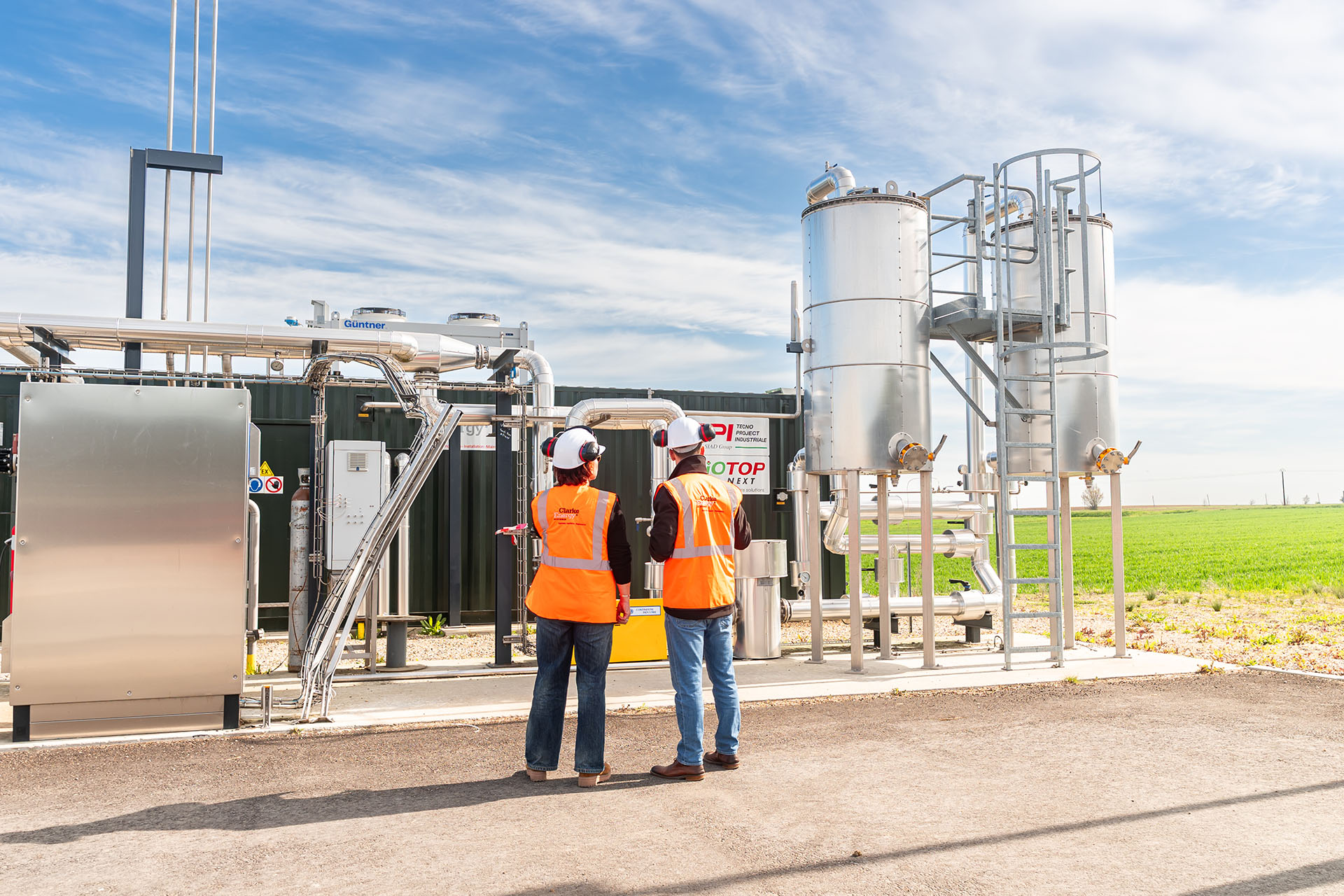
Frequently Asked Questions about TPI Biogas Upgrading Systems
Technical and Engineering
What is biogas upgrading and how does it work?
Biogas upgrading is the process of removing carbon dioxide and trace impurities from raw biogas to increase methane concentration. TPI upgrading systems use either membrane separation or selective solvent absorption to produce high-quality biomethane suitable for grid injection, transport fuel, or industrial use.
What technologies are used in TPI biogas upgrading systems?
TPI supplies two proven technologies: membrane separation systems, which selectively separate gases using multi-stage membranes, and selective solvent systems, which absorb carbon dioxide using a regenerable solvent. The most suitable technology is selected based on gas flow rate, composition, and methane recovery requirements.
What methane purity can be achieved with upgraded biomethane?
TPI biogas upgrading systems typically achieve methane concentrations above 97%, depending on inlet gas quality, system configuration, and applicable gas specifications.
Financial and Commercial
Can upgraded biomethane be injected into the natural gas grid?
Yes, biomethane produced using TPI upgrading systems can be conditioned to meet national gas grid specifications, subject to local regulatory and connection requirements.
Is biogas upgrading financially viable for plant operators?
Biogas upgrading can be financially viable where there is demand for biomethane as grid-injected gas, transport fuel, or a renewable energy source. Viability depends on gas output, operating costs, incentives, and local market conditions.
Are TPI biogas upgrading systems scalable for different applications?
Yes, TPI systems are designed to cover a wide capacity range and can be configured or expanded to suit small, medium, and large-scale biogas plants.
Environmental and Sustainability
Is biomethane classified as a renewable energy source?
Yes, biomethane produced from organic waste or renewable feedstocks is classified as a renewable energy source and can contribute to decarbonisation targets.
Can the CO₂ removed during biogas upgrading be reused?
In some applications, the separated carbon dioxide can be captured and reused for industrial, agricultural, or food-grade purposes, subject to purity requirements and additional processing.
How does biogas upgrading contribute to emissions reduction?
Biogas upgrading enables the replacement of fossil natural gas with renewable biomethane, reducing greenhouse gas emissions and supporting circular economy objectives.
Operational and Implementation
In what types of facilities can biogas upgrading systems be installed?
TPI biogas upgrading systems can be installed at agricultural anaerobic digestion plants, food and organic waste facilities, wastewater treatment works, and industrial biogas sites.
What is the typical timeline for implementing a biogas upgrading project?
Project timelines vary depending on system size, permitting, and grid connection requirements, but typically include feasibility, engineering, installation, and commissioning phases over several months.
What operational support is available after installation?
As an authorised distributor and service provider, Clarke Energy provides commissioning, training, maintenance, and long-term technical support for TPI biogas upgrading systems to ensure reliable ongoing operation.
Looking to Upgrade Biogas Using TPI Biomethane Technology?
Our experts can provide the insight and support you need to evaluate TPI biogas upgrading systems and deliver a reliable, efficient, and compliant biomethane solution for your project.