

Ancillary Equipment for Jenbacher Gas Engines
Supporting reliable, efficient and low-emission operation across a wide range of gas engine applications.
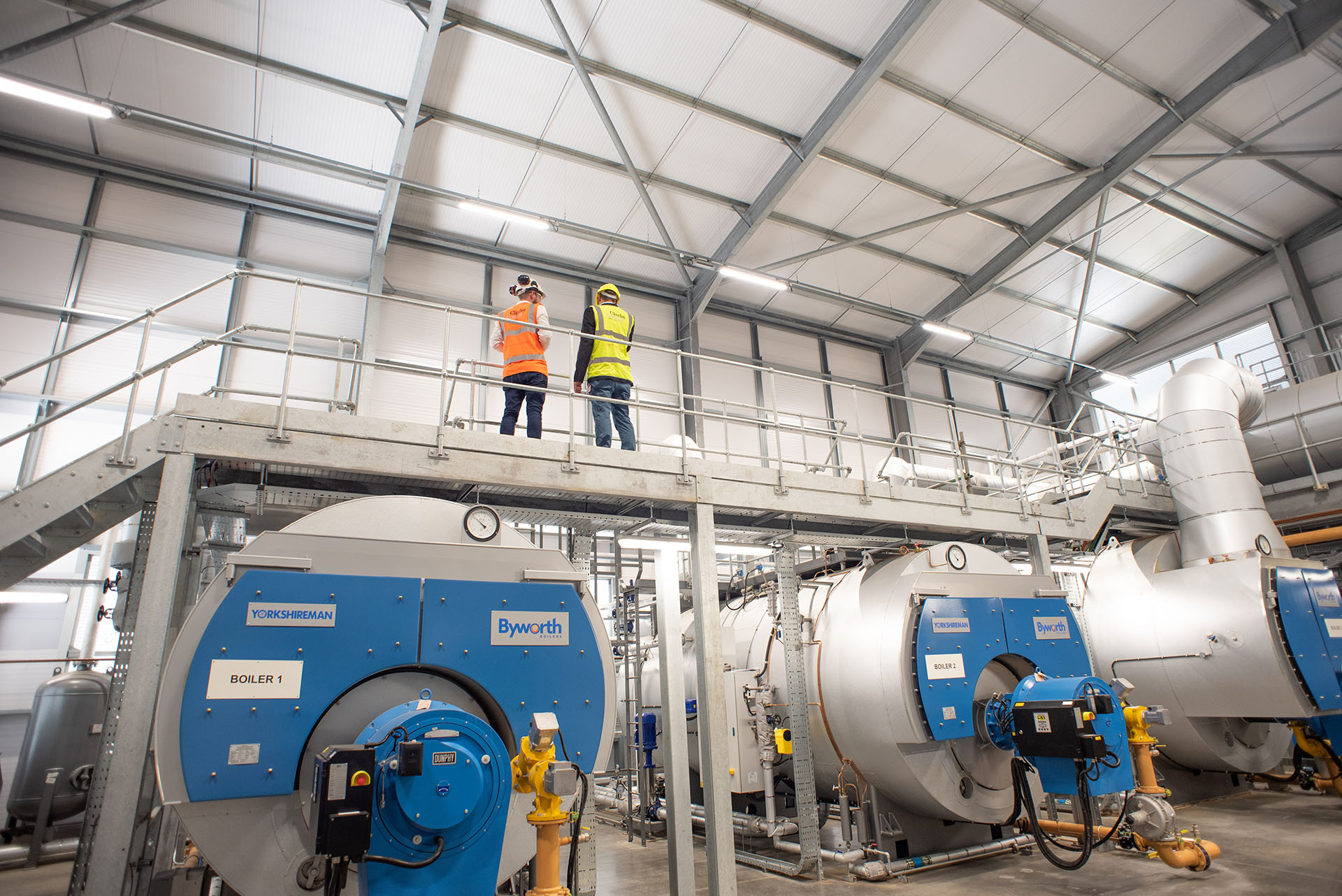
Why Ancillary Equipment Matters
Ancillary equipment plays a vital role in ensuring gas engines operate safely, efficiently and in compliance with emissions and performance requirements. These systems support fuel preparation, exhaust treatment and waste heat recovery, enabling reliable operation across different fuels, site conditions and regulatory environments.
By selecting and integrating the right ancillary equipment, customers can improve plant efficiency, protect engine components, reduce emissions and maximise the value of recovered energy. In practice, this helps to improve reliability and engine longevity, lower environmental impact, enhance heat recovery and adapt gas engine plants to variable fuels and operating conditions.
Types of Ancillary Equipment
Fuel Preparation Systems
Exhaust Cleaning and Emissions Control
Waste Heat Recovery Systems
Fuel Preparation Systems
Fuel Gas Dehumidifiers / Driers
Fuel gas dehumidifiers, also known as gas driers, are used to remove moisture from the fuel gas before it enters the gas engine. Moisture can condense within fuel systems, leading to corrosion, operational instability and increased maintenance requirements.
By drying the fuel gas, dehumidifiers help protect engine components, improve combustion stability and support long-term reliable operation, particularly when using biogas, landfill gas or other moisture-rich fuels.
Carbon Filters
Carbon filters are in-line vessels filled with activated carbon granules that remove contaminants from the fuel gas. These contaminants may include siloxanes, hydrocarbons or other trace compounds that can damage engine components or reduce performance.
Installing carbon filters helps extend engine service life, reduce maintenance costs and maintain consistent engine efficiency, especially in applications using waste-derived or variable-quality gases.
Fuel Gas Boosters
Fuel gas boosters, sometimes referred to as blowers, are used to increase fuel gas pressure to the level required by the gas engine or combined heat and power (CHP) system.
They enable engines to operate where incoming gas pressure is insufficient or fluctuates, supporting stable operation across a wide range of site conditions. Fuel gas boosters improve flexibility and allow engines to be deployed in locations with low-pressure or variable gas supplies.
Exhaust Cleaning and Emissions Control
CL.AIR® Exhaust After-Treatment
The CL.AIR® exhaust after-treatment system is a thermal regenerative post-combustion solution designed to treat exhaust gases from gas engines. It reduces harmful emissions by oxidising pollutants within the exhaust stream.
This system supports compliance with stringent emissions regulations while maintaining efficient engine operation, making it particularly suitable for urban, industrial or environmentally sensitive locations.
Carbon Dioxide Scrubbers
Carbon dioxide scrubbers capture CO₂ from the exhaust gas of a CHP plant. The recovered carbon dioxide can then be reused in applications such as greenhouses, food processing or industrial processes.
By enabling the reuse of CO₂, scrubbers improve overall system efficiency and support circular and low-carbon energy strategies where CO₂ has a valuable downstream use.
Selective Catalytic Reduction (SCR)
Selective Catalytic Reduction (SCR) systems are used to significantly reduce nitrogen oxide (NOₓ) emissions from gas engine exhausts. Using a catalyst and a reagent, SCR systems convert harmful emissions into less damaging compounds.
SCR technology enables compliance with strict air quality standards and supports operation in regions with demanding environmental regulations, while maintaining engine performance.
Waste Heat Recovery Systems
Exhaust Gas Heat Exchangers
Exhaust gas heat exchangers recover thermal energy from the exhaust of a gas engine. This recovered heat can be used for space heating, process heating or hot water production within a CHP system.
By capturing waste heat that would otherwise be lost, exhaust gas heat exchangers improve overall system efficiency and reduce the need for additional fuel input.
Waste Heat Boilers
Waste heat boilers recover energy from engine exhaust gases to produce steam or high-temperature hot water. Around a quarter of the usable energy in the fuel gas exits the engine via the exhaust, making this a valuable source of recoverable heat.
These systems are commonly used in industrial CHP applications where steam or high-grade heat is required for processes, significantly increasing overall plant efficiency.
Absorption Chillers
Absorption chillers enable trigeneration by converting recovered heat into chilled water. They use thermal energy rather than electricity to drive the cooling process.
By producing cooling alongside electricity and heat, absorption chillers allow CHP plants to deliver year-round energy utilisation, improving efficiency and reducing electrical cooling demand.
Looking for a Reliable, Efficient, and Low-Carbon Energy Solution?
Our experts can provide the insight and support you need to evaluate options and achieve the right energy solution for your business.