

Quadgeneration
Delivering integrated electricity, heating, cooling, and beverage-grade carbon dioxide recovery for maximum resource efficiency and lower lifecycle emissions.
What is Quadgeneration?
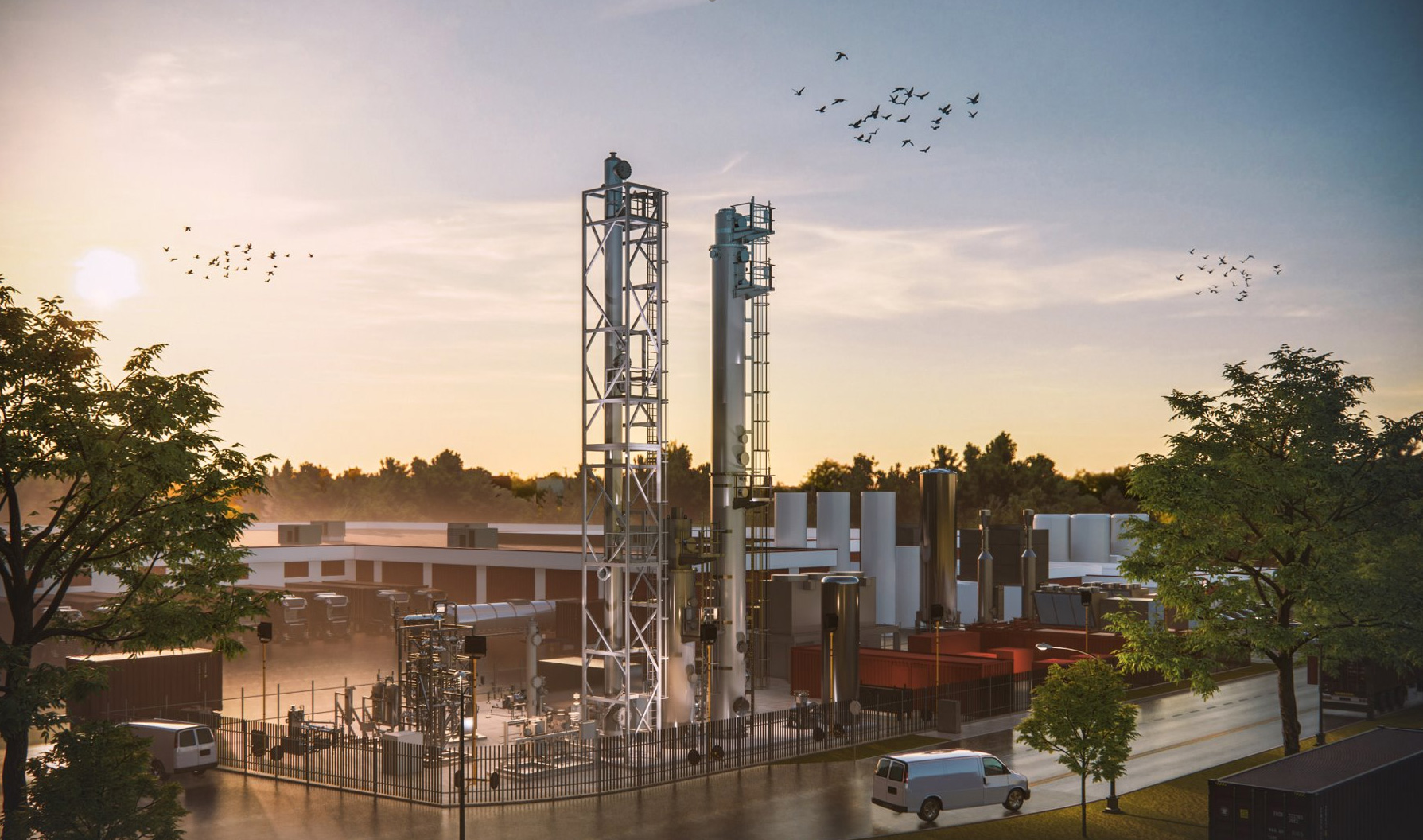
Quadgeneration, sometimes called combined cooling, heat, power and CO₂ recovery (CCHP+CO₂), builds on trigeneration by capturing and upgrading carbon dioxide from the engine exhaust to high purity suitable for food and drink applications. In a single integrated system, fuel input produces electricity, useful heat and chilled water, while the CO₂ stream is recovered, polished, and stored for onsite use.
The concept is ideally deployed where there is a local demand for CO₂ — for example, in beverage production, food processing, or controlled-environment agriculture. By integrating power, thermal outputs and CO₂ recovery, operators can reduce energy costs, avoid purchased CO₂, and improve overall environmental performance.
Benefits of Quadgeneration
High overall utilisation – Simultaneous electricity, heat, cooling and CO₂ recovery drives total energy utilisation typically above 80%, improving primary energy efficiency.
Lower carbon footprint – Efficient onsite generation plus recovered CO₂ reduces emissions and reliance on externally produced industrial CO₂.
Cost avoidance – Offsets grid electricity, boiler heat, mechanical cooling, and purchased CO₂ — delivering compelling operational savings.
Process resilience – Onsite CO₂ supply mitigates market shortages; modular engines provide dispatchable power for critical processes.
Renewable-ready – Systems can operate on natural gas, biogas/biomethane, and hydrogen blends to support decarbonisation pathways.
Discover More
System Architecture
Absorption Chilling
CO₂ Recovery and Polishing
Fuel Flexibility and Integrations
System Architecture
A high-efficiency gas engine generates electricity, with jacket water and exhaust heat recovered for hot-water or steam services. Part of this recovered heat can be directed to an absorption chiller, producing chilled water for HVAC or process cooling. Downstream of the engine, an amine-based CO₂ capture and purification unit cleans, dehydrates, compresses and polishes the gas to beverage-grade quality for onsite use or storage.
Absorption Chilling
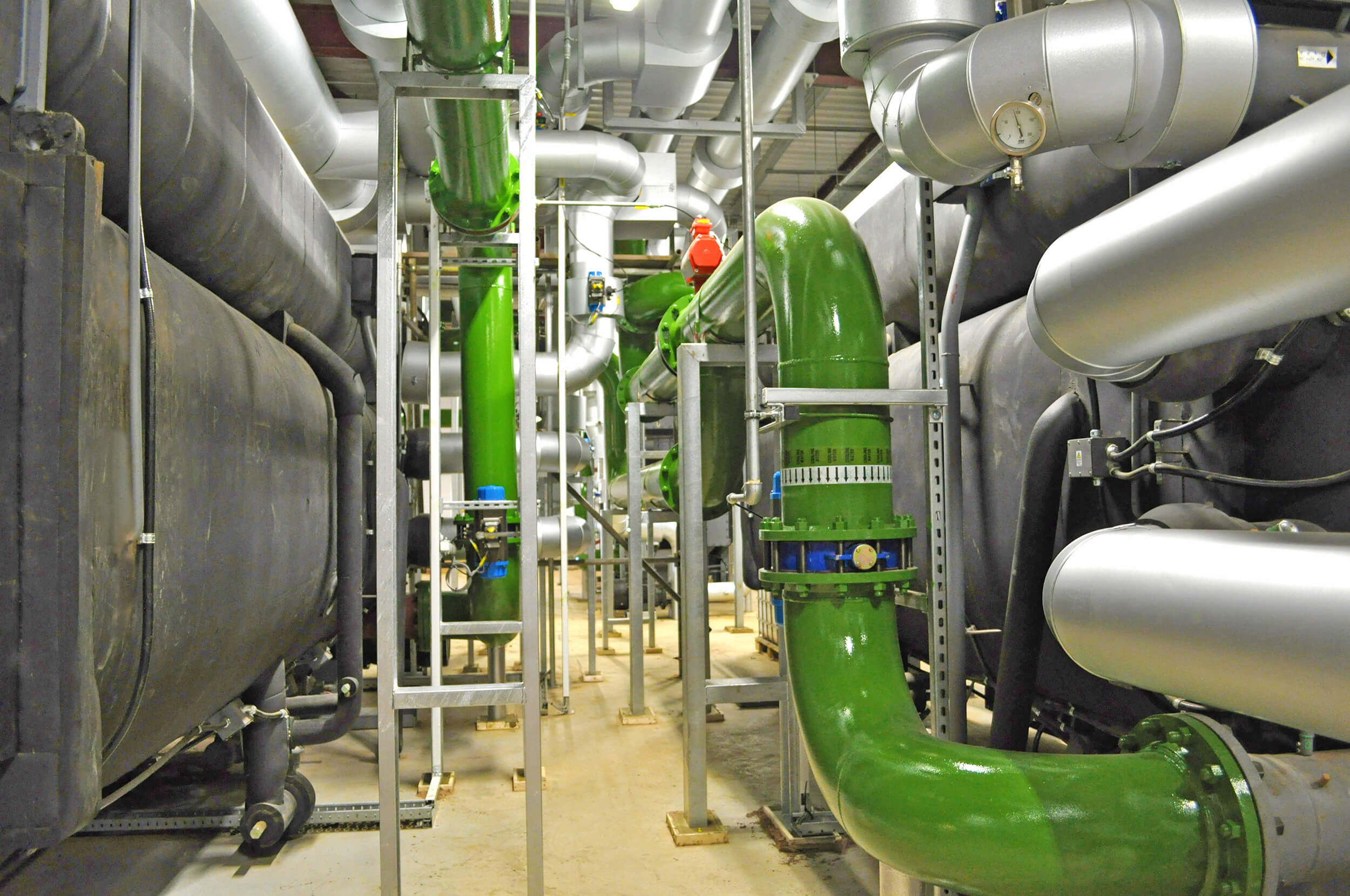
Absorption chillers can be configured for hot-water, steam or direct-fired operation, allowing the system to match the site’s specific thermal profile. Seasonal flexibility enables cooling to be prioritised in summer and heating in winter, while the low moving-part count supports reliable, low-maintenance performance. Typical hot-water absorber coefficients of performance range from around 0.6 to 0.8, with double-effect steam absorbers achieving higher values where required.
CO₂ Recovery and Polishing
The CO₂ recovery process uses proven amine-wash capture technology followed by drying, compression and purification to achieve beverage-grade quality. The recovered CO₂ is stored onsite in buffer tanks and distributed to points of use such as carbonation, modified-atmosphere packaging or pH control systems. Where applicable, purified CO₂ can also be diverted to other beneficial uses such as horticultural enrichment, provided quality standards are met.
Fuel Flexibility and Integrations
Quadgeneration systems can operate on natural gas, biogas, biomethane or hydrogen blends, offering a pathway to progressively lower-carbon energy. The system can also be integrated within a wider microgrid incorporating renewable sources such as solar PV and wind, supported by battery energy storage for enhanced resilience and energy balancing. Integration with existing HVAC networks and heat pumps further improves efficiency and site-wide energy management.
Typical Quadgeneration Applications
- Beverage and food production facilities with onsite carbonation or CO₂ demand.
- Industrial plants with combined power, thermal and cooling loads and steady CO₂ use.
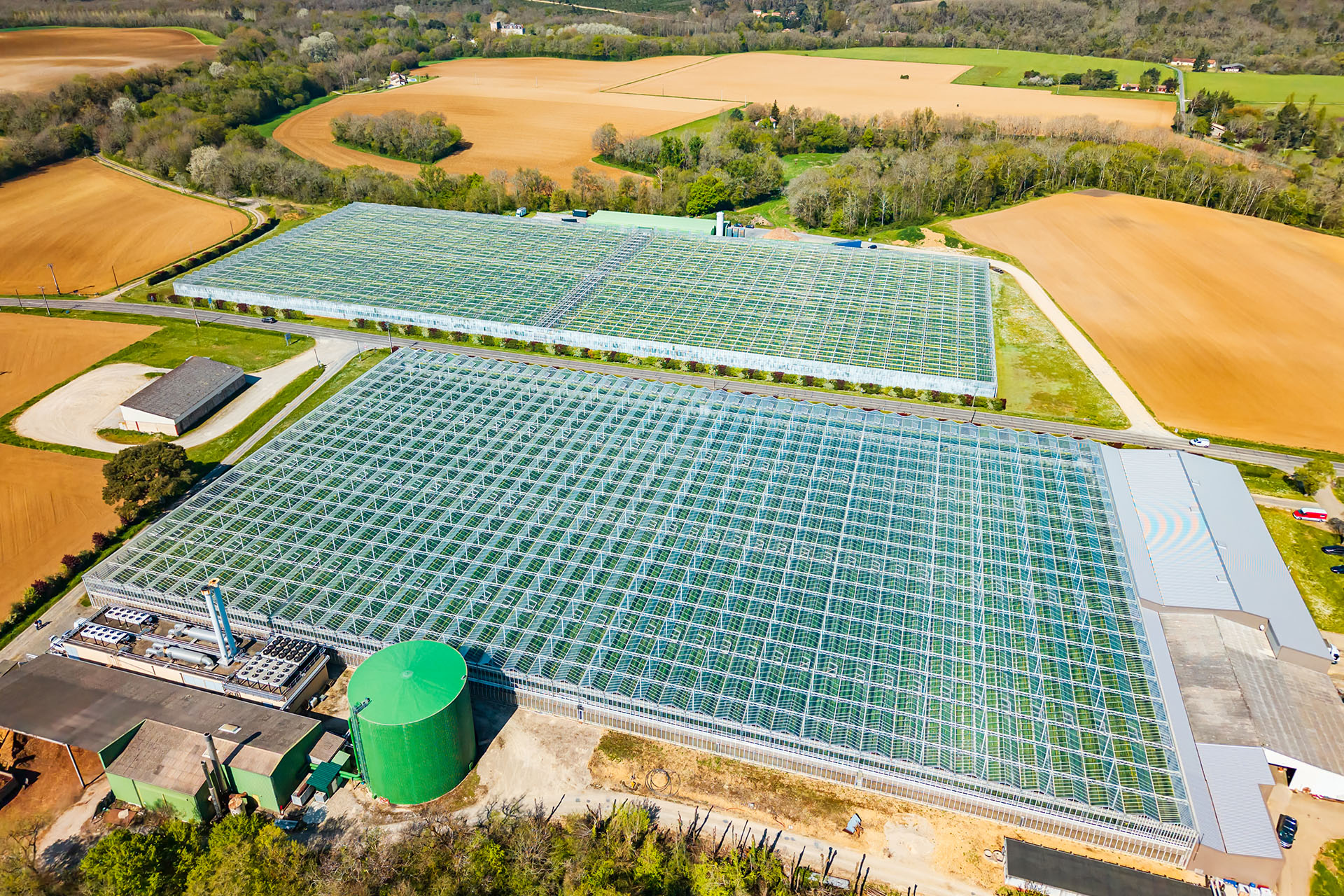
- Greenhouses and controlled-environment agriculture for CO₂ utilisation.
Why Clarke Energy for Quadgeneration Projects?
Field-proven delivery – Extensive global experience in CHP and CCHP systems with demonstrated quadgeneration deployments.
End-to-end engineering – Application design, thermodynamic modelling, CO₂ process integration, and balance-of-plant delivery.
Fuel-flexible, future-ready – Natural gas today, with pathways for biogas, biomethane and hydrogen blends.
Lifecycle performance – Remote monitoring, predictive maintenance, and tailored service agreements to ensure availability and efficiency.
Frequently Asked Questions about Quadgeneration
Technical and Engineering
What is quadgeneration and how does it differ from trigeneration?
Quadgeneration adds a CO₂ capture and polishing stage to trigeneration, delivering four outputs: electricity, heat, chilled water and beverage-grade CO₂.
How is beverage-grade CO₂ produced from an engine exhaust stream?
Exhaust gas passes through amine-based capture, then drying, compression and purification steps to achieve high-purity CO₂ suitable for food and drink use.
Can the system operate with varying thermal and cooling loads?
Yes. Engine control and absorption chiller staging allow turndown; heat can be prioritised seasonally, with chilled-water production modulated to demand.
Is quadgeneration compatible with biogas or hydrogen blends?
Yes. Engines can be configured for biogas, biomethane, and hydrogen blends, subject to gas quality and OEM specifications.
Financial and Commercial
Where do the savings come from in a quadgeneration project?
Savings result from avoided grid electricity, displaced boilers and chillers, and reduced reliance on purchased CO₂.
What drives ROI and payback?
Load factor, spark spread, utilisation of heat and cooling, onsite CO₂ use, and any incentives for efficiency or onsite generation all influence payback.
Can CO₂ sales be considered?
Where standards and logistics allow, surplus CO₂ may be sold; however, most sites prefer onsite consumption to reduce procurement risk.
Environmental and Sustainability
How does quadgeneration reduce emissions?
High-efficiency onsite generation reduces indirect emissions, while CO₂ recovery eliminates the need for externally produced CO₂, supporting circular operation.
Is the recovered CO₂ carbon negative?
Not by default. The environmental benefit depends on the displaced grid emissions and avoided production of industrial CO₂ elsewhere.
Can quadgeneration support sustainability certification goals?
Yes. Efficiency gains and reduced refrigerant use via absorption chilling can contribute to BREEAM or LEED targets.
Operational and Implementation
What additional equipment is required for CO₂ recovery?
CO₂ absorber and stripper columns, regeneration systems, dryers, compressors, polishing units, storage tanks and distribution piping.
How is product quality assured?
Inline analysis and control systems maintain beverage-grade CO₂ quality, supported by periodic validation and maintenance schedules.
What about maintenance and uptime?
Planned maintenance for both the engine and CO₂ system is coordinated to maintain availability, with remote monitoring for predictive servicing.
Looking to Capture CO₂ and Boost Energy Efficiency with Quadgeneration?
Our experts can provide the insight and support you need to evaluate options and achieve the right energy solution for your business.