
For U.S. data-centre operators, grid resilience is no longer a theoretical planning issue. It has become a real constraint on development schedules, commissioning risk, and long-term operations. Multi-year interconnection queues, transmission congestion, extreme weather events, and rapidly growing AI workloads are all forcing developers to question a long-held assumption: that the grid alone can deliver firm, reliable power at the scale and speed data centres now require.
Against this backdrop, recent U.S. grid-resilience policies are quietly reshaping the role of onsite generation. For data centres in particular, they are creating a more pragmatic case for limited-hour gas peaking plants as part of a broader resilience and flexibility strategy.
This is not about replacing the grid or stepping away from decarbonisation goals. It is about ensuring digital infrastructure can be built and operated reliably in a power system under increasing strain.
Why resilience policy now matters directly to data centres
Federal and state resilience initiatives increasingly reflect what data-centre developers are already experiencing. As renewable penetration increases, the grid becomes more sensitive to disturbances, ramping events, and localised congestion. Battery storage continues to scale, but duration limits and availability constraints mean it cannot yet cover every resilience scenario on its own.
At the same time, utilities and regulators are placing higher expectations on large, fast-growing loads. In some markets, data centres are now expected to curtail demand or rely on onsite generation during grid emergencies. In others, utilities are signalling that new load approvals may depend on a project’s ability to demonstrate a degree of self-sufficiency.
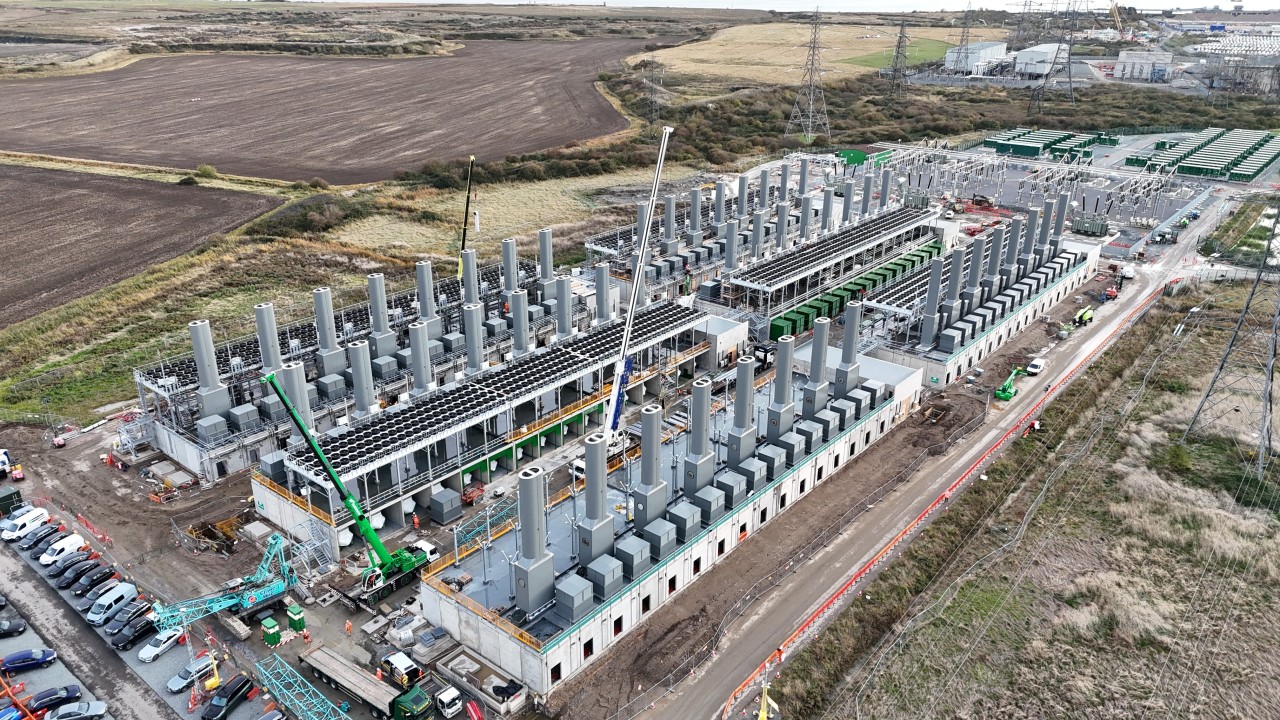
In this environment, fast-start gas engines or turbines are being reconsidered, not as baseload generation, but as reliability infrastructure. Their value lies in rapid start capability, predictable performance, and the ability to operate for limited hours when grid conditions deteriorate.
From stranded backup to strategic infrastructure
Historically, data-centre power strategies relied almost entirely on emergency diesel generators. These assets were designed to sit idle, tested periodically, and used only during outages.
That model is under pressure. Grid events are becoming more frequent and more complex, while construction timelines are increasingly dictated by interconnection risk. As a result, some operators are evaluating gas-based peaking systems that can operate in a controlled, limited-hour manner, integrated with UPS systems, battery storage, and modern microgrid controls.
Changes to market rules that allow aggregated distributed energy resources to participate in wholesale markets introduce an additional consideration. While market participation is rarely the primary driver for data-centre investment, the option to provide capacity or grid-support services reduces the risk of stranded assets over the life of the facility.
What U.S. policy is getting right
From a data-centre perspective, several aspects of the U.S. policy landscape are moving in the right direction.
Grid-resilience funding and guidance increasingly recognise the role of dispatchable resources in maintaining reliability. Market frameworks are evolving to acknowledge that behind-the-meter assets can support the grid, not just consume power. There is also growing acceptance that critical digital infrastructure requires more than short-duration backup to meet uptime expectations during extreme conditions.
Importantly, these policy signals are beginning to align with how data centres are actually designed, financed, and operated in the United States.
Where the framework still creates friction
Despite this progress, meaningful gaps remain.
Permitting and emissions rules vary widely by state, creating uncertainty around how limited-hour gas peaking assets will be classified over time. Interconnection processes and market-participation pathways remain slow and complex, often mismatched to the pace of data-centre development. In many regions, resilience funding is directed primarily towards utilities or public entities, even though privately financed data centres increasingly provide system-level benefits.
There is also limited policy clarity around transition pathways. Data-centre operators need confidence that assets installed today can adapt over time, whether through reduced run hours, integration with storage, renewable natural gas, or future hydrogen-ready operation.
A practical path forward for data centres
For most U.S. data-centre operators, resilience will not be delivered by a single technology. It will come from layered solutions: grid connection where available, large-scale renewable procurement, battery storage for ride-through and power quality, and limited-hour gas peaking capacity to manage extreme events and commissioning risk.
Used in this way, gas peaking is not a step backward. It is a stabilising mechanism that allows digital infrastructure to scale while the grid expands and modernises. With clearer permitting pathways, consistent emissions treatment, and better alignment between resilience policy and private investment, these systems can play a constructive role in both reliability and the energy transition.
Closing thought
Data centres now sit at the intersection of economic growth, digital resilience, and energy policy. As grid stress increases, operators that invest in flexible onsite capacity will be better positioned to manage risk, meet uptime commitments, and engage productively with utilities and regulators.
U.S. resilience policy has begun to recognise this reality. With greater consistency and clarity, it can enable data-centre development that is faster to deliver, more reliable to operate, and better aligned with long-term decarbonisation goals.