
For two years the story of AI has been a story about scale. Bigger models, faster chips, more compute. None of that is wrong. But scale is now running into something it cannot out-argue. The models are ready to run. In a lot of places, the power to run them is not there yet.
That is the shift now showing up across live projects. The limiting factor is moving off the algorithm and onto the physical system that has to feed it: power availability, how fast it can be delivered, and whether it holds up once the load is real. Those questions increasingly decide whether an AI facility gets built on schedule, or gets built at all.
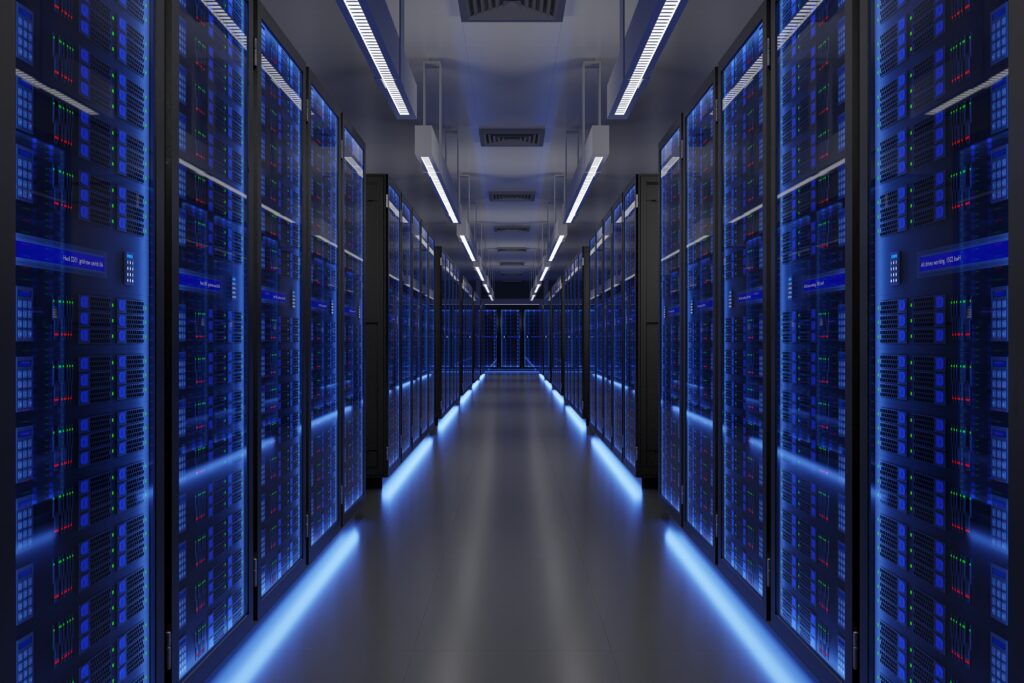
The bottleneck sits in the power system
Data centers are turning into core economic infrastructure, and their growth is meeting the limits of the grid in three familiar ways.
Grid capacity is constrained, which delays new builds and expansions. Transmission is congested, which dictates where new capacity can realistically go. And interconnection has stretched from a scheduling detail into a multi-year commitment. In several markets the connection queue now runs longer than the planning horizon for the workloads the facility is meant to serve.
That is the real mismatch. AI moves at the speed of software. The energy system moves at the pace of permits, substations, and steel. The gap between compute demand and available power is widening, and it is becoming the defining constraint of this phase.
Speed to power is turning into the advantage
Capacity used to be the whole conversation. It is not anymore. The question now is how quickly that capacity can be delivered and brought into service.
Hyperscalers, colocation providers, and large industrial operators are making a trade many of them resisted a few years ago. They are taking rapid deployment over perfect optimization, interim supply over waiting for the permanent build, and flexible designs that can grow with the load. What used to be written off as a stopgap, temporary generation, modular plant, distributed power, is becoming a strategic position. The operator who brings power online in months rather than years captures the demand. The one still in the queue watches it move elsewhere. That shift deserves its own edition, and the next one takes it on directly.
Temporary is becoming semi-permanent
The role of temporary infrastructure has quietly changed. Interim power used to bridge a gap of weeks or months. Those gaps are no longer short. Grid delays, permitting, and congestion have turned interim arrangements into multi-year operating realities.
That changes what these assets have to be. A temporary system now has to hold commercial-grade reliability, because real load is depending on it. It gets designed into a phased long-term strategy rather than bolted on beside one. And flexibility is weighed against efficiency and emissions from the outset. This is why modular and hybrid generation has stopped being a transitional tool and started becoming part of the architecture, especially for AI load, where power density is high, continuity is critical, and downtime is not something the business can absorb.
Power has become a strategic decision
For a long time energy sat on the procurement line. Someone secured supply and the business got on with the work that mattered to it. That framing no longer holds. For a data center operator or an AI-driven business, power now shapes time to market, revenue, competitive position, and how the asset looks to investors. It has moved from an input near the bottom of the plan to a constraint near the top of it.
Once power is a strategic constraint, it has to be planned like one. That means treating the move to firmer, cleaner, more flexible supply as a sequence of decisions rather than a single one. This is the thinking behind the Structured Transition Model, the framework Alex Marshall, Group Business Development and Marketing Director, has developed for planning that sequence: match the asset to the stage, keep optionality open, and avoid locking in today’s constraints as tomorrow’s liability.
“The mistake is treating power as a single decision you make once. It is a sequence over time. The Structured Transition Model exists to plan that sequence deliberately, so the choice you make for speed today does not lock you out of the reliability and fuel flexibility you will need later.”
– Alex Marshall, Group Business Development and Marketing Director, Clarke Energy
Where Rehlko’s Clarke Energy business fits
As this plays out, the value of an energy partner is not only in the megawatts. It is in helping build a strategy that deploys quickly, runs reliably, and still has room to adapt when the requirements change.
That is where our work at Rehlko and Clarke Energy sits. Modular generation and hybrid systems for speed to power. Proven engine-based solutions for the kind of reliability mission-critical load can stand on. And transition pathways that leave space for future fuels and changing needs, rather than locking an operator into today’s assumptions. Most of the real value is in the integration: turning separate technologies into one coherent system that performs now and keeps performing as the picture moves.
Want to learn more?
If you’d like to learn more about flexible onsite power solutions for data centers, contact Clarke Energy for more information.
Questions and Answers
The chips and models are available. In many markets the electrical capacity to run them is not. Grid capacity limits, transmission congestion, and multi-year interconnection queues now delay when a facility can actually draw power. That moves the binding constraint off the algorithm and onto the physical energy system that has to feed it.
Speed to power is how fast usable, reliable electrical capacity can be delivered and brought into service for a load. It is a timeline, not a quantity. As grid connection stretches from months into years, the operators who can energize sooner capture demand, and the ones still in the queue watch it go elsewhere. That makes deployment speed a competitive advantage, not just an engineering detail.
Because the gaps they were meant to bridge are no longer short. Grid delays, permitting, and congestion have turned interim arrangements into multi-year operating realities. As a result, temporary systems now have to meet commercial-grade reliability and are designed into phased long-term strategies rather than bolted on beside them.
AI load is power dense, continuous, and intolerant of downtime, and centralized grid capacity is often slow to arrive. Modular and distributed generation sited close to the load can be deployed in stages and scaled as demand grows. Hybrid configurations that combine engines, storage, and renewables add resilience that a single centralized connection cannot guarantee on its own.
The Structured Transition Model, authored by Alex Marshall and published by Rehlko, plans energy infrastructure as a sequence of staged decisions rather than a single one. It matches the asset to the stage, keeps future options open, and avoids locking in today’s constraints as tomorrow’s liability. It is the framework behind treating power as a strategic decision rather than a one-time procurement choice.