
Absorption Chillers
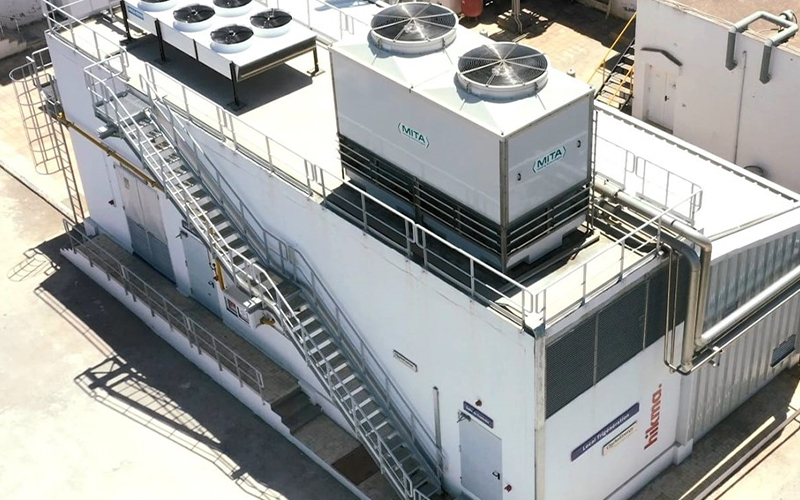
Absorption chillers can be used to deliver a trigeneration solution for a combined heat and power plant.
Absorption chillers produce chilled water by heating two different substances that are in thermal equilibrium to separation, then reuniting them through heat removal. An example of two substances that may be used for this process is water and lithium bromide. Absorption chillers can be combined with CHP or cogeneration projects to provide tri-generation or combined heat power and cooling (CHPC) schemes. The heat input and removal which is achieved using a vacuum under varying pressure conditions (~8-70mbar), brings the material into imbalance, thereby forcing them to undergo desorption or absorption. Water which acting as the refrigerant and lithium bromide salt acting as the absorbant are generally used for the generation of chilled water in the temperature range 6-12°C. Alternatively when using ammonia as the refrigerant and water as the absorbant, lower temperature chilling down to -60°C can be achieved.
To learn more about trigeneration with gas engines please contact your local Clarke Energy office.